George Loves Weather

Have a Better Life By Using Weather Instruments

  • Mounting
  • Reviews
    • AcuRite
    • Ambient
    • Davis Instruments
    • La Crosse
  • Kids
  • Learning
  • About
    • All About George
    • About George Loves Weather
    • I Own and Develop George Loves Weather-My Background
  • Contact Us

Learn All About How Varied, Wild, and Woolly Weather Is

I have written a huge variety of weather situations and types that you would benefit from knowing.

Check out my various posts that cover everything from gardening, to farming, dairy farms, and cyclones.

Much, much more may be found here as well.

A Guide to Choosing the Right Emergency Alert Weather Radio

Emergency Weather Alert Radios: What They Are, How They Work, and Why You Need One

When a severe storm, wildfire, or other disaster strikes, cell towers go down, the internet cuts out, and television goes dark. An emergency weather alert radio is one of the few devices that keeps working — and keeps you informed — when everything else fails.

What is an emergency weather radio?

An emergency weather radio — often called a NOAA weather radio in the United States — is a dedicated receiver that picks up official emergency alerts broadcast by government agencies around the clock.

Unlike a regular AM/FM radio, it stays silent until a genuine alert is issued, then sounds an alarm and delivers the broadcast automatically.

In the US, alerts are broadcast by the National Oceanic and Atmospheric Administration (NOAA).

In Canada, a parallel network operates through Environment and Climate Change Canada. 

Both systems use a network of high-frequency transmitters to blanket their respective countries with coverage.

NOAA Weather Radio All Hazards covers not just weather events, but also industrial accidents, public safety threats, terrorist alerts, and AMBER alerts — making it a true all-hazards system.

How does a weather alert radio work?

The network operates through hundreds of broadcast stations transmitting on dedicated VHF frequencies between 162.400 MHz and 162.550 MHz.

A government meteorologist or emergency manager issues an alert, which is encoded and broadcast from the nearest transmitter.

Your radio detects the signal and triggers an audible tone and voice message.

If your radio supports SAME technology, it only wakes for alerts in your specific county.

The result is a device that can sit silently on a shelf for months and still wake you at 3 a.m. if a tornado warning is issued for your area.
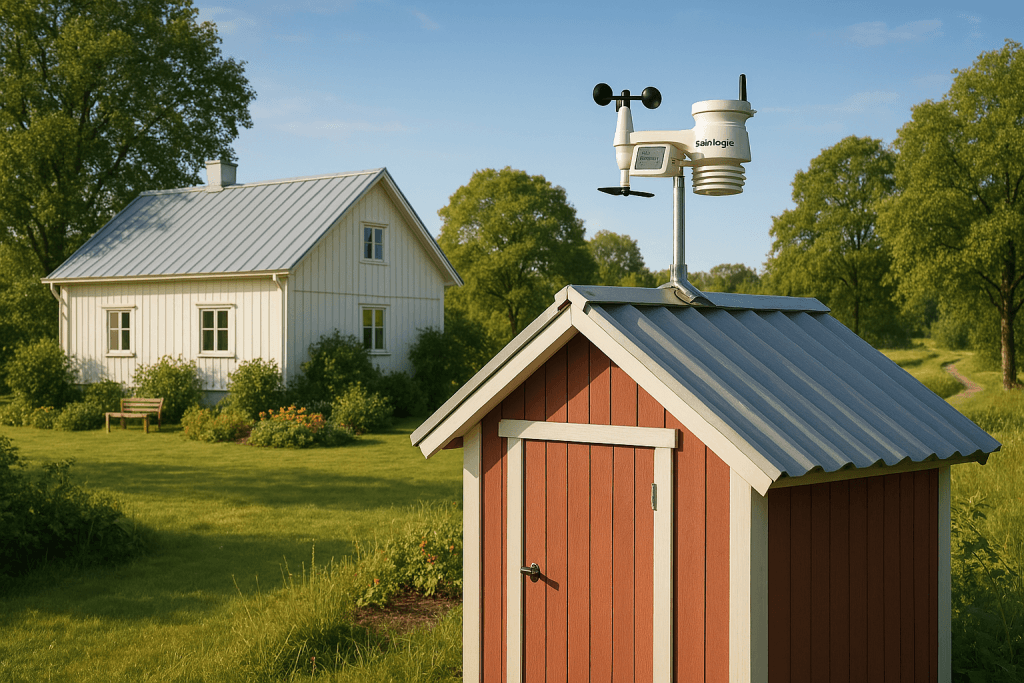
Sainlogic vs Acurite 5 in 1

Sainlogic vs Acurite 5 in 1

Why you need one — even in 2026

Smartphones and smart speakers have made it easy to assume weather alerts are covered. They often are — until a disaster knocks out the infrastructure those devices depend on. Power outages, downed cell towers, and overwhelmed networks are common during the exact events when you need information most.

An emergency weather radio solves this because it receives a direct government broadcast with no internet required, runs on batteries or a hand crank if AC power is unavailable.

It also works automatically even while you are asleep, and covers hazards beyond weather including chemical spills and AMBER Alerts.

Types of weather radios

Desktop and tabletop radios are designed to sit in a bedroom, kitchen, or office.

These plug into an outlet but typically include a battery backup, making them the best choice for households that want reliable, always-on home coverage.

Portable and handheld radios are compact units powered by batteries or rechargeable cells.

They are ideal for camping, hiking, and travel — anywhere you might be away from home when conditions change.

Multi-purpose emergency radios combine a NOAA receiver with an AM/FM tuner, flashlight, USB charging port, solar panel, and hand-crank generator in a single device.

These are a popular choice for emergency preparedness kits.
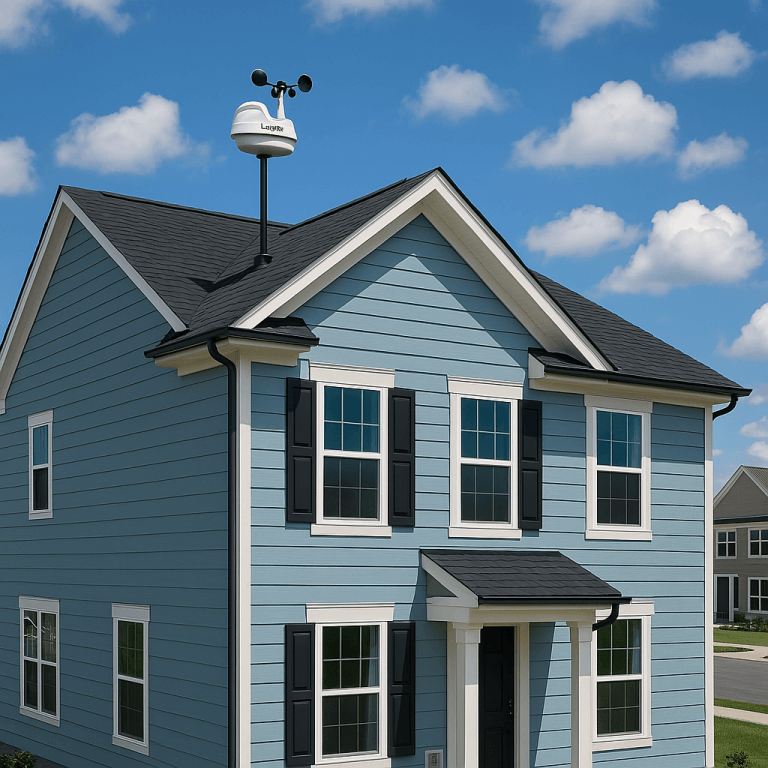
AcuRite Iris 5-In-1

AcuRite Iris 5-In-1

Key features to look for

SAME technology (Specific Area Message Encoding) lets you program the radio to only alert for your county, filtering out warnings from distant areas that don't affect you.

Alert and alarm mode keeps the radio silent during normal conditions and sounds a tone the moment an official alert is detected — even from standby.

Multiple power sources are essential. Look for AC power plus battery backup, a hand-crank generator, and ideally a solar panel so the radio works regardless of grid conditions.

Portability matters if you plan to use the radio outside the home.

A compact, durable build means you can take it camping, keep it in a car kit, or move quickly if you need to shelter elsewhere.

A built-in LED flashlight is a practical bonus when a storm knocks out power.

A USB charging port lets you keep a phone or other device alive when outlets are unavailable.

Frequently asked questions

Is a NOAA weather radio the same as an emergency alert radio? Essentially, yes. "NOAA Weather Radio" refers to the US government's broadcast network specifically. 

The radios that receive it are sold under various names — emergency alert radio, weather alert radio, NOAA radio — but they all receive the same signal.

Do I still need one if I have a weather app on my phone?

Yes. Phone alerts depend on cellular service, which is often the first infrastructure to fail during a major storm or disaster. 

A dedicated radio receives a direct government broadcast that does not rely on the internet or cell towers.

What does SAME mean on a weather radio? SAME stands for Specific Area Message Encoding.

It allows you to program your radio to only sound alerts for specific counties or regions, so you are not woken by warnings that don't apply to your area.

What is the best power source for an emergency weather radio? The safest choice is a radio with multiple power options:

AC outlet for everyday use, replaceable or rechargeable batteries as a backup, and a hand-crank or solar panel as a last resort.

This layered approach ensures the radio works no matter what happens to the power grid


Table of Contents
What is an emergency weather radio?
How does a weather alert radio work?
Why you need one — even in 2026

Types of weather radios
Key features to look for
Frequently asked questions


George

Weather Enthusiast’s Journey

From an early age, I discovered the profound impact weather has on our lives.

A stormy day can disrupt your plans, while perfect weather feels like a precious gift meant to be savored to its fullest.

Through this site, I’m passionate about sharing my expertise on weather instruments and their practical applications for enhancing your daily life.

I’ll show you how a personal weather station can transform your home experience, giving you valuable insights about conditions on your specific property.

Explore my discoveries and gain the knowledge to truly understand the weather patterns in your area.

Welcome to a community where weather isn’t just small talk—it’s a fascinating science that connects us all.

How to Interpret Weather Data from Your Personal Weather Station

This article is all about how to interpret weather data. Interpreting weather data from your personal weather station can seem daunting, but it’s easier than it appears.

This blog post is all about teaching you how to interpret weather data.

Personal weather stations collect a wealth of information, from temperature and humidity to wind speed and rainfall.

Understanding these readings not only helps you predict weather changes but also deepens your knowledge about your local climate.

This data proves invaluable for a variety of activities, such as gardening, outdoor events, or simply adjusting your daily plans.

By monitoring trends and patterns, one can make informed decisions based on accurate, real-time information.

Personal weather stations often use software like WeatherLink or Cumulus, which help visualize and interpret this data clearly, making insights accessible to even the most casual weather enthusiast.

Many platforms allow historical data access, enabling users to compare current conditions with past records.

This historical perspective can be crucial for recognizing irregularities and long-term trends.

With the right tools and understanding, anyone can become adept at reading and interpreting weather data, turning natural curiosity into practical knowledge.

Let's move on to learn more about how to interpret weather data. If you do I promise it will make your life easier.

Personal AcuRite Weather Station

Personal AcuRite Weather Station

Setting Up Your Personal Weather Station

Successful weather station setup is imperative for collecting accurate and reliable data.

Setting up involves choosing the optimal location, following specific installation tips, and ensuring proper calibration and maintenance.

You can go here now to obtain your personal copy of my PDF report on How To Place Your Personal Weather Station.

Choosing the Right Location

Selecting an ideal location for your weather station is critical.

Distance from obstructions like tall buildings, trees, and large bodies of water is vital to avoid disruption of wind patterns and temperature readings.

The station should be placed on level ground to ensure accurate precipitation measures.

Additionally, the station's sensor should be within a reasonable distance from the display unit to maintain signal integrity.

Installation Tips and Best Practices

To ensure accurate data, follow practical installation tips.

Mount the sensors at a height recommended by the manufacturer, typically around 6 feet above the ground for temperature and humidity sensors.

If you are new to mounting your personal weather station take a look at these two post where I give you more in depth instructions on everything mounting. 

Details For Mounting AcuRite Weather Station??I Report On Mounting An AcuRite Iris 5-In-1?? and Top Weather Station Mounting Ideas

Use sturdy mounting poles or tripods to secure the station.

Verify the sensors are level and properly oriented. 

It's also essential to avoid placing the station under obstructions like trees or overhangs, as these can skew rainfall data.

When installing, follow the manufacturer's specific guidelines carefully for optimal performance.

Understand the Basics of Weather

Understand the Basics of Weather

Understanding the Basics of Weather Data

The next thing you need to understand is how to interpret weather data, is a look at all the basic weather data you have at your hands to use.

Weather data is collected through a variety of sensors and instruments on your personal weather station.

These measurements provide insights into temperature, humidity, pressure, wind speed, and rainfall.

Temperature is usually measured in degrees Celsius or Fahrenheit.

Modern stations use thermometers to provide real-time readings.

Humidity indicates the amount of moisture in the air. It is measured as a percentage.

High humidity levels can make it feel warmer than the actual temperature.

Barometric pressure is recorded in millibars (mb) or inches of mercury (inHg).

Stable pressure usually signals calm weather, while falling pressure can indicate approaching storms.

Wind speed and direction are captured using anemometers and weather vanes.

Speed is noted in kilometers per hour (kph) or miles per hour (mph).

Rainfall is measured in millimeters (mm) or inches.

This helps understand the intensity and duration of precipitation events.

Data Visualization

Weather data visualization techniques include charts, graphs, and maps:

  • Line graphs for temperature changes over time.
  • Bar charts for daily rainfall.
  • Wind roses to show wind direction frequencies.

Data Quality and Validation

Ensuring data accuracy is crucial. Perform regular calibration checks on your instruments.

Comparing personal station readings with nearby official weather stations can validate data quality.

Reading weather data correctly helps in making informed decisions about daily activities and safety precautions.

Accurately interpreting this data needs an understanding of every parameter's role in the broader weather context.

Colorful Bar Graph Rep[resenting Weather Data

Colorful Bar Graph Rep[resenting Weather Data

Calibration and Maintenance

Regular calibration and maintenance are crucial for consistent data accuracy.

Perform initial calibration as per the manufacturer's instructions post-installation.

Check readings against a known reliable source to verify accuracy.

Over time, regular maintenance activities such as cleaning the sensors, checking batteries, and verifying alignment help ensure long-term accuracy.

It's advisable to calibrate rain gauges frequently and adjust for any deviations noted during regular assessments.

Reading Weather Measurements

Interpreting weather data from a personal weather station involves accurately reading and understanding key measurements such as temperature, humidity, barometric pressure, wind speed and direction, and rainfall.

These measurements are essential for making informed decisions about weather patterns and trends.

Should You Place a Weather Station Under A Tree

Should You Place a Weather Station Under A Tree

Temperature and Humidity

Temperature measurements provide essential data about the warmth or coolness of the atmosphere.

They are usually displayed in degrees Celsius (°C) or Fahrenheit (°F). 

Accurate readings require the sensors to be placed in a shaded area, away from direct sunlight and reflective surfaces.

Humidity is measured as a percentage and indicates the amount of moisture in the air.

It affects human comfort, plant growth, and can signal potential weather changes. 

Indoor and outdoor humidity sensors should be placed in locations representative of the areas being monitored.

Barometric Pressure

Barometric pressure, measured in inches of mercury (inHg) or millibars (mb), indicates the weight of the air above a certain point.

It is crucial for weather prediction, as high-pressure systems generally signal fair weather, while low-pressure systems often indicate stormy conditions.

The most accurate barometric pressure readings are taken outdoors.

It’s important to ensure the weather station is calibrated correctly. 

Calibration involves adjusting the station to match a known, local pressure standard, often available from nearby airports or weather services.

Wind Speed and Direction

Wind speed, measured in miles per hour (mph) or kilometers per hour (kph), provides insight into the strength and movement of air.

An anemometer is typically used for this measurement, and it should be mounted at a sufficient height, free from obstructions.

Wind direction is reported using degrees, where 0° signifies north, 90° east, 180° south, and 270° west.

Vane orientation is essential for accuracy. 

Proper placement is critical—generally on a mast or roof, high above potential wind breaks to capture true wind patterns.

The Rocky Mountains and Wind Driven Air currents

The Rocky Mountains and Wind Driven Air currents

Wind Speed and Direction Sensors

Wind speed and direction sensors measure the speed and direction of the wind.

They are typically mounted on a weather vane and anemometer.

The anemometer measures wind speed, while the weather vane measures wind direction.

Precipitation Gauges

Precipitation gauges measure the amount of precipitation that falls in a specific area.

The two most common types of precipitation gauges are the tipping bucket rain gauge and the weighing gauge.

The tipping bucket rain gauge measures the amount of precipitation by counting the number of times a bucket tips over, while the weighing gauge measures the amount of precipitation by weighing the precipitation that falls into a container.

Barometric Pressure Sensors

Barometric pressure sensors measure the atmospheric pressure.

They are typically used to track changes in weather patterns. 

The two most common types of barometric pressure sensors are the mercury barometer and the aneroid barometer.

The mercury barometer measures atmospheric pressure by measuring the height of a column of mercury, while the aneroid barometer measures atmospheric pressure using a sealed metal container that expands or contracts with changes in pressure.


Table of Contents
1
Setting Up Your Personal Weather Station
1.1
Choosing the Right Location
1.2
Installation Tips and Best Practices
2
Understanding the Basics of Weather Data
2.1
Data Visualization
2.2
Data Quality and Validation
2.3
Calibration and Maintenance
3
Reading Weather Measurements
3.1
Temperature and Humidity
3.2
Barometric Pressure
3.3
Wind Speed and Direction
3.4
Wind Speed and Direction Sensors
3.5
Precipitation Gauges
3.6
Barometric Pressure Sensors
3.7
Rainfall and Precipitation
4
Analyzing Weather Patterns
5
Interpreting Data Trends and Variability
6
Using Data to Predict Weather Changes
7
Data Collection and Transmission
7.1
Data Logging
7.2
Wireless vs Wired Transmission
7.3
Real-Time Data Streaming
8
Installation and Maintenance
8.1
Site Selection
8.2
Installation Guidelines
8.3
Routine Maintenance
9
Applications of Weather Station Data
9.1
Meteorology
9.2
Agriculture
9.3
Aviation
9.4
Marine Navigation
10
Emerging Technologies in Weather Sensing
10.1
Smart Sensor Networks
10.2
Remote Sensing Applications

Rainfall and Precipitation

Rainfall is measured in millimeters (mm) or inches (in), indicating the total amount of precipitation over a given period.

The rain gauge, a critical component for this measurement, should be placed in an open area away from obstructions like trees or buildings that can shield or deflect rain.

Consistent monitoring of rainfall helps predict flooding, irrigate agriculture properly, and understand long-term weather trends.

Data should be frequently checked to ensure accuracy, as debris or blockages can impair the gauge's function.

These core measurements are vital for interpreting weather data accurately, helping individuals and communities prepare and respond to weather-related events effectively.

Analyzing Weather Patterns

Analyzing weather patterns from a personal weather station involves observing trends, comparing historical data, and identifying anomalies.

The goal is to make sense of large datasets and predict future weather conditions.

Temperature Trends:
Examine daily, monthly, and yearly temperature variations.

Use line charts to visualize these trends, making it easier to spot patterns such as seasonal changes or unusual temperature spikes.

Rainfall and Precipitation:
Track the amount and frequency of precipitation events.

Bar graphs can illustrate monthly rainfall totals, helping to identify wet and dry periods.

Wind Patterns:
Analyze wind speed and direction.

Wind roses provide a graphical method to showcase where most winds originate from and their intensity.

Humidity Levels:
Monitoring humidity trends can help understand moisture patterns.

Charts showing daily humidity levels can highlight periods of high or low moisture, which affect comfort and weather predictions.

AcuRite Iris 5 in 1 Indoor Outdoor_Weather Station Reviewed

AcuRite Iris 5 in 1 Indoor Outdoor_Weather Station Reviewed

Heatmaps:
Heatmaps simplify complex datasets by using color gradients.

They are particularly effective for spotting weekly or monthly patterns in temperature or precipitation.

Historical Comparisons:
Compare current data with historical records to identify long-term changes or recurring patterns.

Tables summarizing past years’ data provide a clear snapshot of these trends.

Software Tools:
Use tools that integrate with your weather station to visualize data.

Many software options offer custom charts, graphs, and reports, making pattern recognition straightforward.

Regular analysis helps in making informed decisions, whether for agriculture, disaster management, or daily activities.

Interpreting Data Trends and Variability

Identifying trends and variability in weather data is crucial.

Users should start by collecting reliable data from their personal weather station over a significant period.

Steps to Identify Trends:

  1. Gather Consistent Data: Ensure your data is consistent and covers variables like temperature, precipitation, humidity, and wind speed.
  2. Use Graphs: Plot the data on graphs to visualize patterns. Line charts are excellent for showcasing trends over time.

Analyzing Temperature Patterns:

  • Daily and Seasonal Trends: Look for average temperatures, highs, and lows. For instance, track how summer peaks compare to winter lows.
  • Anomalies: Note unusual spikes or drops. These could indicate outliers or errors needing further investigation.

Precipitation and Humidity:

  • Monthly Totals: Summarize monthly rainfall to see if there’s an increasing or decreasing trend over the years.
  • Humidity Levels: Check average humidity during different seasons. High variability might suggest changes in local climate.

Wind Speed and Direction:

  • Wind Rose Diagrams: These can help you visualize the predominant wind directions and speeds over a specific period.
  • Trend Analysis: Compare wind data over months or years to identify any changes in wind patterns.
Weather Vanes In Lithuania

Weather Vanes In Lithuania

Statistical Methods:

  • Utilize basic statistical methods like mean, median, and standard deviation to understand variability.
  • Regression Analysis: For more advanced insight, apply regression analysis to predict future trends based on historical data.

Data Quality:

  • Validation: Always validate your data to ensure accuracy. Cross-reference with nearby official weather stations if possible.
  • Cleaning: Remove any obvious errors or outliers that could skew the results.

By following these methods, one can effectively interpret the trends and variability in weather data from a personal weather station.

Using Data to Predict Weather Changes

Accurately predicting weather changes involves analyzing various data points collected by a personal weather station.

Key metrics include temperature, humidity, and atmospheric pressure.

These variables provide important clues about upcoming weather conditions.

Temperature:

  • Sudden drops often suggest cold fronts.
  • Gradual increases can indicate warmer days ahead.

Humidity:

  • Rising humidity levels may precede rainfall.
  • Decreasing humidity suggests drier conditions.

Atmospheric Pressure:

  • Falling pressure is a typical sign of approaching storms or wet weather.
  • Rising pressure usually signals clearer skies.

Using software packages like Cumulus can simplify data interpretation.

These tools visualize data trends through charts and graphs, making patterns easier to identify.

Example Data Trend:

MetricIndicatorPrediction
TemperatureDropCold front
HumidityIncreaseRain expected
PressureSharp decreaseStorm approaching
Wind Direction Sensor

Wind Direction Sensor

Data Collection and Transmission

Data Logging

Weather station sensors collect data on various atmospheric variables, such as temperature, humidity, wind speed, and precipitation.

This data is then stored in a data logger, which is a device that records and stores data over time.

Data loggers can be standalone devices or integrated into the weather station itself.

The frequency at which data is logged depends on the type of sensor and the application.

For example, some sensors may log data every minute, while others may log data every hour.

The data logger may also have a limited storage capacity, which means that data may need to be downloaded and cleared periodically.

Wireless vs Wired Transmission

Once data is logged, it needs to be transmitted to a central location for analysis and processing. There are two main methods of data transmission: wired and wireless.

Wired transmission involves physically connecting the weather station to a computer or data logger using cables. This method is reliable and secure, but can be limiting in terms of range and mobility.

Wireless transmission, on the other hand, uses radio waves or other wireless technologies to transmit data over a distance.

This method allows for greater flexibility and mobility, but can be subject to interference and signal loss.

Weather Station DATA Logging

Weather Station DATA Logging

Real-Time Data Streaming

Real-time data streaming involves transmitting data as it is collected, rather than storing it in a data logger.

This method allows for immediate access to data and can be useful for applications that require up-to-the-minute information, such as aviation or emergency response.

Real-time data streaming can be achieved using wired or wireless transmission methods.

However, wireless transmission is often preferred due to its flexibility and ease of use.

In summary, weather station sensors collect data on atmospheric variables, which is then logged and transmitted to a central location for analysis and processing.

Data can be logged using standalone data loggers or integrated into the weather station itself.

Data can be transmitted using wired or wireless methods, and real-time data streaming allows for immediate access to data.

Installation and Maintenance

Site Selection

When selecting a site for a weather station, it is important to choose a location that is representative of the surrounding area and is free from obstructions that could interfere with sensor readings.

Ideally, the site should be flat, open, and at least 30 meters away from any buildings, trees, or other objects that could affect wind flow or temperature.

Additionally, the site should be easily accessible for maintenance and calibration purposes.

Installation Guidelines

Proper installation is essential for accurate and reliable data collection.

Before installing the weather station, it is important to carefully read the manufacturer's instructions and follow them closely.

The installation process will vary depending on the type of weather station and sensors being used, but in general, it will involve securely mounting the sensors and connecting them to the data logger.

One important consideration when installing a weather station is the orientation of the sensors.

For example, wind sensors should be oriented so that they face into the prevailing wind direction, while temperature sensors should be located in a shaded area to avoid direct sunlight.

Additionally, the sensors should be mounted at the recommended height and distance from the ground to ensure accurate readings.

Routine Maintenance

Regular maintenance is crucial for ensuring the continued accuracy and reliability of a weather station.

This includes cleaning the sensors and data logger, checking the calibration of the sensors, and replacing any worn or damaged parts.

The frequency of maintenance will depend on the specific weather station and sensors being used, as well as the environmental conditions at the installation site.

It is important to keep a log of all maintenance activities and sensor calibrations, as this information can be used to identify any issues or trends in the data.

Additionally, it is recommended to have a backup power source, such as a battery or generator, in case of power outages or other disruptions.

By following these installation and maintenance guidelines, weather station operators can ensure accurate and reliable data collection for a wide range of applications, including meteorology, agriculture, and climate research.

Applications of Weather Station Data

Weather station data has a wide range of applications in various fields.

In this section, we will explore some of the most common applications of weather station data.

Meteorology

Meteorologists use weather station data to monitor and forecast weather conditions.

By collecting data from various sensors, they can analyze atmospheric conditions and predict weather patterns.

This information is crucial for public safety, as it allows people to prepare for severe weather events such as hurricanes, tornadoes, and thunderstorms.

Agriculture

Weather station data is also important in agriculture.

Farmers use weather station data to monitor weather conditions and make informed decisions about planting, irrigation, and harvesting.

By analyzing data from sensors such as temperature, humidity, and rainfall, farmers can optimize crop yields and minimize losses due to weather-related events.

Aviation

Weather station data is essential for aviation safety.

Pilots use weather station data to monitor weather conditions and plan flights accordingly.

By analyzing data from sensors such as wind speed and direction, temperature, and air pressure, pilots can make informed decisions about takeoff, landing, and flight routes.

Marine Navigation

Marine navigation also relies on weather station data. By collecting data from sensors such as sea level, wind speed and direction, and air pressure, sailors can navigate safely and avoid dangerous weather conditions.

This information is crucial for commercial shipping and offshore operations.

In conclusion, weather station data has a wide range of applications in various fields, including meteorology, agriculture, aviation, and marine navigation.

Marine Weather Data Collection

Marine Weather Data Collection

By collecting data from various sensors, weather stations provide valuable information that helps people make informed decisions about public safety, crop yields, flight planning, and marine navigation.

Emerging Technologies in Weather Sensing

Smart Sensor Networks

Weather sensing technologies have come a long way in recent years, with the development of smart sensor networks being a significant breakthrough.

These networks consist of a group of sensors that communicate with each other and a central hub to collect and analyze data in real-time.

Smart sensor networks can be used for a variety of applications, including weather forecasting, air quality monitoring, and flood detection.

One of the main advantages of smart sensor networks is that they can be deployed in remote or hard-to-reach areas, providing accurate and reliable data without the need for human intervention.

This makes them ideal for monitoring weather conditions in areas that are prone to extreme weather events, such as hurricanes or tornadoes.

Smart sensor networks can also be used to monitor air quality, providing real-time data on pollutants such as ozone, nitrogen dioxide, and particulate matter.

This information can be used by governments and other organizations to develop policies and initiatives aimed at reducing air pollution and improving public health.

Remote Sensing Applications

Another emerging technology in weather sensing is remote sensing.

Remote sensing refers to the use of satellites and other airborne platforms to collect data on weather conditions and other environmental factors.

This technology has revolutionized the way we monitor weather patterns and has enabled us to make more accurate predictions about future weather events.

One of the main advantages of remote sensing is that it allows us to monitor weather conditions over large areas, providing a more comprehensive view of weather patterns and trends.

This information can be used to develop more accurate weather forecasts and to track the effects of climate change on the environment.

Remote sensing can also be used to monitor other environmental factors, such as soil moisture, vegetation cover, and ocean temperatures.

This information can be used to develop more effective strategies for managing natural resources and mitigating the effects of natural disasters.

Overall, emerging technologies in weather sensing are providing us with more accurate and reliable data on weather conditions and other environmental factors.

This information can be used to develop more effective strategies for managing natural resources, protecting public health, and mitigating the effects of climate change.

Insert Content Template or Symbol
George

Weather Enthusiast’s Journey

From an early age, I discovered the profound impact weather has on our lives.

A stormy day can disrupt your plans, while perfect weather feels like a precious gift meant to be savored to its fullest.

Through this site, I’m passionate about sharing my expertise on weather instruments and their practical applications for enhancing your daily life.

I’ll show you how a personal weather station can transform your home experience, giving you valuable insights about conditions on your specific property.

Explore my discoveries and gain the knowledge to truly understand the weather patterns in your area.

Welcome to a community where weather isn’t just small talk—it’s a fascinating science that connects us all.

Understanding Weather Station Sensors and Their Functions: A Comprehensive Guide

Weather station sensors are crucial tools for measuring and analyzing atmospheric conditions.

You will find that understanding weather station sensors can only help you get better results with your weather station.

These sensors can provide real-time data on a variety of weather parameters such as temperature, humidity, pressure, wind speed, and precipitation.

Understanding the functions of these sensors is essential for anyone who wants to monitor and analyze weather data, whether they are professional meteorologists, hobbyists, or business owners.

Weather station sensors come in different types, each designed to measure specific atmospheric conditions.

understanding weather station sensors

Understanding Weather Station Sensors

For example, temperature sensors measure the ambient temperature of the air, while humidity sensors measure the amount of moisture in the air.

Pressure sensors measure the atmospheric pressure, and wind sensors measure the speed and direction of the wind.

Precipitation sensors, on the other hand, measure the amount and type of precipitation that falls from the sky.

By understanding the functions of weather station sensors, users can collect accurate and reliable data on atmospheric conditions.

This data can be used for a variety of purposes, including weather forecasting, climate research, and agricultural planning.

In the following sections, we will delve into the world of weather station sensors, exploring their functions, types, and advancements.

​Understanding weather station sensors should be fun for you. This knowledge will help you out when deciding where to place your personal weather station.

Types of Weather Station Sensors

Weather stations use various sensors to measure different atmospheric variables.

These sensors are responsible for detecting and measuring different weather parameters.

By utilizing various sensors, a weather station can accurately capture data about the surrounding environment.

Let’s explore the key types of weather sensors.

Temperature Sensors

Temperature sensors are one of the most common types of sensors used in weather stations.

They measure the temperature of the air, ground, or water.

The two most common types of temperature sensors are thermometers and thermistors. 

Thermometers utilize the expansion or contraction characteristic of specific materials for temperature measurement, whereas thermistors rely on the alteration in electrical resistance as temperature changes.

Temperature sensors, often overlooked yet indispensable components of weather stations, play a pivotal role in providing us with up-to-date information on the dynamic climate patterns.

These remarkable devices manifest in diverse configurations, with thermometers and thermistors emerging as the most prevalent options.


Thermometers, the classic type we all recognize, leverage the expansion and contraction properties of materials such as mercury or alcohol.

As temperatures rise, these materials expand, moving up a calibrated scale to give an accurate reading.

Conversely, as temperatures drop, they contract, moving down the scale. This simple yet effective mechanism has been a staple in weather monitoring for centuries.

On the more modern side of things, we have thermistors, which stand out for their precision and responsiveness.

Made from ceramic materials that conduct electricity differently depending on the temperature, thermistors provide rapid and highly accurate readings.

When the temperature changes, the electrical resistance of the thermistor changes as well, and this change can be measured and converted into temperature data.

This capability makes thermistors particularly useful in digital weather stations and electronic devices, where quick and precise temperature readings are essential.

AcuRite Thermistor

What does a Thermistor Look Like

I have reviewed several weather stations manufactured by a company named AcuRite. Here is how they describe what they use in their personal weather stations.

All of AcuRite’s digital thermometers and weather stations measure temperature using a device called a thermistor.

Thermistors are thermally sensitive resistors which change in electrical resistance as temperature rises or falls. 

To put it another way, the thermistor has an electrical current flowing through it. Depending on the temperature it’s exposed to, the thermistor will make it easier or harder for electricity to pass through…sort of like putting a kink in a garden hose to reduce the flow of water. There are two types of thermistors:

  • Negative Temperature Coefficient (NTC) thermistors exhibit a decrease in electrical resistance when subjected to an increase in temperature.
  • Positive Temperature Coefficient (PTC) thermistors exhibit an increase in electrical resistance when subjected to an increase in temperature.

The amount of electrical resistance applied by the thermistor will be electronically translated to a temperature reading on the thermometer’s digital display.

Thermistors are especially useful because (depending on the model and specifications) they can measure temperatures ranging from -100° to more than 600° Fahrenheit.

They are also extremely precise over their entire temperature range, resulting in accurate, reliable temperature readings.

​All of this information can only make understanding weather station sensors easier.

​You will be comfortable with your personal ​weather station this makes owning a personal weather station more fun.

In the Home

Beyond their technical prowess, temperature sensors have found their way into a plethora of everyday applications.

From the thermostat that keeps your home cozy to the weather app on your phone that helps you decide whether to grab an umbrella, these sensors are integral to modern convenience.

AcuRite Multi room weather station

AcuRite Multi Room Weather Station

In the Field: Agriculture

In agriculture, they help farmers monitor soil temperatures to optimize planting times and crop health.

Helpful in Cooking as Well

In the culinary world, they ensure that your favorite dishes are cooked to perfection by maintaining the right oven temperatures.

Even in space exploration, temperature sensors are critical for monitoring the harsh environments that spacecraft and astronauts encounter.

So, while these sensors might be small and often overlooked, their impact on our daily comfort and scientific advancements is nothing short of monumental.

Humidity Sensors

Humidity sensors measure the amount of water vapor in the air.

They are typically used in combination with temperature sensors to calculate relative humidity.

The two most common types of humidity sensors are capacitive and resistive sensors.

Capacitive sensors measure humidity by detecting changes in the electrical capacitance of a material,

while resistive sensors measure humidity by detecting changes in electrical resistance.

Wind Speed and Direction Sensors

Wind speed and direction sensors measure the speed and direction of the wind.

They are typically mounted on a weather vane and anemometer. The anemometer measures wind speed, while the weather vane measures wind direction.

Precipitation Gauges

Precipitation gauges measure the amount of precipitation that falls in a specific area.

The two most common types of precipitation gauges are the tipping bucket rain gauge and the weighing gauge.

The tipping bucket rain gauge measures the amount of precipitation by counting the number of times a bucket tips over, while the weighing gauge measures the amount of precipitation by weighing the precipitation that falls into a container.

Barometric Pressure Sensors

Barometric pressure sensors measure the atmospheric pressure.

They are typically used to track changes in weather patterns. The two most common types of barometric pressure sensors are the mercury barometer and the aneroid barometer.

The mercury barometer measures atmospheric pressure by measuring the height of a column of mercury, while the aneroid barometer measures atmospheric pressure using a sealed metal container that expands or contracts with changes in pressure.

Solar Radiation Sensors

Solar radiation sensors measure the amount of solar radiation that reaches the surface of the Earth.

They are typically used to track changes in solar radiation levels.

The two most common types of solar radiation sensors are pyranometers and pyrheliometers.

Pyranometers measure the total amount of solar radiation that reaches the surface of the Earth, while pyrheliometers measure the direct solar radiation that reaches the surface of the Earth.

Soil Moisture Sensors

Soil moisture sensors measure the amount of moisture in the soil.

They are typically used to track changes in soil moisture levels.

The two most common types of soil moisture sensors are capacitance sensors and resistance sensors.

Capacitance sensors measure soil moisture by detecting changes in the electrical capacitance of the soil, while resistance sensors measure soil moisture by detecting changes in electrical resistance.

Wind Direction Sensor

Wind Direction Sensor

Sensor Accuracy and Calibration

Accuracy Standards

Weather sensors need to meet certain accuracy standards to ensure reliable and consistent data collection.

The World Meteorological Organization (WMO) has established standards for various weather parameters, including temperature, humidity, wind speed, and precipitation.

These standards ensure that weather data collected from different stations is comparable and can be used for scientific research and forecasting.

When selecting weather sensors, it is important to consider the accuracy standards they meet.

Some sensors may meet the minimum standards set by the WMO, while others may exceed them.

Sensors that exceed the standards may be more expensive but can provide more accurate and reliable data.

acurite weather station

AcuRite Weather Station

Calibration Procedures

Even the most accurate sensors can drift over time due to environmental factors such as temperature changes, humidity, and exposure to sunlight.

To maintain sensor accuracy, regular calibration is necessary.

Calibration involves comparing sensor readings to a known standard and making adjustments if necessary.

The frequency of calibration depends on the type of sensor and the environmental conditions it is exposed to.

For example, temperature sensors in a weather station may need calibration every 1-2 years, while sensors exposed to extreme temperature variations or high humidity levels may require more frequent calibration.

Calibration procedures may vary depending on the type of sensor and manufacturer.

It is important to follow the manufacturer’s instructions when calibrating sensors to ensure accurate and reliable data collection.

Many weather stations come with calibration tools and instructions, making the process easy and straightforward.

Overall, understanding sensor accuracy and calibration is crucial for reliable weather data collection.

By selecting sensors that meet accuracy standards and regularly calibrating them, weather enthusiasts and professionals can ensure accurate and reliable data collection for scientific research and forecasting.

Weather Station Sensor Array

Weather Station Sensor Array

Data Collection and Transmission

Data Logging

Weather station sensors collect data on various atmospheric variables, such as temperature, humidity, wind speed, and precipitation.

This data is then stored in a data logger, which is a device that records and stores data over time.

Data loggers can be standalone devices or integrated into the weather station itself.

The frequency at which data is logged depends on the type of sensor and the application.

For example, some sensors may log data every minute, while others may log data every hour.

The data logger may also have a limited storage capacity, which means that data may need to be downloaded and cleared periodically.

Wireless vs Wired Transmission

Once data is logged, it needs to be transmitted to a central location for analysis and processing.

There are two main methods of data transmission: wired and wireless.

Wired transmission involves physically connecting the weather station to a computer or data logger using cables.

This method is reliable and secure, but can be limiting in terms of range and mobility.

Wireless transmission, on the other hand, uses radio waves or other wireless technologies to transmit data over a distance.

This method allows for greater flexibility and mobility, but can be subject to interference and signal loss.

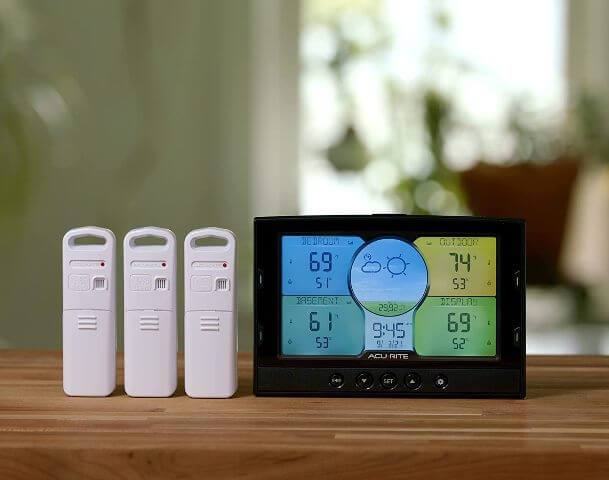
AcuRite 3 Sensors Weather Station

AcuRite 3 Sensors Weather Station

Real-Time Data Streaming

Real-time data streaming involves transmitting data as it is collected, rather than storing it in a data logger.

This method allows for immediate access to data and can be useful for applications that require up-to-the-minute information, such as aviation or emergency response.

Real-time data streaming can be achieved using wired or wireless transmission methods.

However, wireless transmission is often preferred due to its flexibility and ease of use.

In summary, weather station sensors collect data on atmospheric variables, which is then logged and transmitted to a central location for analysis and processing.

Data can be logged using standalone data loggers or integrated into the weather station itself.

Data can be transmitted using wired or wireless methods, and real-time data streaming allows for immediate access to data.

Installation and Maintenance

Site Selection

When selecting a site for a weather station, it is important to choose a location that is representative of the surrounding area and is free from obstructions that could interfere with sensor readings.

Ideally, the site should be flat, open, and at least 30 meters away from any buildings, trees, or other objects that could affect wind flow or temperature.

Additionally, the site should be easily accessible for maintenance and calibration purposes.

Installation Guidelines

Proper installation is essential for accurate and reliable data collection.

Before installing the weather station, it is important to carefully read the manufacturer’s instructions and follow them closely.

The installation process will vary depending on the type of weather station and sensors being used, but in general, it will involve securely mounting the sensors and connecting them to the data logger.

One important consideration when installing a weather station is the orientation of the sensors.

For example, wind sensors should be oriented so that they face into the prevailing wind direction, while temperature sensors should be located in a shaded area to avoid direct sunlight.

Additionally, the sensors should be mounted at the recommended height and distance from the ground to ensure accurate readings.

Routine Maintenance

Regular maintenance is crucial for ensuring the continued accuracy and reliability of a weather station.

This includes cleaning the sensors and data logger, checking the calibration of the sensors, and replacing any worn or damaged parts.

The frequency of maintenance will depend on the specific weather station and sensors being used, as well as the environmental conditions at the installation site.

It is important to keep a log of all maintenance activities and sensor calibrations, as this information can be used to identify any issues or trends in the data.

Additionally, it is recommended to have a backup power source, such as a battery or generator, in case of power outages or other disruptions.

By following these installation and maintenance guidelines, weather station operators can ensure accurate and reliable data collection for a wide range of applications, including meteorology, agriculture, and climate research.

Applications of Weather Station Data

Weather station data has a wide range of applications in various fields.

In this section, we will explore some of the most common applications of weather station data.

Meteorology

Meteorologists use weather station data to monitor and forecast weather conditions.

By collecting data from various sensors, they can analyze atmospheric conditions and predict weather patterns.

This information is crucial for public safety, as it allows people to prepare for severe weather events such as hurricanes, tornadoes, and thunderstorms.

Personal Weather station and agriculture use

Personal Weather Station and Agriculture Use

Agriculture

Weather station data is also important in agriculture.

Farmers use weather station data to monitor weather conditions and make informed decisions about planting, irrigation, and harvesting.

By analyzing data from sensors such as temperature, humidity, and rainfall, farmers can optimize crop yields and minimize losses due to weather-related events.

Aviation

Weather station data is essential for aviation safety.

Pilots use weather station data to monitor weather conditions and plan flights accordingly.

By analyzing data from sensors such as wind speed and direction, temperature, and air pressure, pilots can make informed decisions about takeoff, landing, and flight routes.

Marine Navigation

Marine navigation also relies on weather station data.

By collecting data from sensors such as sea level, wind speed and direction, and air pressure, sailors can navigate safely and avoid dangerous weather conditions.

This information is crucial for commercial shipping and offshore operations.

In conclusion, weather station data has a wide range of applications in various fields, including meteorology, agriculture, aviation, and marine navigation.

By collecting data from various sensors, weather stations provide valuable information that helps people make informed decisions about public safety, crop yields, flight planning, and marine navigation.

Personal Weather Station And Marine Use

Personal Weather Station And Marine Use

Emerging Technologies in Weather Sensing

Smart Sensor Networks

Weather sensing technologies have come a long way in recent years, with the development of smart sensor networks being a significant breakthrough.

These networks consist of a group of sensors that communicate with each other and a central hub to collect and analyze data in real-time.

Smart sensor networks can be used for a variety of applications, including weather forecasting, air quality monitoring, and flood detection.

One of the main advantages of smart sensor networks is that they can be deployed in remote or hard-to-reach areas, providing accurate and reliable data without the need for human intervention.

This makes them ideal for monitoring weather conditions in areas that are prone to extreme weather events, such as hurricanes or tornadoes.

Smart sensor networks can also be used to monitor air quality, providing real-time data on pollutants such as ozone, nitrogen dioxide, and particulate matter.

This information can be used by governments and other organizations to develop policies and initiatives aimed at reducing air pollution and improving public health.

Remote Sensing Applications

Another emerging technology in weather sensing is remote sensing.

Remote sensing refers to the use of satellites and other airborne platforms to collect data on weather conditions and other environmental factors.

This technology has revolutionized the way we monitor weather patterns and has enabled us to make more accurate predictions about future weather events.

One of the main advantages of remote sensing is that it allows us to monitor weather conditions over large areas, providing a more comprehensive view of weather patterns and trends.

This information can be used to develop more accurate weather forecasts and to track the effects of climate change on the environment.

Remote sensing can also be used to monitor other environmental factors, such as soil moisture, vegetation cover, and ocean temperatures.

This information can be used to develop more effective strategies for managing natural resources and mitigating the effects of natural disasters.

Overall, emerging technologies in weather sensing are providing us with more accurate and reliable data on weather conditions and other environmental factors.

This information can be used to develop more effective strategies for managing natural resources, protecting public health, and mitigating the effects of climate change.

George

Weather Enthusiast’s Journey

From an early age, I discovered the profound impact weather has on our lives.

A stormy day can disrupt your plans, while perfect weather feels like a precious gift meant to be savored to its fullest.

Through this site, I’m passionate about sharing my expertise on weather instruments and their practical applications for enhancing your daily life.

I’ll show you how a personal weather station can transform your home experience, giving you valuable insights about conditions on your specific property.

Explore my discoveries and gain the knowledge to truly understand the weather patterns in your area.

Welcome to a community where weather isn’t just small talk—it’s a fascinating science that connects us all.

Free-Top 10 Points To Consider When Buying A Personal Weather Station

10 Things e-book

So You Are Interested In a Personal Weather Station

You Need To Take A Look At This Comprehensive Report 

I have watched the activity on my site for over 4 years now. I know that viewers are looking for three things mainly.

  • The are looking for reviews on top selling weather stations
  • They need information on mounting weather stations
  • They are interested in weather station information for children

You May Need To Fit In Better With Your Weather

This is an excerpt showing you the type of content available in this 42 page PDF for FREE

"So whether you are enjoying the day outside or if you are just hoping to get rid of it you could improve your mental well-being, you know (your attitude) by learning more about the weather outside.

The conditions you must drive in daily. The conditions you need to plan social events around.

The same weather that can make or break a sporting event you are participating in or going to as a fan of the sport."

Top 10 Reasons To Buy A Weather Station

This 41 page PDF from georgelovesweather.com covers in detail everything you would want to know about correctly buying a personal weather station.

No more guess about how to best decide which weather station will fit your needs.

Sign Up Below To Get Access To Your FREE Copy


So if you are interested in the weather, then my report will be a help to you.

1.     It will bring up things that needed to be thought about and things you will need to do your own due diligence on.

2.    The good news is: that you can easily match to a really good fit with a personal weather station.

3.    It can, not only be useful to you, but also fun. This e-book also includes bonus coverage on things to avoid
.

10 Things To Know When Buying A Weather Station

10 Things To Know When Buying A Weather Station

Copyright 2022 georgelovesweather.com - Privacy Policy

George

Weather Enthusiast’s Journey

From an early age, I discovered the profound impact weather has on our lives.

A stormy day can disrupt your plans, while perfect weather feels like a precious gift meant to be savored to its fullest.

Through this site, I’m passionate about sharing my expertise on weather instruments and their practical applications for enhancing your daily life.

I’ll show you how a personal weather station can transform your home experience, giving you valuable insights about conditions on your specific property.

Explore my discoveries and gain the knowledge to truly understand the weather patterns in your area.

Welcome to a community where weather isn’t just small talk—it’s a fascinating science that connects us all.

Weather Instruments List For the Month of June 2019

Weather Instruments List Set Up For June 2019

My weather instruments list that I am using for June 2019, will be especially for this new month. We have been experiencing a very cloudy, and damp weather system for well over a year.

Weather Instruments List

This overall weather pattern has put us in a place locally of some special situations often not seen in a lifetime.

My selection for my weather instruments list is the following.

  • An anemometer
  • Wind vane
  • Soil moisture sensor
  • Dewpoint sensor
  • Thermometer-Outside Temperature sensor

My reasons for picking these for my weather instruments list for June 2019, will be explained next.[toc]

Why I Picked These Types of Weather Instruments

In looking at the array of weather sensors to choose from it was obvious to me, what I needed to concentrate on for this month. Since our ground is saturated with moisture right now, we need to be watching how well the weather is responding to the wetness.

We need to have better evaporation in our local area. The farmers haven’t been able to even plow the fields, yet have them planted with crops. To bring this to my level and probably your level as well what about our garden for this year, 2019?

Gardening has been really close to not existing so far. Between days of hard rain, on and off throughout, as well as the temperatures being 8-9 degrees below normal, the garden is a mudhole.

With this current picture, what needs to be watched for me to successfully get the garden in ASAP is the following 3 items for a successful garden this year, 2019.

3 Top Gardening Tips For 2019

  1. You must aerate your soil so that seeds can germinate properly
  2. Overnight temperatures and daily highs need to be maximized
  3. The wind direction and wind speeds need to be monitored. There is a big difference between moist garden soil and wet garden soil.

Please go here for recommended reading=>=>=> Wet Soil vs. Moist Soil

weather instruments list


For Point 1
Here are my thoughts. When your garden is a mudhole, it is very heavy in moisture and doesn’t have the proper ability to breathe, and it has a denseness that will rot your seeds, not germinate them in the normal growing way.

So you need to loosen up the surface areas and let the evaporation be maximized to the soil conditioned for good seed growing.

For Point 2
You may need to keep as much much warmth in the topsoil and garden surface at all times. If it is going to be colder overnight, maybe cover some areas. This will allow for more moisture evaporation which is what you need most right now.

For Point 3
The wind is a key to good evaporation for your lawn, garden, or field. The sun and wind are always key elements to having good evaporation necessary for having good planting and great growing.

This will then lead to lush-looking lawns and great crop yields in fields.

Then your home garden will look like this. A great garden for great eating where plenty of foods will be prepared for non-food-producing months in the fall and winter months.

Kinds of Weather Instruments That I Use and Where to Find Them

So I have based this site on the main US manufacturers of weather stations and weather sensors. The main ones I write about are La Crosse, AcuRite, and Davis Instruments.

Each company has its own strengths and weaknesses. But the one really cool thing is that with the competition between them, you will have as choices so really useful, sensors that you can add on to your weather station.

Davis Instruments 6345 Leaf/Soil Moisture/Temp Monitoring StationDavis Instruments 6345 Leaf/Soil Moisture/Temp Monitoring StationDavis Instruments 6345 Leaf/Soil Moisture/Temp Monitoring StationI want to talk about a couple of these that will help you in this discussion of June 2019.

Choice 1
My choice 1 is the Davis Instruments 6440 Soil Moisture Sensor. This seems to be a favorite with home gardeners far and wide. You can use this with the Davis Instruments 6345 Leaf/Soil Moisture/Temp Monitoring Station.⏩⏩⏩⏩

This weather station will monitor 4 of the soil moisture sensors in your garden for you. This should help propel a much better gardening situation for you.

So this will take care of a vital cog in what I need in my locality this June. We have very wet soil, and it has been very cloudy for months now.

So if I am planting I need to know what my soil needs attention to, to maximize my seeds germinating for my garden plants this June.

Next year June 2020 there may be a totally different set of weather instruments that I can call on to help me out.

Choice 2
Davis Instruments 6372 Wireless Temperature StationDavis Instruments 6372

Wireless Temperature StationDavis Instruments 6372 Wireless Temperature Station

My choice 2 is another Davis Instruments add-on sensor. This is in addition to your expense of buying the weather station of your choice.

You can match up the Davis Instruments 6372 Wireless Temperature Station which will transmit temperature readings from up to 4 temperature probes to your Vantage Vue weather station.

The temperature probes which may be used for either air temperature or soil temperature are the Davis Instruments 12181831 Stainless Steel Temperature Probe.

This probe works with the aforementioned Davis Instruments 6372. This will help me to know if your soil is warming up enough to be evaporating the extra moisture we have in our soil at this time. Knowing this will let you know if you need to do anything else to try to dry the garden out more.

Then you can get the plants on their way to healthy growth and a great yield of “yummy garden-fresh vegetables???”.


June Shows Better Signs

So as I write this it is raining again, but my weather station is telling me, the rain is much lighter than it has been earlier in the week.

We are also supposed to be getting a 5 day period with very little rain if any. This will help allow the serious gardening prep to start.

As you can see using these weather instruments will help enormously in getting the garden in, and in helping the early planting to come along as quickly as it can.

Read More About Using Weather Instruments Each Month of the Year-View Related Posts Below

Weather In April-How to Better Use Weather Instruments
Weather in the northern hemisphere starts really shifting gears by the time the month of April arrives. Where I have lived most of my life, April brings an awakening from a deep winter’s sleep. All things plant, grass, flowers, and trees become alive. How does this tie in with how I use my weather stations to improve my life?
Weather Instruments For Kids-How To Better Use In the Month of May
Weather Instruments for kids is about how you can use 3 weather situations that are predominant in May, to teach your kids about some weather instruments.
I suggest using weather instruments when looking at Tornadoes, Thunderstorms, and Heavy rainfall as teaching tools.
George

Weather Enthusiast’s Journey

From an early age, I discovered the profound impact weather has on our lives.

A stormy day can disrupt your plans, while perfect weather feels like a precious gift meant to be savored to its fullest.

Through this site, I’m passionate about sharing my expertise on weather instruments and their practical applications for enhancing your daily life.

I’ll show you how a personal weather station can transform your home experience, giving you valuable insights about conditions on your specific property.

Explore my discoveries and gain the knowledge to truly understand the weather patterns in your area.

Welcome to a community where weather isn’t just small talk—it’s a fascinating science that connects us all.

An Introduction to the Different Types of Cyclones

Exploring the Types Of Cyclones

Most people don’t realize that the word “cyclone” actually refers to several different types of storms. Some of them occur over land, while others occur over water.

Different Types of Cyclones

You will find, what all of the different types of cyclones have in common, is that they all spin around low-pressure centers.

Also, the difference between high pressure and low pressure always plays a major component in the formation of all cyclones.

This article will offer an introduction to the different types of storms that can be considered cyclones to help clear up some of the confusion surrounding these uncommon, but fascinating weather phenomena.

The Eye of the Storm

What differentiates all of the different types of cyclones from other inclement weather events is that they all rotate around what’s often called the “eye” of a storm.

The eye of the storm creates the eerie calm often associated with cyclones.

While the storm’s eye remains almost completely calm, the areas surrounding it can be incredibly hectic as a cyclone’s spinning “arms” create a maelstrom of wind and rain.

An Introduction to the Different Types of Cyclones

A Storm By Any Other Name

Not only does the word cyclone actually refer to a variety of different kinds of storms, but in certain regions what’s called a cyclone would be known as something else.Different Types of Cyclones

Storms that fit this description in the Atlantic Ocean or the Pacific Northeast would be called hurricanes, for example.

In the Pacific Northwest, the same kind of storm would be known as a typhoon. Elsewhere in the world like in the South Pacific or the Indian Ocean, it would simply be called a tropical cyclone.

No matter what name these storms are given, they’ll still wreak havoc with the areas that effectively become part of the local weather.

The high winds, the cyclonic action, as well as the copious amounts of rain, are generally the weather actions that raise heck within the areas these storms strike in.

Tropical Cyclones

When most people think of cyclones they’re almost always thinking of tropical cyclones, which occur over oceans in tropical regions.

The hurricanes of the Pacific Northeast and the typhoons of the Pacific Northwest are formed in the same way as tropical cyclones.

Geography Causes the Name to Be Different

But they are different, because of where they are located geographically in the world. So then I can conclude that when I hear the term tropical cyclone, it is actually talking about, a storm that is occurring or has occurred in the South Pacific or in the Indian Ocean.

So a tropical cyclone can be called three different names right off the mark.
Tropical cyclone names are

  • Typhoons
  • Hurricanes
  • Tropical Cyclone

Also, you should know that tropical cyclones are categorized according to wind speed so it’s also common to hear a weatherman refer to a category one, two, three, four, or five cyclones.

Category one cyclones may be weaker than category two storms, but they can still do some serious damage.

Winds have to reach between 74 and 95 miles per hour for a storm to even be considered a cyclone.

Needless to say, category five cyclones, with winds that reach upwards of 155 miles per hour in speed, can do a substantial amount of damage.

Category Five Cyclone Damage
Category Five Hurricane Damage

With these storms, often they will be, both radically strong wind events, as well as many of these, bring hundreds of millions of dollars of personal property damage to an area.

Often power losses result, as well as large areas of flooding are par for the course.

Polar Cyclones

As the name implies, polar cyclones occur only in very cold regions like Siberia, Greenland, and the Antarctic. They’re most active in the winter but unlike tropical cyclones, they tend to affect less populated areas.

The damage from polar cyclones tends to be minimal so it’s rarer for inhabitants of tropical or temperate climate zones to hear about them on the news.

Mesocyclones

This type of cyclone can be thought of like the bridge between a thunderstorm and a tornado. This is easy enough to remember once you are armed with the knowledge that “meso” actually translates to “middle.”

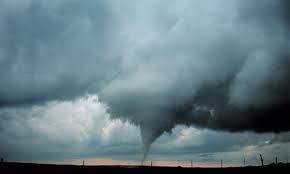
Not all mesocyclones lead to tornadoes, but tornadoes can’t form without them. In order for tornadoes to occur and begin touching down on the ground, the clouds associated with a thunderstorm have to start spinning and form a mesocyclone.

meso "the middle" cyclone
meso “the middle” cyclone

This intermediary stage in the formation of tornadoes isn’t typically visible from the ground since it occurs in the clouds, themselves.

Mid-Latitude Cyclones

Okay so this area is a bit tricky, I will give it my best shot. The second part of this will be covering Bomb Cyclones, which have been in the news lately.

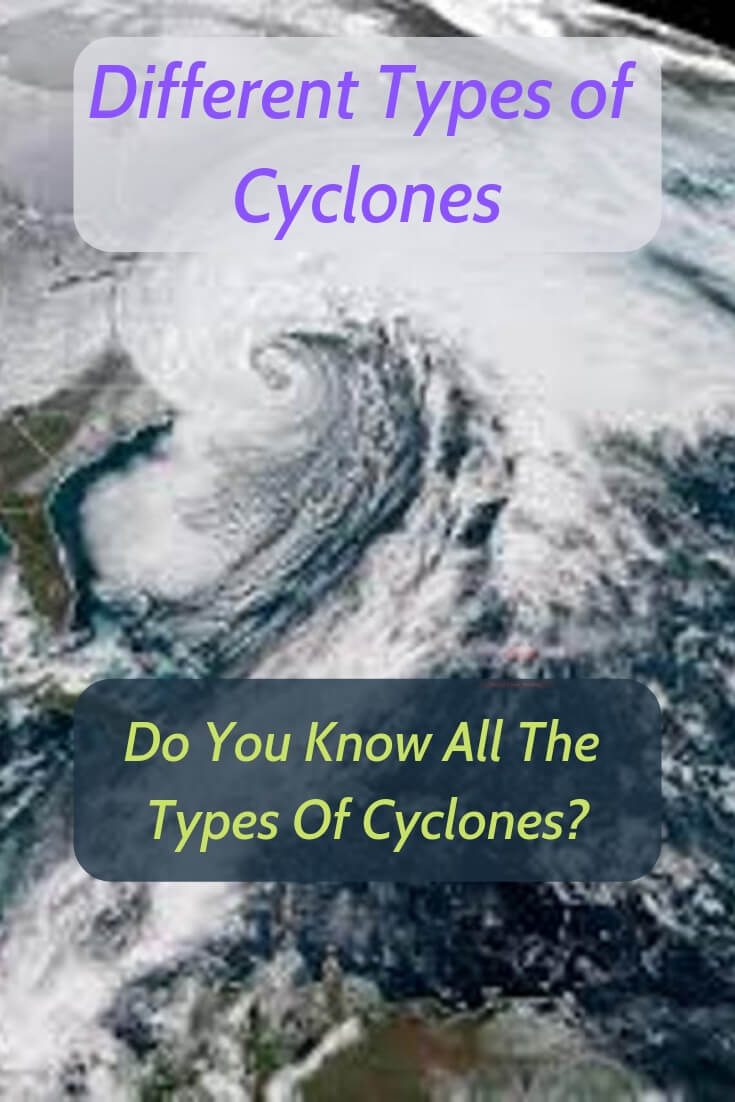
The Midwestern area of the United States was ravaged by a record-setting bomb cyclone on Wednesday, March 13, 2019.

Further discussion is needed to understand this very large, intense weather situation.
How A Mid-Latitude Cyclone Is Formed

Mid-latitude cyclones form only occasionally, but usually the extreme temperance differences between what the Northern pole area of North America is producing versus what the Equator area of our hemisphere is producing.

As the temperature differences start to collide, these massive cyclones may form due to the dramatic uplifting of warm air over cold air. The more radically active this airlift is, the more clouds form and then you will have tremendous convection currents being built in. So this is definitely low-pressure system weather.

You can see in the picture below just how extraordinarily large these cloud formations become. As this happens there is a massive shift in the barometric pressure in the collision (convergence) area occurs.

Bomb Cyclone From Midwest March 2019

An intense mid-latitude cyclone may have a surface pressure as low as 970 millibars, compared to an average sea-level pressure of 1013 millibars.

In fact, the Pueblo, Colorado,  National Weather Service station recorded that the barometric pressure dropped to only 968 millibars of pressure.

This is very low and winds were recorded in Colorado Springs, Colorado at 97 mph.

In the normal formation and life of these huge weather events, each individual frontal cyclone will exist for about 3 to 10 days. Usually these travel in a west to east direction.

The Areas Where Mid-Latitude Cyclones Form

There are three major areas that very often present these specific conditions to form actual mid-latitude cyclones. You will need a low-pressure system weather setup.

Where these are usually produced, can be either in the Gulf Of Mexico, off the East coast of the United States, or thirdly, the eastern side of the Rocky Mountains.

The March 13th event formed in the eastern side of the Rocky Mountains in Eastern-New Mexico and Colorado area.

These cyclones are usually cold-weather events, which can lead to extremely tricky and treacherous driving conditions for huge areas of landmass. This was widely reported from the bomb cyclone of March 2019.

Many times, the mid-latitude cyclones will cover an area as large as reaching 625 to 1,600 miles (1,000 to 2,500 km) in diameter.

They also can pack winds up to 75 mph as an example of how severe they will be. Wind speeds were recorded at over 90 mph in many different states in this recent event.

With the wind gust being measured at 70 mph in Denver, and 89 mph in Dallas, Texas.  This further proves how powerful the mid-latitude cyclones really are.

Many times these are larger wind events than they are wind and precipitation events. While heavy snows were recorded in areas, the major damages were from the cyclonic wind activity.

What are Bomb Cyclones?

These are also referred to as weather bombs, these cyclones actually are the same thing as what I just described up above.

They are mid-latitude cyclones. So as they are latitude dependent, usually a mid-latitude event as was described above as well.

So if you are looking for specifical information on what is a bomb cyclone, you can get the same information about it as you would searching for what is a mid-latitude cyclone?

Winter 93 East Coast Cyclone

So bomb cyclones form differently from tropical cyclones, but they are categorized in the same way on one to five numeric scales.

As with other major cyclones or hurricanes, bomb cyclones are now named as well.

Most people will never see a bomb cyclone since they are typically maritime, winter events. Very unlike what just happened in the midwest.

They can, however, still occur during other seasons and in continental settings, and when they do they bring heavy precipitation and often significant damage.

My Cyclone Summary

In summation you ask, “are all cyclones low-pressure system weather?”, the answer is definitely yes.  The pre-requisites for all cyclones and cyclone activity is an area of low pressure where air masses meet and rise.

Secondly, also, a huge difference between low pressure and high pressure will exist as well. These conditions must be present to have a cyclone.

Whatever type of cyclone depends on seasons, latitude, as well as locations, they all play a large part.

So whether it is a mid-latitude cyclone, a hurricane, a typhoon, or a tropical cyclone.

Read More Articles on General Weather Subjects-View Related Posts Below

How Weather Stations Help Gardeners
Weather Stations help gardeners quite a bit. Grow a better garden with the guidance of a personal weather station.
Tornado Alley Season Starts-So What About It?
Tornado alley season starts shortly. We want you to be aware of it. Where it is and the very large why this is important to you and your family’s safety.
George

Weather Enthusiast’s Journey

From an early age, I discovered the profound impact weather has on our lives.

A stormy day can disrupt your plans, while perfect weather feels like a precious gift meant to be savored to its fullest.

Through this site, I’m passionate about sharing my expertise on weather instruments and their practical applications for enhancing your daily life.

I’ll show you how a personal weather station can transform your home experience, giving you valuable insights about conditions on your specific property.

Explore my discoveries and gain the knowledge to truly understand the weather patterns in your area.

Welcome to a community where weather isn’t just small talk—it’s a fascinating science that connects us all.

Next Page »

Amazon Affiliate Associate

We are a participant in the Amazon Services LLC Associates Program, an affiliate advertising program designed to provide a means for us to earn fees by linking to Amazon.com and affiliated sites.
Most of my posts do contain some affiliate links. I like to share weather gathering instruments and stations that may help you with your weather interests. These links do provide a small compensation to me that helps in the daily operating costs of this site.

Accessibility Statement | Affiliate Disclosure | Cookies Policy| Disclaimer | Privacy Policy | Sitemap | Terms and Conditions | © 2026 - George Loves Weather

We are using cookies to give you the best experience on our website.

You can find out more about which cookies we are using or switch them off in .

George Loves Weather
Powered by  GDPR Cookie Compliance
Privacy Overview

This website uses cookies so that we can provide you with the best user experience possible. Cookie information is stored in your browser and performs functions such as recognizing you when you return to our website and helping our team to understand which sections of the website you find most interesting and useful. Our Privacy Policy.

Strictly Necessary Cookies

Strictly Necessary Cookie should be enabled at all times so that we can save your preferences for cookie settings.

3rd Party Cookies

This website uses Google Analytics to collect anonymous information such as the number of visitors to the site, and the most popular pages.

Keeping this cookie enabled helps us to improve our website.