George Loves Weather

Have a Better Life By Using Weather Instruments

  • Mounting
  • Reviews
    • AcuRite
    • Ambient
    • Davis Instruments
    • La Crosse
  • Kids
  • Learning
  • About
    • All About George
    • About George Loves Weather
    • I Own and Develop George Loves Weather-My Background
  • Contact Us

Cattle Heat Stress: Weather Patterns That Influence Cattle Reproduction

To a layman the question to ask is, "Is weather important to farming?"

Great question.

Cattle heat stress is a very important farming smarter subject that each farmer should seriously take a look at.

How do you manage your cattle's heat stress.

One way is to use modern weather meters to identify the heat stress your cattle are experiencing.

To a farmer he knows very well that weather needs to be analyzed and looked at daily and sometimes by the hour to be more productive in farming.

There is work to be done

When looking at a farm and its total operation, you need to ask yourself how does one make money with either a dairy farm or a beef cattle raising business.

The central part of both businesses is the sustaining and growing of your numbers of dairy cows or beef cows you own in your herd.

This is a basic principle and yet a massive undertaking by the farmer who owns the farm as a business.

To sustain the herd, you must feed and water it.

You must do everything you need to do to keep them healthy and growing.

For dairy cows, you need to keep them producing milk at least twice a day.

Cattle heat stress

Large Dairy Farming Herd

This Involves Farming Smarter

Let's look at how weather stations can boost your cow herd's success

Imagine having a secret weapon that helps you raise healthier, more productive cows.

That weapon is knowledge - specifically, the detailed weather information you can get from a modern weather station.

For farmers looking to improve their dairy operations, understanding local weather conditions can make a huge difference in how well their herds perform.

Weather isn't just small talk for farmers - it's a critical factor that directly impacts cow health, reproduction, and milk production.

ideal temperature for cows

Black Angus Beef Cattle

Involve a Good Weather Station/Meter

A good weather station can give you real-time data about temperature, humidity, wind speed, and other key environmental factors that affect your cows' well-being.

You might want to take a close look at any of the Kestrel Weather Meters I have set up for you on this page.

Farmers Can Make Smart Decisions Using Personal Weather Stations

By monitoring these conditions closely, farmers can make smart decisions that help their herds stay comfortable, healthy, and productive.

Think of a weather station like a high-tech health monitor for your entire farm.

It can help you predict and prevent problems before they start. Too hot?

You'll know exactly when to provide extra shade or cooling.

Humidity rising? You can take steps to keep your cows from getting stressed.

This isn't just about comfort - it's about protecting your investment and maximizing your farm's potential.

In the World of Dairy Farming, Small Advantages Can Lead to Big Results.

cow heat stress

Young Calf Grazing

A weather station gives you those advantages, helping you understand and manage the environmental conditions that impact your cow herd's performance.

From breeding success to milk production, the right weather information can be the difference between an average farm and an outstanding one.

So with keeping all this in mind, let's take a closer examination at the cow's health and the growing the cow herd through expanding the numbers present in your herd.

You work very hard on your farm. Some of the biggest ways to make money with the Cow Crop (your herd and it's size) is with milking cows (Milk Production) and Breeding your cows to have more offspring which can become more cows.

More assets! More Ka-ching!

This increase in your herd will increase your income from your work.

You will milk more cows, or you will have more cows to sell at the auction or more cattle to harvest for meat.

Cattle Heat Cycle

Cattle Heat Cycle & How Weather Affects

Understanding the Cow Reproductive Cycle: The Basics

Cows have a reproductive cycle that lasts about 21 days.

This cycle has four main phases that farmers need to understand:

  1. Proestrus (2-3 days): The cow's body gets ready for ovulation with rising estrogen levels
  2. Estrus or "heat" (12-18 hours): When the cow is ready to mate
  3. Metestrus (3-4 days): When ovulation happens
  4. Diestrus (10-14 days): The longest phase when the cow's body prepares for possible pregnancy

Knowing these phases helps farmers time breeding better.

However, weather can change how long these phases last and how easy they are to spot.

How Weather Affects Cow Fertility: Understanding the Basics

Weather has a big impact on whether cows get pregnant successfully.

Temperature, humidity, and seasonal changes all play important roles in cow reproduction.

Understanding the Cattle Heat Cycle

Understanding the Cattle Heat Cycle

Very hot or cold weather stresses cows and messes with their hormones.

This stress can make it harder for cows to get pregnant, delay when young cows reach puberty, and even cause pregnant cows to lose their embryos.

Weather also affects feed quality, which impacts cow nutrition and reproductive health.

By understanding how weather affects fertility, farmers can make better plans for breeding and herd management throughout the year.

How Temperature Affects Heat Signs

Temperature greatly affects how cows show they're in heat.

Hot temperatures especially impact how long and obvious these signs are.

When temperatures go above 70°F (21°C), you might notice:

  • Shorter heat periods
  • Less obvious signs of heat
  • Less mounting behavior
  • Reduced eating, which affects hormones

Very cold temperatures can also affect heat signs, but usually less than hot weather does.

In cold conditions, cows may move around less to save energy, making heat detection harder.

To deal with these challenges:

  • Provide shade and cooling systems in hot weather
  • Use heat detection tools like tail paint or electronic monitors
  • Schedule breeding during cooler parts of the day or year
  • Ensure proper nutrition to support body condition and hormones

MIDDLE OF THE ROAD CHOICE Kestrel 5000 Environmental Meter Non-LiNKMIDDLE OF THE ROAD CHOICE Kestrel 5000 Environmental Meter Non-LiNKMIDDLE OF THE ROAD CHOICE Kestrel 5000 Environmental Meter Non-LiNKBEST CHOICE Kestrel 5000AG Livestock Environmental Meter Non-LinkBEST CHOICE Kestrel 5000AG Livestock Environmental Meter Non-LinkBEST CHOICE Kestrel 5000AG Livestock Environmental Meter Non-LinkCHEAPEST Kestrel 3000 Pocket Weather Meter / Heat Stress MonitorCHEAPEST Kestrel 3000 Pocket Weather Meter / Heat Stress MonitorCHEAPEST Kestrel 3000 Pocket Weather Meter / Heat Stress Monitor


How Humidity Affects Breeding Success

Humidity is just as important as temperature when it comes to cow fertility.

High humidity makes heat stress worse, even at moderate temperatures. The Temperature-Humidity Index (THI) significantly affects breeding success.

When humidity is high, cows struggle to cool down through sweating. This can lead to:

  • Lower conception rates
  • More early embryo losses
  • Changed hormone levels affecting heat cycles
  • Decreased milk production, which indirectly affects fertility

To reduce high humidity effects:

  • Ensure good airflow in barns and holding areas
  • Provide clean, cool water at all times
  • Consider installing fans or misters in busy areas
  • Watch THI levels and adjust management practices accordingly

Remember, the combination of heat and humidity together is more harmful than either one alone.


Table of Contents
0.1
There is work to be done
1
This Involves Farming Smarter
2
Involve a Good Weather Station/Meter
2.1
Farmers Can Make Smart Decisions Using Personal Weather Stations
3
Understanding the Cow Reproductive Cycle: The Basics
4
How Weather Affects Cow Fertility: Understanding the Basics
5
How Temperature Affects Heat Signs
6
How Humidity Affects Breeding Success
7
How Seasons Affect Cow Fertility
8
Managing Fertility During Extreme Weather
9
Nutrition for Weather-Resistant Fertility
10
New Technology for Tracking Heat in Different Weather
11
Success Stories: Fertility Management in Different Climates
12
Looking Ahead: Climate Change and Cow Reproduction
13
Conclusion: Adapting Breeding Programs to Weather

How Seasons Affect Cow Fertility

Seasons have a strong impact on cow fertility, with breeding success varying throughout the year.

These changes happen because of daylight length, temperature shifts, and feed availability. Understanding these patterns helps optimize breeding programs.

In moderate climates, you might see:

  • Spring: Better fertility as days get longer and temperatures moderate
  • Summer: Potential drop in fertility due to heat stress, especially late summer
  • Fall: Often peak fertility as temperatures cool and feed quality improves
  • Winter: Possible reduced fertility due to cold stress and lower feed quality

These patterns vary depending on your location and management practices. To adapt to seasonal changes:

  • Adjust breeding schedules to match optimal fertility periods
  • Create season-specific feeding plans
  • Provide environmental modifications (shade, heating, cooling) as needed
  • Consider using assisted reproductive technologies during challenging seasons

By planning for these seasonal shifts, you can maintain more consistent breeding success year-round.

heat stress on cattle

Heat Stress On Cattle

Managing Fertility During Extreme Weather

Extreme weather events like heatwaves, cold snaps, or severe storms can seriously challenge cow fertility.

With proper planning, you can minimize negative impacts. Consider these strategies:

Heat Stress Management:

  • Provide plenty of shade and cool water
  • Install fans and sprinklers in holding areas
  • Feed during cooler parts of the day
  • Consider timed artificial insemination when heat detection is difficult

Cold Weather Strategies:

  • Ensure adequate shelter from wind and precipitation
  • Provide extra feed to meet increased energy needs
  • Keep water sources unfrozen and accessible
  • Use bedding to insulate cows from cold ground

General Extreme Weather Preparation:

  • Develop an emergency plan for power outages or severe weather
  • Stock essential supplies and medications
  • Train staff on weather-related protocols and animal welfare

By implementing these strategies, you can help your herd maintain reproductive performance even during challenging weather.

Prevention and preparation are key to managing fertility during extreme weather events.

effect of heat stress on milk production in dairy cows

Effect of Heat Stress on Milk Production In Dairy Cows

Nutrition for Weather-Resistant Fertility

Good nutrition is essential for cow fertility, especially during weather challenges.

A balanced diet helps cows maintain body condition, support hormone production, and handle environmental stress.

Here's how to optimize nutrition for weather-resistant fertility:

Energy Balance:

  • Adjust feed energy density during heat stress to make up for reduced eating
  • Increase energy during cold weather to meet higher maintenance needs

Protein Quality:

  • Ensure adequate protein levels to support milk production and reproduction
  • Consider bypass protein sources to improve efficiency

Mineral Supplementation:

  • Provide appropriate levels of minerals like phosphorus, copper, and selenium
  • Adjust mineral intake based on seasonal forage quality changes

Vitamin Support:

  • Supplement with vitamins A, D, and E for immune function and reproduction
  • Consider increased vitamin E during heat stress periods

Hydration Management:

  • Ensure constant access to clean, fresh water
  • Monitor water intake and quality, especially during extreme weather

By adjusting your feeding program for weather challenges, you can help your cows maintain optimal fertility year-round.

Consult with a nutritionist to develop a custom plan for your herd's specific needs.

New Technology for Tracking Heat in Different Weather

New technology has changed how farmers can monitor cow fertility, especially in challenging weather.

These innovations help detect heat more accurately, time breeding better, and improve overall reproductive performance. Consider these modern tools:

Activity Monitors:

  • Pedometers or collar sensors track increased movement during heat
  • Can detect subtle behavior changes often missed visually, especially in extreme weather

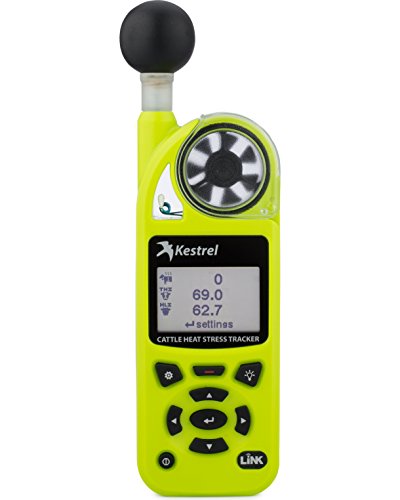
TOP CHOICE FOR FARMERS Kestrel 5400AG Cattle Heat Stress Tracker with Link and Vane MountTOP CHOICE FOR FARMERS Kestrel 5400AG Cattle Heat Stress Tracker with Link and Vane MountTOP CHOICE FOR FARMERS Kestrel 5400AG Cattle Heat Stress Tracker with Link and Vane MountMIDDLE OF THE ROAD CHOICE Kestrel 5000 Environmental Meter Non-LiNKMIDDLE OF THE ROAD CHOICE Kestrel 5000 Environmental Meter Non-LiNKMIDDLE OF THE ROAD CHOICE Kestrel 5000 Environmental Meter Non-LiNK


Rumination Sensors:

  • Monitor changes in chewing patterns, which can indicate heat
  • Particularly useful when heat stress suppresses typical behavior signs

Body Temperature Monitoring:

  • Vaginal temperature sensors detect slight temperature increases during heat
  • Helps distinguish between weather-related temperature increases and those from heat cycles

Automated Heat Detection Systems:

  • Combine multiple data points (activity, rumination, temperature) for more accurate prediction
  • Often include smartphone apps for real-time alerts and data analysis

Progesterone Testing:

  • On-farm milk progesterone tests confirm heat and optimal breeding times
  • Useful for verifying other detection methods, especially in variable weather

By using these technologies, you can detect heat accurately even when weather makes traditional observation difficult.

This leads to better timing of breeding and higher conception rates.

Success Stories: Fertility Management in Different Climates

Looking at real examples of successful fertility management across various climates provides valuable insights.

Here are three examples showing effective strategies for weather challenges:

Case 1: Dairy Farm in Hot, Humid Climate (Florida) Challenge: Extreme heat and humidity reducing heat expression and conception rates

Solution:

  • Installed intensive cooling system with fans and misters
  • Scheduled breeding for early morning and late evening
  • Used activity monitors for heat detection
  • Provided high-energy rations with added fat

Result: Improved conception rates by 15% during summer and reduced days open by an average of 20 days.

Case 2: Beef Cattle Ranch in Cold, Dry Climate (Montana) Challenge: Harsh winters affecting body condition and delaying return to heat

Solution:

  • Timed calving to align with best forage availability
  • Provided windbreaks and bedding in calving areas
  • Implemented body condition scoring and targeted nutrition
  • Used heat synchronization to tighten breeding window

Result: Achieved 95% pregnancy rate within a 60-day breeding season, despite challenging winter conditions.

Case 3: Mixed Dairy-Beef Operation in Temperate Climate (New Zealand) Challenge: Seasonal variations in pasture quality affecting fertility

Solution:

  • Adopted seasonal calving aligned with grass growth patterns
  • Used grazing management techniques to optimize pasture quality
  • Implemented comprehensive health program focusing on transition cows
  • Used tail painting and visual observation for heat detection

Result: Maintained consistent 78% 6-week pregnancy rate across seasons, maximizing pasture use and reproductive efficiency.

These examples highlight the importance of adapting management to your specific climate.

By combining appropriate technologies, nutrition management, and breeding techniques, you can achieve successful fertility outcomes in various weather conditions.

Looking Ahead: Climate Change and Cow Reproduction

Looking to the future, it's important to consider how climate change might affect cow reproduction.

Changing weather patterns and more frequent extreme events may create new challenges for fertility management:

Temperature Trends:

  • Rising average temperatures may extend periods of heat stress
  • This could lead to longer periods of reduced fertility and increased embryo loss

Rainfall Changes:

  • Changed rainfall patterns may affect feed and water availability
  • Droughts or floods could impact pasture quality, indirectly affecting fertility

Extreme Weather Events:

  • More frequent storms, heatwaves, or cold snaps may disrupt breeding schedules
  • This might require more flexible management strategies

Disease and Pest Pressures:

  • Changing climates may shift disease and pest distribution affecting reproductive health
  • New challenges may emerge, requiring updated health protocols

To prepare for these potential changes:

  • Stay informed about climate projections for your region
  • Invest in infrastructure that can withstand extreme weather
  • Explore heat-tolerant breeds or crossbreeding
  • Develop backup plans for feed and water shortages
  • Stay connected with researchers and extension services for latest practices

By anticipating these changes and adapting your management strategies, you can help ensure continued reproductive success despite climate change.

heat stress in cattle

Heat Stress In Cattle

Conclusion: Adapting Breeding Programs to Weather

Weather significantly impacts cow fertility, affecting everything from heat expression to conception rates.

By understanding these impacts and implementing adaptive strategies, you can optimize your herd's reproductive performance regardless of climate challenges.

Key takeaways include:

  • Recognize weather-related stress signs in your cows
  • Implement appropriate environmental changes (shade, cooling systems, windbreaks)
  • Adjust feeding programs to support fertility in varying weather
  • Use technology for more accurate heat detection and breeding timing
  • Consider seasonal breeding strategies that align with your local climate
  • Stay informed about climate trends and prepare for future changes

Successful fertility management during weather challenges requires a complete approach.

By combining good nutrition, appropriate housing, strategic breeding schedules, and advanced monitoring, you can help your cows maintain optimal reproductive performance year-round.

Consider scheduling a consultation with a reproductive specialist or attending a workshop on climate-adaptive breeding strategies.

By staying informed and proactive, you can ensure your operation remains productive and profitable, no matter what weather challenges arise.

George

Weather Enthusiast’s Journey

From an early age, I discovered the profound impact weather has on our lives.

A stormy day can disrupt your plans, while perfect weather feels like a precious gift meant to be savored to its fullest.

Through this site, I’m passionate about sharing my expertise on weather instruments and their practical applications for enhancing your daily life.

I’ll show you how a personal weather station can transform your home experience, giving you valuable insights about conditions on your specific property.

Explore my discoveries and gain the knowledge to truly understand the weather patterns in your area.

Welcome to a community where weather isn’t just small talk—it’s a fascinating science that connects us all.

Weather Stations For Farmers-You Can Use the Davis Instruments 6162

Weather Stations For Farmers

Use Davis Instruments Weather Stations For Farmers

Farmers today use many different technological developments to their advantage.

You can use weather stations for farmers by Davis Instruments to help you on your farm.

Advantages may be had, by using weather station instrument data gathering tools.

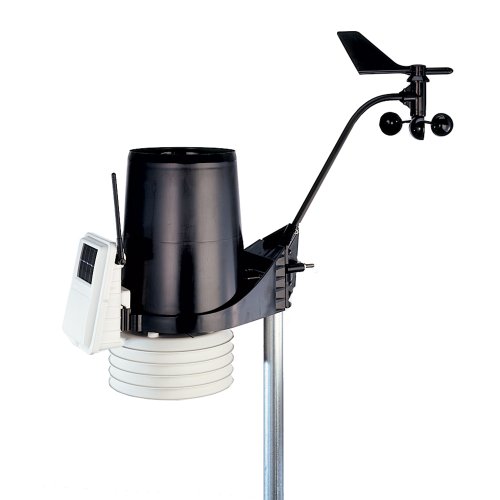
I have decided to talk to you about the Davis Instruments 6162 Vantage Pro2 Plus weather station.

Why the Davis Instruments 6162 Vantage Pro2 Plus You Ask?

This is a very good question from a farmer to me. Let’s dig in and I will share my points to be made to you.

Davis Instruments 6162 Wireless Vantage Pro2 Plus

With the 6162 you have access to a near-professional level weather readings. Areas a farmer finds himself using weather information would include the following measurements.

These readings can be supplied by agricultural weather stations, made by Davis Instruments.

  • Air temperature
  • Rain or snow precipitation amounts
  • The weather forecast
  • The wind speed
  • The wind direction
  • Soil moisture content

So weather stations can help farmers with the tough job they do all year long. A weather station for farmers by Davis Instruments is their top line of Vantage Pro2 weather stations.

These stations help the most by providing rapidly updated weather readings from various weather instruments.

In looking at these measurements, what the farmer will be looking at the most are ways to increase his crop yield and then also ways to prevent any losses of any crops or animals.

I have discussed in detail the ways that farmers specifically use weather stations. I crafted the post titled How Weather Stations Help Farmers which may be read by clicking on this link farmer’s weather stations.

As you can see, once you have caught yourself up to what the farmer needs to do, you may then understand why this weather station, the Davis Instruments 6162 Vantage Pro2 Plus will work wonderfully for you as a farmer.


The 6162 Reviewed As One Of The Top Weather Stations For Farmers

Here is a list of the main features the 6162 will give you in return if you decide to purchase its use.

  • Accurate weather data updates every 2.5 seconds
  • Provides you with a 12-hour forecast with icons and ticker-tape feature 24-48 hour weather forecasting at the bottom of the console
  • provides the time of sunset and also the sunrise time and date of highs/lows and time and date of a graphed data point
  • 3 times greater transmission distance than the competition. Improved transmission through multiple walls and greater immunity from RF interference
  • A five-position trend arrow shows whether barometric pressure is rising, falling, or steady
  • The normal console area shows outside temperature, humidity, and barometric pressure at all times
  • The Umbrella icon appears when it is raining. View last 24 storm totals with start and end dates.view daily, monthly, and yearly rainfall totals
  • It has a status indicator that lets you know all data packets are being received
  • ticker-tape messaging can display up to 100 messages
  • It graphs the last 24 hours of readings. Over 80 graphs are available
  • more than 70 alarms are available to be set up
  • the compass rose shows 16 points shows current and dominant wind direction

You Are Buying A Davis Instruments Weather Station Via Amazon

AMAZON A-Z Guarantee
AMAZON A-Z Guarantee, Click On Image To Read

When you purchase from Amazon you will be getting Amazon’s Satisfaction Guarantee. All of their features, that millions of satisfied customers enjoy daily can be yours.

I have provided an image of the page from the Amazon.com site. Just click on the Image for a Much Larger View so that you may read the Amazon A-Z Guarantee.

Where the Price Range Is Generally

Over a period of time, the price range for the Vantage Pro2 has been usually over $900.00 price point to the current $1,160.00 on Davis Instruments own site.

So as you can see by buying through Amazon you can experience savings of up 22%.

Typically you can expect the saving range to vary a bit, no prices are guaranteed, as they change sometimes almost daily.

But one stable thing you do know is that when you purchase from Amazon you usually will save money, and you might get Prime free shipping as well to come with your purchase.

So what do you have to lose, by using Amazon as your buying source?

Who Is This Weather Station For

This weather station is built for serious weather people. Whether you are a serious weather fan, or you are a farmer, a horticulturist, or owner of a lawn care business, you will find the professional quality assurance built into the Davis Instruments products a large plus for your performance.

Use all the advantages of a good farmers’ weather forecast. It can give you great up to minutely detailed readings to make your decisions easier.Farming With Modern Computers

You will find the decisions are easier to make when you are sure of certain weather factors from hour to hour. The ability to set up alerts for any number of sensor readings will help you tremendously.

Let’s say, a quick example might be that you need to know when the sun comes up and when the sun goes down today. Next, you need to know if the sun is going to shine, and when the max temperatures are happening and then you are able to enter a field when it is the driest for the day.

You need to cut and condition a crop of alfalfa let’s say. You can use the instruments to help you figure out your work performance for the day. The many sensors and the extra-long reception transmission help with where you are able to place a sensor and still be able to get an accurate reading that you can count on.

This is a top-level weather station and gives you much flexibility along with accurate readings. The history may be stored, so that you can use the data to study months, weeks, and certain time periods throughout the year.

You Can Add Additional Weather Sensors Too

You may attach additional sensors to this weather station. You can use your detailed knowledge of weather affecting agriculture, and you can see added features you can take advantage of.

Please use this list to help you out with the possibilities.

  • Can retransmit to additional consoles up to 1000 feet
  • Solar radiation when an extra sensor is installed it shows the highs for the day, month and year as well temperature/humidity/sun/wind index, set alarms for high readings
  • When an optional UV Sensor is installed, view the current UV Index. UV index for the day. The daily, monthly, and yearly highs. Or you can change the scale to UV, and then set an alarm to warn of high UV dose/index.
  • the additional sensor will give you evapotranspiration rates
  • UV Index, leaf wetness, wind chill, dew point, and two different heat indices

Value for money:

Davis Instruments 6162 Vantage Pro2 Plus Wireless Weather Station with UV Sensor, Solar Radiation SensorDavis Instruments 6162 Vantage Pro2 Plus Wireless Weather Station with UV SensorDavis Instruments 6162 Vantage Pro2 Plus Wireless Weather Station with UV Sensor, Solar Radiation SensorI believe that as a farmer you are comfortable with the idea of spending money to help your farm and its effective production of food crops and animal harvesting or milking.

So you understand you will need to invest in your business operation to keep your work at top efficiency.

I found this great article for you to read if you are considering investing in your own weather station for your farm. The article is titled, 6 tips to get started with on-farm weather stations.

This weather station will be able to handle all of the demands of running a farm better. You will be very pleased with a tool that you deserve to own and use in all of your chores in running your farm.

So if you are looking to buy this professional-level Davis Instruments weather station, you may click here to check out the current price for owning a Davis Instruments 6162 Vantage Pro2 Plus weather station.

My Top Suggested Accessory Item

6462 AeroCone w/Bird Spikes and Debris Screen With Davis Logo6462 AeroCone w/Bird Spikes and Debris Screen With Davis Logo6462 AeroCone w/Bird Spikes and Debris Screen With Davis LogoIn researching and studying questions and answers about this model weather station, and other Davis instruments stations, I came across the perfect additional purchase item to add to your weather station.
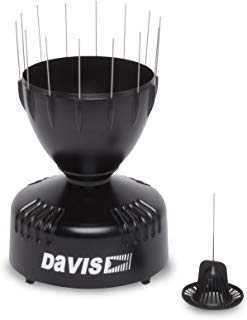
It is the 6462 AeroCone w/Bird Spikes and Debris Screen

This rain collector can reduce wind-induced errors. It is designed to produce a more aerodynamic path for the area around the rain collector.

This design will also improve the rain collecting data for you. Especially in high wind situations.

It causes the rain to be able to settle into the collector cup instead of being blown over the cup, not being collected for measurement.

It is also designed to reduce dramatically inside the cup, the splash-out rate of the rain.

The new debris screen locks into place, ensuring that it remains in place during high winds and heavy rainfall events.The AeroCone comes standard with 2017 and later Vantage Pro2 stations (not compatible with Vantage Vue).

It can also be used as an extra sensor, which you can add to your weather sensory collection instruments.

Read More About Davis Instruments Weather Stations-View Related Posts Below
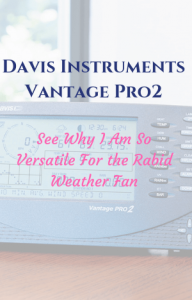
Davis Instruments Vantage Pro2 Plus Wireless Weather Station-a ReviewDavis Instruments Vantage Pro2 Plus Wireless Weather Station is reviewed in great detail.This is a personal weather station that will please the more sophisticated weather fans.The Davis weather instruments supplied with this are very accurate instruments, producing the best results for you. Davis Instruments 6250 Vantage Vue Wireless Weather Station ReviewThe Davis Instruments 6250 Vantage Vue is a professional-level personal weather station.It is reviewed here in great detail. And as a big fan of climatology and meteorology, I am excited to be doing a review. This is a highly respected weather station. The Davis Instruments 6250 Vantage Vue offers some of the best equipment options for the outside.

George

Weather Enthusiast’s Journey

From an early age, I discovered the profound impact weather has on our lives.

A stormy day can disrupt your plans, while perfect weather feels like a precious gift meant to be savored to its fullest.

Through this site, I’m passionate about sharing my expertise on weather instruments and their practical applications for enhancing your daily life.

I’ll show you how a personal weather station can transform your home experience, giving you valuable insights about conditions on your specific property.

Explore my discoveries and gain the knowledge to truly understand the weather patterns in your area.

Welcome to a community where weather isn’t just small talk—it’s a fascinating science that connects us all.

Heat Stress Dairy Cows & How to Plan Well for It

Heat Stress Dairy Cows & How to Plan Well for It

Heat Stress In Your Cattle Herd

Whether your cattle are just for your family or part of a larger business, you want to do everything possible to ensure their health and comfort.

Doing so will provide higher quality milk, greater quantities, and overall better experiences with your cows. However, any heat stress dairy cows experience can put a real damper on your plans and your farm’s profitability. It is essential that you learn how to deal with it early on!

What Heat Stress In Cattle Feels Like

Just as the heat of summer can feel oppressive to humans, cows, and other animals can experience side effects from the changing seasons. While wintertime has problems of its own, the heat stress dairy cows experience during the summer is a concerning event that should not be taken lightly.

This condition occurs when the animal is no longer able to cool its body on its own. Four separate factors contribute to the comfort of your animals, including the temperature of the air.

It is important to recognize that three additional factors are involved, so even if the temperatures are moderate, your cattle could still be at risk for heat stress.

Heat Stress Management Tools Can Be Used

Now If you are in tune with your cattle herd, you are very aware of the fact that you want nothing to do with having any heat stress problems with any of your cows. So how do you manage these conditions?

The best way to do that today is to use some scientific handheld weather meter tools that will through sensors you have set up, help you to know weather conditions that aren’t good for your cattle.

A great example of one of these tools would be my suggestion of purchasing a Kestrel Data Logger to Monitor Heat Stress in Your Cows.

This is a weather meter that is called the Kestrel Drop. This unit is highly successful with monitoring cattle herds properly for you. The alerts you can set up alert you to temperature changes, humidity changes and you also will know what little air movement there is in the area of your sensor locations.

To continue on with all of the signs that you need to be aware of to do your best with the cattle heat stress situation with your cows.

If the Humidity Is Bad

The second influencing factor is humidity. As it increases, so do the risk factors for your cows. If you notice that your cows are panting, you are seeing signs of heat stress already. To help alleviate this discomfort, take advantage of the third factor: air movement.

If the animals are stuck inside a barn, the still air can contribute to their ill reactions to heat. Lastly, solar radiation due to poor sheltering options during the day can exacerbate their symptoms and health.

The heat stress dairy cows experience can result in lower milk production. Some animals make a gallon less per day when experiencing prolonged heat stress. This loss in production could be very bad, if not crippling to most dairy farmers.

The lengthening of lactations also contributes to decreasing infertility. This isn’t very appealing either, since you will be wanting to breed the cow to keep the calving program growing for your farm. These factors can wreak havoc on your plans!

How Very Important Managing the Heat Is

You must manage the heat in order to protect your cattle from these troubling problems.  To start with you need to increase higher quality forages during heat stress events.

These are more digestible, which can help animals already experiencing greater stress. however, you need to make sure that you still supply a sufficient amount of fiber fermentation for optimal health.

You will need to learn more about how your breed responds best to the local climate changes and employ those ratios. Holsteins respond differently than Jerseys, and Guernsey’s are different again.

Water Plays a Vital Part in Good Management

Always make sure that your animals have sufficient water. The water has a dual purpose. First, it helps to prevent dehydration; secondly, it acts as an internal cooling agent.

Make sure that each head has at least 25 gallons per day. You should provide water immediately after milking to improve production and health.

You can also use water sprinklers and industrial fans to help keep the animals cool down. As the water evaporates from their skin, it will help to cool the external temperature and provide them some relief from the blistering heat.

Since cows cannot sweat, this process helps to simulate the act for them.
In conjunction with other relief efforts, you should be able to keep your cattle healthy and happy during the stressful months of summer.

Cramped Quarters Don’t Help Anyone

Don’t forget about providing enough room for your cattle to move freely. Your pens should have enough room that the animals can move and that gentle breezes will waft between them.

Provide a barn or other shelter that the animals can enter when the heat of the sun bearing down becomes too great. Again, make sure that enough room exists for every animal to comfortably fit.

Another way to reduce the stress associated with the summer is to care for the animals early in the morning. When you have to move, dehorn and vaccinate your animals, make your plans before the sun.

By tending to the care and management needs of your cattle when the weather is the coolest, you will reduce the amount of stress they experience during these essential activities.

No matter what the size of your herd, taking good care of your dairy cows will improve the quality and quantity of milk that your animals produce each day.

By keeping these suggestions in mind you should be able to stave off the worst of the heat and keep your animals cool!

George

Weather Enthusiast’s Journey

From an early age, I discovered the profound impact weather has on our lives.

A stormy day can disrupt your plans, while perfect weather feels like a precious gift meant to be savored to its fullest.

Through this site, I’m passionate about sharing my expertise on weather instruments and their practical applications for enhancing your daily life.

I’ll show you how a personal weather station can transform your home experience, giving you valuable insights about conditions on your specific property.

Explore my discoveries and gain the knowledge to truly understand the weather patterns in your area.

Welcome to a community where weather isn’t just small talk—it’s a fascinating science that connects us all.

Ways to Go About Dairy Cattle Stress Management

How The Summer Weather Affects Dairy Cattle

Ways to Go About Dairy Cattle Stress ManagementCurrent climate conditions do affect animals as well as people. As a dairy farmer, it is very important for you to have a plan for your dairy cattle stress management.

How and when you have a plan, the sooner you can address the symptoms and as well the sooner your cattle can get comfortable and get back to producing milk properly.

Livestock heat stress can cause serious health issues in your valuable livestock as well as reduced dairy and herd productivity.

Dairy Cattle Stress Management Suggestions

To make sure you are doing your best, offer them fresh water at all times and make sure they have extra during the summer when their body fluids are leaving them quicker. Using a stress management tool such as a Kestrel Data Logger can help you in knowing when you have condition changes that will be a problem for you.

Say, for example, the water’s temperature throughout the day has increased in tandem with the outside temperatures and is too warm for the cow’s body. This will affect the cow’s milk production, so you don’t want that happening.

An alert setup on the Kestrel data logger will alert you to these changes.

How About a Sprinkler System

Setting up sprinkler systems over the feeding areas can also help reduce heat stress in your cows. If you have a large operation, you will need to address this issue and install them so that the entire population of cattle can receive relief from the sprinklers.

Watch how the cattle react to high temperatures. The alerts from the data logger will alert you to climbing danger situations.

Install Barn Fans

You may want to install barn fans so that air will move consistently through the open sides of the building. Some barns are made of concrete so opening the lower level of the barn is not possible. In these cases add the fans above the cattle and this will help resolve the matter.

Special Sheet Metal Structure Suggestions

For barns with sheet metal walls, remove the sides of the metal and install netting in place of the metal. This netting can be lifted to improve airflow during the summer and you can easily lower it during the winter.

Another option is to add or increase the ventilation in the roof. When cattle are outside, be sure that they have ample places to shade themselves.

Here’s Some Information on the Kestrel Drop

Use a Kestrel Data Logger to Monitor Heat Stress in Your Cows

Kestrel DROP D2AG Livestock Heat Stress Monitor
Kestrel DROP D2AG Livestock Heat Stress Monitor “

Kestrel manufactures a small monitor device (the Kestrel Drop) which works very well for giving you many different weather-related readings that are very useful in managing the heat stress in your cows.

This monitor is a data logger that measures traditional weather parameters of ambient temperature, relative humidity, heat stress index, dew point temperature, as well as Temperature-Humidity Index (THI), a livestock-specific heat stress calculation. 

The Kestrel DROP allows users to customize logging rates, connections, and alerts. 

Check Out This Amazing Feature

Another great feature is that it is dust and waterproof which is absolutely necessary to be able to continually work in harsh farming conditions.

You will be informed of heat conditions in the barn, during transport, or anywhere livestock is housed. This is also well used in heat stress feedlot cattle management.

Large beef cattle farms today will be using large fenced-in acreage to just feed the cattle each day.

The problem today is that the cattle are kept for days during the nice weather season in these feedlot conditions, so without a heat stress monitor, you wouldn’t know when to move the cattle to a cooler spot.

Managing Heat Stress Levels in Cows with Diet

Kestrel 5400AG Cattle Heat Stress Tracker with LiNK + Vane MountKestrel 5400AG Cattle Heat Stress TrackerKestrel 5400AG Cattle Heat Stress Tracker with LiNK + Vane MountOther methods for increasing the nutrients the cows get to improve their condition include feeding them more grain, fats, and high-quality forage.

Do not forget that when they perspire and pant they lose a lot of water. While drinking water helps replenish moisture, it cannot replace essential minerals.

These can be dealt with by increasing potassium levels in the dry food. You will want to increase sodium and magnesium levels slightly.

Cows may experience a decline in rumination when their forage is of high quality. As long as you add buffers, this should correct the problem.

To an agricultural person, this is what is meant by buffers. Buffers are compounds which in aqueous(a water) solution help resist changes in rumen pH when high grain, low forage

proper buffers will maintain pH balance and better, more consistent milk production.

The latest developments are focusing on making use of genetics to breed cows that are more resistant to heat.

Already some cattle are more capable of experiencing less heat stress. Genetic studies could make breeding the cows with better tolerance with other cows more common, resulting in animals that are naturally resistant to heat stress.

Weather Readings Affect Feeding Rates

When the weather is hot and humid, always increase the number of feedings. Try feeding them early in the morning or later on at night so that they can eat when temperatures are likely to be more comfortable and will lead to less feed heating which causes spoilage. This also keeps flies to a minimum.

Keep observing the cows as needed to adjust feedings and make any changes to the barn to facilitate cooling. For specialized help, consult with your feed consultant but following the above tips should help your dairy cattle stress management.

As you can see the heat stress in cows can be made a controllable situation using the proper plan. The plan would include dietary planning and heat management plans for watching and changing where your cattle are currently residing.

If it is in a barn situation have one plan. If it is a heat stress feedlot cattle situation have a plan for that.

Move them to a shaded pasture area possible, but don’t just keep them in an open feedlot. The heat stress in the cow feedlot must be maintained, to ensure normal steady milk production from your cows.

So use the tools that are available to help you out. Continue your farming activities but still be alerted to the changes that are happening from minute to minute and hour to hour.

George

Weather Enthusiast’s Journey

From an early age, I discovered the profound impact weather has on our lives.

A stormy day can disrupt your plans, while perfect weather feels like a precious gift meant to be savored to its fullest.

Through this site, I’m passionate about sharing my expertise on weather instruments and their practical applications for enhancing your daily life.

I’ll show you how a personal weather station can transform your home experience, giving you valuable insights about conditions on your specific property.

Explore my discoveries and gain the knowledge to truly understand the weather patterns in your area.

Welcome to a community where weather isn’t just small talk—it’s a fascinating science that connects us all.

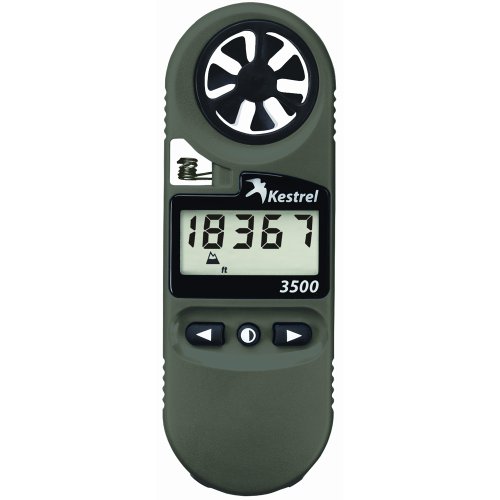
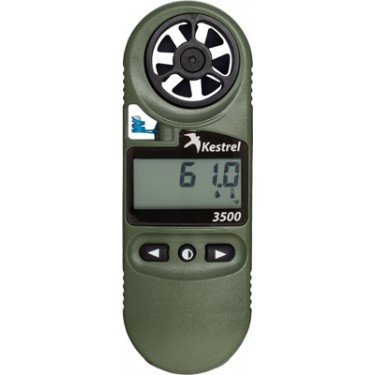
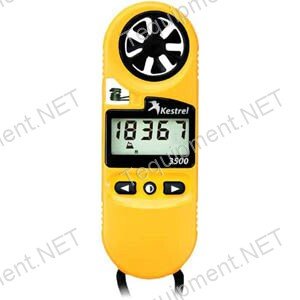
Kestrel 3500 Pocket Weather Meter/Digital Psychrometer

Kestrel 3500 Pocket Weather Meter

Review of the Kestrel 3500 Pocket Weather Meter

The workload for the Kestrel 3500 pocket weather meter covers much territory. Whether you are a scientist on an exploratory trip, or a policeman out doing your daily job, you will find this weather tool to be of major benefit to you.

Instruments Of the Kestrel 3500 Pocket Weather Meter

  • Thermometer
  • Anemometer
  • Rain Gauge
  • Barometer
  • Relative Humidity
  • Software

How the Measurements are calculated

1.  Wind Speed-This will be the average over the previous three seconds. The reading will be accurate for the airflow either through the front or rear of the unit.

2. Maximum Wind Gust-This reading will be the average of the last three wind speeds registered since the unit was turned on.

3. Temperature-This is the reading from the thermistor, which is located at the end of the coiled leads (in the open cavity) below where the impeller is located.

In order to get the quickest response, either wave the unit back and forth lightly or face it in the wind. This will get you a quick reading.

You may also get water and snow temperatures because the unit will allow you (it is waterproof) to submerge it into either the water or the snow.

4. Wind Chill-As defined by the US National weather service, is the combination of temperature coupled with wind velocity that will get you a feels like Wind Chill reading. This is calculated by the unit as the same temperature if either the temperature is 45 degrees or above, and if the wind is below 3 mph. Either Way

Kestrel 3500 Night Vision Handheld Anemometer - Kestrel 3500NVKestrel 3500 Night Vision Handheld Anemometer – Kestrel 3500NV

5. Relative Humidity- this is defined by the national weather service and meteorologists as “the amount of moisture in the air compared to the amount of moisture the air can hold for the given temperature, represented as a percent”.

This reading should be taken in the shade. The response time will depend on how quickly you are getting the temperature reading.

6. Heat Stress- the combo of higher temperature and the present humidity.
– a combination of temperature and humidity. Anything below 75 degrees will just be the temperature that is currently present.

7. Dew Point- in understanding this always remember this information: If the temperature and dew-point are the same, dew will form. If this happens below freezing frost will form.

You can be assured that if the dew-point is very close to the temperature then know that it is humid out right now. This is calculated by mixing the relation of air temperature with the humidity measurement.

8. Wet Bulb Temperature- this is not a widely known reading. It is a mixture of temperature and humidity levels. It deals with the evaporation rate present currently.

Know this, if the wet-bulb temperature is very close to the air temperature, the air is humid.

Instrument sensors

This instrument will measure the following environmental conditions:

• wind speed

• heat stress index

• maximum wind gust

• dew point

• average wind speed

• wet bulb temperature

• temperature (air, water, snow)

• barometric pressure

• wind chill

• altitude

• relative humidity

Manufacturer/Support


Kestrel 3500 Pocket Weather Meter / Digital Psychrometer Altimeter AnemometerKestrel 3500 Pocket Weather Meter / Digital Psychrometer Altimeter Anemometer

Every Kestrel is designed and manufactured at NK’s (Nielsen-Kellerman) facility in Boothwyn, Pennsylvania Near Philadelphia, Pa.

The address for Nielsen-Kellerman is

21 Creek Circle, Boothwyn, PA 19061

Phone: (610) 447-1555

Fax: (610) 447-1577

Web: www.kestrelweather.com

Email: kestrel@nkhome.co

replacement parts such as the impellor are readily purchased by going here, Kestrel Replacement Impeller for/All Kestrel Models

Features

with Backlight


• clock

• 3-hour pressure trend

• data hold function

• backlight

• automatic power-down function

• waterproof and

Dimensions

The actual size of this tool is 4.8 x 1.9 x 1.1 in.

It weighs 3.6 oz.

How Powered

Use only new CR2032 coin cell batteries. Wipe the battery clean of any fingerprints and insert the positive (+) pole up, angling the battery downward and pressing it firmly into place. You can get up to 300 hours of use from one battery. These are not the easiest batteries to find around. Amazon does stock them HERE.

Pros

✅ Model 3500 NV has night vision

✅ Can be used by gun owners to help with wind deflection. Can improve accuracy when shooting from long range

✅ Fully waterproof and has passed mil-spec drop testing

✅ Cover offers good protection for the unit

✅ A small package but a powerful versatile weather meter.

Cons

❌ Does not have the Night Vision. Night Vision is only on the 3500 NV model

❌ Does not have logging data capabilities you have to cycle through all the different variables, one at a time

❌ Does not have the ability to set up temperature alerts

Consumer Ratings

Customers have openly offered that Kestrel offers very good phone support. It is quick, responsive, and accurate in getting your problem solved. They come highly recommended for all of their product lines. This model isn’t any different. It is currently looking at a 4.7-star rating on Amazon as an example.

That is really impressive in the sense that the 4.7-star review rating is out of a 5.0 for the perfect rating.

They are very accurate, and with the support that is offered purchasing a Kestrel 3500 would be very difficult to beat. Top of the line for a weather meter of the pocket variety. It does fit very well in a pocket too.

Price

Customers look at the cost as either an investment or an expense. In this case, it is an investment in your purchase. The quality is unmatched in the market. The support is top of the line and the service provided by the product is excellent as well.

It is built to last. When you compare the quality difference of the Kestrel compared to competitors the Kestrel faces. The quality difference far exceeds any price differences you may find in the market currently.

A market competitive price and better than built-in quality. A market advantage for them.

Kestrel 3500NV Weather Meter / Digital Psychrometer with NV BacklightKestrel 3500NV Weather Meter / Digital Psychrometer with NV BacklightKestrel 3500 Pocket Weather Meter / Digital Psychrometer - YellowKestrel 3500 Pocket Weather Meter / Digital Psychrometer – Yellow

George

Weather Enthusiast’s Journey

From an early age, I discovered the profound impact weather has on our lives.

A stormy day can disrupt your plans, while perfect weather feels like a precious gift meant to be savored to its fullest.

Through this site, I’m passionate about sharing my expertise on weather instruments and their practical applications for enhancing your daily life.

I’ll show you how a personal weather station can transform your home experience, giving you valuable insights about conditions on your specific property.

Explore my discoveries and gain the knowledge to truly understand the weather patterns in your area.

Welcome to a community where weather isn’t just small talk—it’s a fascinating science that connects us all.

What Weather Measurements Are Best For Gardeners

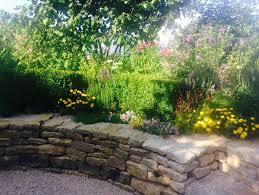
vegetable garden

Weather Stations Can Be Used For Better Gardens

When one thinks of a garden, they see a fresh, green-filled garden with many different types of vegetables, growing and flourishing.

You are looking at and savoring the great fresh vegetable taste, you will be experiencing. The expectation is to harvest some of the vegetables and eat them.

But the mystery is how to get to that point with your garden. It isn’t good luck that successful growers possess, it is know-how and work.

You can use the instrument metrics from your weather station to help you get there.

You can look forward to mouth-watering vegetables that you picked from your own garden. You will also be saving much money on your food budget.

How Do You Use Weather Measurements?

To determine how to best use weather readings, you probably should first determine which readings will be important to you. This will be important in helping you to produce a garden full of wonderful fresh produce ready to be consumed by you and your family.

So the best instrument readings for this will be, temperature readings, rainfall amounts, barometric pressure, wind direction & speed, as well as relative humidity. There are other readings that may be gathered and used from instruments such as moisture content, wind chill factor, and dew point.

The instruments used to gather these readings are a thermometer, anemometer, barometer, and pyranometer. A pyranometer is one of the instruments that aren’t ordinarily found on regular consumer-purchased weather stations.

It is usually only available on advanced scientific climate instrument stations. These advanced stations are exceedingly more expensive than the standard weather stations. The scientific stations are in the neighborhood of $4000-$6000 for the most part. Regular, really good weather stations are usually purchased in the $500-$1500 range.

What Is A Pyranometer?


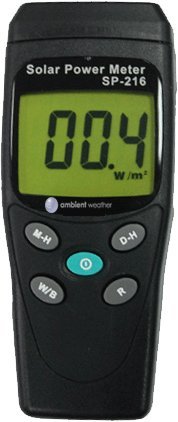
Ambient Weather TM-206 Solar Power Meter (Pyranometer)Ambient Weather TM-206 Solar Power Meter (Pyranometer)

A pyranometer is a form of an actinometer. I know, what is an actinometer?

What is a Pyranometer? Well, let’s get to the bare bones of what we are talking about here. We are talking about measuring the effects of the sun’s rays in an area.

This measurement is done by the sun’s rays, activating a chemical reaction in the measuring tool to see how effective the sun’s photons are actually working to help out plant growth in an area you are measuring.

Let’s look at an example. You have a small garden on the north side of your property. It really isn’t shaded at all, but you are concerned about how effective the sun will be in growing plants in a garden there. So you measure the sun using a pyranometer.

What you find out is that an area on the south side of your property actually rates as a better garden spot than the plot on the north side. It is close, but the pyranometer shows the south side plot is better for more effective plant growth.


Using The Readings From Your Personal Weather Station

Any advantage you can get as a gardener makes you a much happier gardener. Learning to effectively use scientific data to your advantage is your goal. Why do all the hard work, if you aren’t going to grow a great harvest of plentiful vegetables?

Let’s look at some things that are very important to maintain great plant growth. One of the first things is to maintain a good amount of water for growth but not too much water.

Too much moisture in the soil can result in stunted growth and can actually be bad enough that you can suffocate the root system of the plants and kill them.

What About The Rainfall?

Watching your rainfall by using your weather station can be a very invaluable source of this information. You will know when it rains and how much it rains. Knowing when the rain is falling can help you with preparing your plants for the rainfall.vegetable garden

You can make sure the soil around the roots is aerated well by loosening up the dirt enough around the roots to cause the water to be close to the roots but not pocketing enough to not allow the roots to get the necessary oxygen from the soil close to the roots. This will allow continued plant growth.

The Facts Show This

Scientific facts back up my statements. One of the most common reasons for the suppression of plant growth during very wet periods is the reduction of oxygen in the soil that is available to plant roots. Plant cells respire and need oxygen to survive and grow.

You will need to be concerned if the soil air drops to less than 12% oxygen. At that level roots will suffocate and die. Some things to watch for are, oxygen in the air in the soil forces out soil air. Also when there is less air available, the oxygen is rapidly used and becomes inadequate for good root growth.

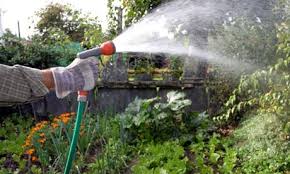
In very wet soils, organic matter begins to decompose and this process will also further deplete oxygen in the soil area. So as you can see, how much water, where is the water, and proper care of the soil in your garden, does make a large difference to a successful gardener.watering garden

So in the big picture having a station in your garden area will allow you to measure the rainfall in your garden. The station’s rain gauge will be very useful for this.

Watering Your Plants

Watering habits vary widely from one gardener to the next. As an example, one group tends to get very busy with their lives and they end up forgetting about the plants. The plants often wilt and often don’t get the water quickly enough to save them.

Whereas the second group of gardeners tends to pamper their plants. They then have a tendency to water their plants too much. They often come close to killing their plants by drowning them.

With either of these extremes, you can stress your plants to the point that you will end up weakening your plants. Our experience tells us these weakened plants are the first to fall prey to bugs and diseases. Most importantly they also will produce fewer blooms or vegetables.

Watering seems simple but actually takes a little finesse to do properly. Start by identifying your soil type and measuring the actual amount of water your plants receive.

“Vegetables need an inch of water per week delivered by either rainfall or irrigation. This converts roughly to six gallons per square yard per week,” said Robert Polomski, Clemson Extension Horticulturist at Clemson University, in a report out of Clemson’s Agriculture Dept recently.

It has been found that thoroughly soaking the soil with infrequent watering is better than shallow regular watering. Experience also shows that a deep soaking will encourage the plant roots to reach deep into the soil.

It is also known that shallow watering will keep roots close to the surface, and this will cause the plants to be more susceptible to drought.

Sunshine Anyone?

Very important when tending a garden is that you have the necessary sunshine to grow the plants you have planted. It is very important that are able to keep track of how much sun and just how much good weather you have been having so that you can make sure you are on schedule with bringing your garden along.

sunshineYou need to make sure your plants are maturing at the pace they need to be so that they will be producing the crop for consumption you have planned out. Always remember that your growing season is on a set schedule.
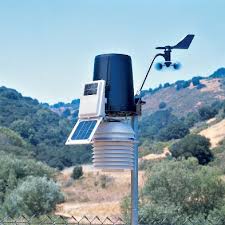
You do know approximately the length of your season and when you will need the crop harvested before the frost hits. So use the daily temperature data and keep track of the good elements days so that you know you are on schedule. Your station with the software provided will be able to give you this record.

Another thing a station will provide you with is the current wind speed, the top wind gusts in the last 12 hour period, and whether or not the wind speed is trending upward or downward. In looking at the anemometers provided the information you will be able to analyze where you are at with how moist or dry your garden is currently.

The longer the wind is blowing, the more dried out your garden will be. With this information, you will be better prepared to know when it is time to be watering your garden.

Remember, a garden that is too wet is prone to be killing off the plants, and a garden too dry will mean your vegetables will not be growing up to their potential.

Adding on or buying a newer, better-equipped station would be two ways to improve your gardening experience. Adding extra instruments and displays to your selection of tools would be a wise move.

With your added repertoire of tools, you will have more information to analyze, and then more timely work to be done, to maximize your vegetable’s growth.

In Summation

So looking at the much larger picture, when you are taking a view of the garden and using an instrument station, it is seen very easily, that the most important things you need to be concerned with are sunlight, rain, wind, and the growing season information.Weather Station

Weather stations do provide readings for all of these areas. You just need to use the information. Let the information work for you. Data logging can be a very helpful thing.

If your unit does have software, this will help you out tremendously. Applying your knowledge of the vegetables you are growing, the station’s daily readings, along using proper weeding, and watering techniques will help your garden flourish.

You can check up on more sophisticated element station collection units to find even more complicated methods to use for even better gardens. More instruments, more information, and much better yielding gardens.

Read More About Gardening & Farming With Weather Stations-View Related Posts Below

How Weather Stations Help Farmers
Farming depends heavily on weather. So as a farmer you need the best possible weather information. Learn how to get the best information.
How Weather Stations Help Gardeners
Weather Stations help gardeners quite a bit. Grow a better garden with the guidance of a personal weather station.
George

Weather Enthusiast’s Journey

From an early age, I discovered the profound impact weather has on our lives.

A stormy day can disrupt your plans, while perfect weather feels like a precious gift meant to be savored to its fullest.

Through this site, I’m passionate about sharing my expertise on weather instruments and their practical applications for enhancing your daily life.

I’ll show you how a personal weather station can transform your home experience, giving you valuable insights about conditions on your specific property.

Explore my discoveries and gain the knowledge to truly understand the weather patterns in your area.

Welcome to a community where weather isn’t just small talk—it’s a fascinating science that connects us all.

Next Page »

Amazon Affiliate Associate

We are a participant in the Amazon Services LLC Associates Program, an affiliate advertising program designed to provide a means for us to earn fees by linking to Amazon.com and affiliated sites.
Most of my posts do contain some affiliate links. I like to share weather gathering instruments and stations that may help you with your weather interests. These links do provide a small compensation to me that helps in the daily operating costs of this site.

Accessibility Statement | Affiliate Disclosure | Cookies Policy| Disclaimer | Privacy Policy | Sitemap | Terms and Conditions | © 2026 - George Loves Weather

We are using cookies to give you the best experience on our website.

You can find out more about which cookies we are using or switch them off in .

George Loves Weather
Powered by  GDPR Cookie Compliance
Privacy Overview

This website uses cookies so that we can provide you with the best user experience possible. Cookie information is stored in your browser and performs functions such as recognizing you when you return to our website and helping our team to understand which sections of the website you find most interesting and useful. Our Privacy Policy.

Strictly Necessary Cookies

Strictly Necessary Cookie should be enabled at all times so that we can save your preferences for cookie settings.

3rd Party Cookies

This website uses Google Analytics to collect anonymous information such as the number of visitors to the site, and the most popular pages.

Keeping this cookie enabled helps us to improve our website.