Farming with Weather
Farming today is a big risk, big rewards type of business. Farms are very expensive to run and high-yielding in profit in good crop years.
One key to being successful with your crop yield is to analyze everything from seed crop data to pesticide application, to soil conditions and our favorite subject, using a weather station to study what nature’s elements are doing daily.
Farming 40-50 years ago was much different than it is today. Agriculture used to be thousands of 100-500 acre farms spread throughout the United States.
This size of the farm cannot successfully exist today, simply because you could never create enough income from it to afford to keep it running.
The farms today that can make money for their owners are probably at least 1000 acres. Most are probably 3 to 10 times larger than this.
Crop Failure Causes
The biggest reason farms fail is usually weather-related crop failure. Sometimes this failure is not that crops aren’t produced, but that not enough of a yield was produced to overcome the high costs.
One way to increase crop yields is to apply every available modern-day data stream to help you understand the truth about what is happening.
This data stream would be of weather data coming from weather stations you may have set up on your farm property.
They would need to be set up by weather station installation on your farm. I have written a couple of suggested reads on weather station installation.
What’s Involved in Weather Station Mounting
Top Weather Station Mounting Ideas
Then you can apply a good sound decision to what is happening. Using a weather station (or a series of weather stations) could be very beneficial to a farm.
A very close to the perfect professional-level weather station is the Davis Instruments 6152 Vantage Pro2. You should take a look at it here.

Davis Instruments 6152 Vantage Pro2 Wireless Weather Station
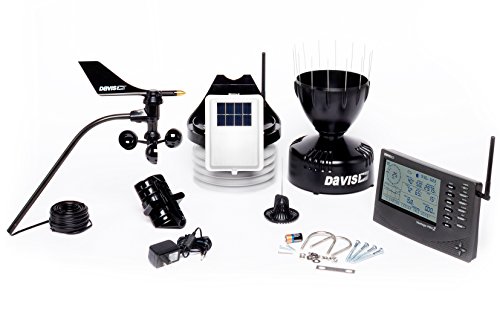
The Davis Instruments 6152 Vantage Pro2 is a professional-level wireless weather station.
If you are a farmer you will find this weather station ensemble has many top features that you would find necessary to help you gather weather information for farm operations.
This model features the following sensors.
- wind speed sensor
- wind direction sensor
- Rain Collector Type . . .Tipping bucket.
- a Temperature Sensor
- PN Junction Silicon Diode Relative Humidity Sensor
As a farmer you need to raise your crop production/yield and if you are raising animals you will want to be receiving, outside temperature readings, because they can alert you to temperatures that could cause animal stress levels. These stress levels could mean a drop in milk production as well as a poorer cut of beef from a beef cattle breed.
This Davis Instruments console can keep track of relative humidity readings which are used in many facets of farming.
It is also very important in the harvesting of hay and crop harvesting. In these harvesting methods you need to know when the fields are dry enough to bring the crop in for winter storage.
Reasons Discussed Why Farmers Use Weather Station Data
When looking at data supplied by a Davis Instruments weather station, not all data is the same. The uses of information are manyfold.
They are dependent upon the profession using and needing the weather information.
The information supplied by a station, that is most needed is temperature, wind speed, barometric pressure, rainfall measurements, and recorded rainfall amounts.
Also, the relative humidity is very important as is the upcoming weather forecast. Working with the forecast is by far the best way to manage your farm work.
Let’s now go over using weather station data. We will cover various categories that are all very important to different types of farmers due to different types of conditions for their farming.
Commercial Agriculture Crops
One very important thing to note is that with commercial agriculture crops, we are talking about huge tracks of land that are in production to grow millions and millions of bushels of crops.
Many of these crops are grown in the midwestern states. States such as Illinois, Iowa, Nebraska, Kansas, Oklahoma, Missouri, Minnesota, North Dakota, South Dakota, and Montana.
These states are huge in growing commercial agriculture crops such as corn, wheat, and soybeans. These crops are mainstays in the worldwide diets of 2019.
Thus their failure or even threat of a failure is tantamount to maintaining food supplies in the United States. This is in addition to the vast amount of food that is exported to other nations around the world.
With all of this in mind, many of these farmers are looking to incorporate the use of professional weather stations throughout their farms to monitor weather data changes so that all or some of the following weather readings could make a huge difference to them.
Many of these farmers today are using small handheld weather meters to collect weather data and send the results to their cell phones.
This is done while in the middle of a very large farm operation, maybe even in the middle of a field or a corral.
These signal warnings allow the farmers to quickly respond to these weather meter readings.
Yes, I want to take a look NOW! at ONE OF THESE HANDHELD WEATHER METERS
KESTREL 5500 POCKET WEATHER METER – TAN G_MRPX
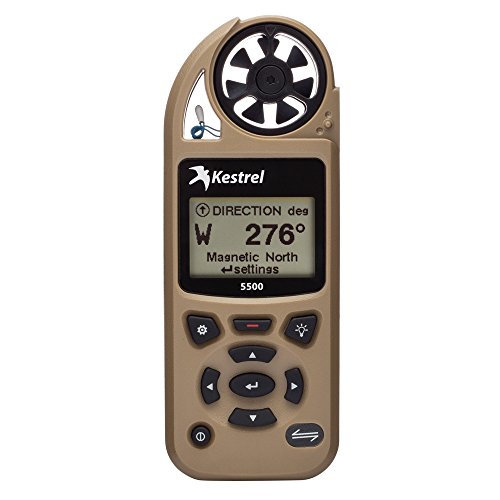
The Kestrel 5500 Environmental Meter is a complete handheld weather station.
Within the small inner workings, it is very powerful and can provide all of the following readings to you.
- Altitude (Barometric)
- Barometric Pressure
- Compass Direction
- Crosswind
- Density Altitude
- Dewpoint Temp
- Headwind / Tailwind
- Heat Stress Index
- Relative Humidity
- Station Pressure (Absolute Pressure)
- Temperature
- Wet Bulb Temperature (Psychrometric)
- Wind Chill
- Wind Speed/Air Speed
With these readings provided to you, you can control your production much better on your farm.
The Kestrel units are small and adaptable to your needs. They can be set up at a distant paddock of horses or beef cattle or dairy cows to monitor cattle heat stress. Or on the corner post of a fenced pasture.
They could also be set up in an area of your large ranch which is the first area that receives weather changes when they happen. Use the unit as a weather alert unit, and keep the unit in your barns and in your vehicles (pickups or cars, etc).
Temperature Data
In farming, most of the emphasis in this data area is looked at through the lens of just how devastating a frost could be to your crops.
A station will have a temperature change alert on it that you can set. This alert will serve the purpose of letting you know when the temperature is dipping down to near frost levels.
This then would allow you to respond by setting up anti-frost measures in your harvest areas to protect your crops. Some of these anti-frost methods could be covering, fog or smoke clouds, a light sprinkling of water, and the usage of wind machines.
Protect Plants Against Freezing
A. Covering
- This method reduces heat loss from the surface. This is often used by home gardeners and the growers of low-growing commercial crops that use smaller acreage lots.
- They use materials such as straw mulch, boxes, tar paper, plastic, etc. to reduce the heat loss from the surface. Often the costs of these materials prohibit this method.

- The storage, the time, and the labor needed to place the covers are the main drawbacks to this method for large areas of crops.
- Some materials are more effective in reducing radiative heat loss than others. Any cover is effective in reducing heat loss by convection. When covers are placed, particularly thin materials such as plastics, care must be taken to prevent contact with the plant to reduce heat loss by conduction.
- You need to remember the temperature of the exposed surface is usually lower than the air below it. Straw mulches should cover all plant parts as any protruding leaves are more susceptible to freeze damage.
- Covers should always be removed during the day, as the plants need to breathe, and the warmer day temperatures will cause condensation around the plants, and heavy dampness which will lead to an increased risk of plant diseases forming.
B. Using Fog or Smoke Clouds
- This method is well known for its active ability to reduce radiative heat loss from the ground. Often smoke from smudge pots is used to smoke out or fog the area with a warm protective air covering.
- Some people have used mist from fine water nozzles, and another favorite is to burn petroleum-based tires. These will also serve to keep the earth’s warmth from escaping thus lowering the risk of frost-bitten plants.
- One bad part of discussing the smudge pots and burning tires is that very often this goes broadly against local environmental laws for air pollution.
C. Sprinkling of Water
- A third method to discuss is sprinkling a low application of water in the air. This is done by using an irrigation system and sprinkling a light mist of water over all your crop.
- This has scientifically been proven to be effective in protecting lower-to-the-ground crops from frost. This is especially effective when vast temperature differences are present between the ground temperature and the temperature say 10-20 feet above the ground. Effectiveness varies in the range of 1 to 4 degrees C.

- Please note that this method must be started well before the onset of freezing temperatures and must be maintained for an extended period after the threat has subsided.
D. Wind Machines
- Another popular system used is the use of wind machines. This is most effective during freezes which occur on calm, clear nights. On those nights the air layer near the ground is colder than the air aloft.
- This is known as a temperature inversion. Wind machines or helicopters are sometimes used to bring the warmer air down to the crop level to replace the cold air layer at the surface.
- Equipment and operating costs are high for this system, but this can also be the one most effective method to use, but your budget must match up with the benefit you are producing.
Wind Speed & Direction
The first thing that comes to mind with wind direction is how very important it is to observe wind conditions(speed and direction) prior to spraying any crops with chemicals.
Spraying is a very expensive part of managing your crop’s overall health. Insects and pests must be sprayed for. This will increase the volume of the harvest by not losing yields due to any damage from blights, eating of crops, and either malformation of the fruit/yield or the physical appearance of the crop.
The marketability must be maintained. The integrity of the crop that you are selling must be top-grade. The top-grade quality will always bring the highest price for the crop.
A. Wind and Crop Damage
Wind speed is very important as well. If you have a wind storm or predicted strong wind gusts, you need to know. Strong winds often cause crops to break and lay down. Often they will not harvest properly if they are laying down (versus) standing up.
B. Drying Conditions
Knowing the drying conditions of the day or the next few days is very important to a farmer as well. Let’s say you have three hay fields, to cut, to condition, to bale, and to haul into the mow.
Maybe you will not even start the haying operation if you do not have enough time to get the bales into the barn before it rains for a couple of days.
Wet bales can easily become moldy. Moldy hay will not be eaten, nor can it be used in the feed grinding process.
This will then cause extra work to roll the bales over, to ensure the bale is dried out on all sides. If the farm needs to bring in the bales of hay or straw from the field, they will need to know if someone should be sent out to roll the bales over to let the bottoms dry out.
It is very important to only pick up and mow away only dry bales. Bales of straw or hay that are still damp can cause a great heat up(self-combustion may occur) in the mow, and many barn fires have happened in the past.
These fires often totally destroy the barns as well as the stored crops, the cattle, and farm equipment as well.
The Forecast
The upcoming elements forecast is what I would consider the second most important thing an instrument station can give me if I’m a farmer. As I mentioned in my article on gardening and weather stations, the same goes for farming.
A farmer is always at the mercy of the outside elements. He will be allowed x number of hours to bring in crops before it rains, as an example. Or he may have two hundred acres of grain to harvest yet, but in three days, it is going to start snowing. He must maximize his harvest time, to bring in as much of the grain crop as possible.
The weather forecast and present instrument elements data will allow him to figure out the best use of his daylight working hours. It will allow him the best use of the dark hours as well. So as you can see the weather information is needed by any farmer, that way he is not shooting blind.
Summation
The farmer’s respect for and knowledge of the weather is vital to his survival. If he misreads or fails to act properly in any climate situation he will pay dearly for that bad decision.
The farmer has many huge expenses today in his business. Equipment is very high in cost. Building maintenance is costly. Fertilizer is expensive as well. The cost of the best seeds (for top-yielding crops) is expensive as well.
Animal feed, gas for equipment, and the cost of labor are high as well. So with this in mind why would a farmer not be willing to invest in top-of-the-line weather stations, displays, and weather equipment?
The stations should also collect and store data as well. This is the age of highly educated analyzing farmers. So the use of computers, the analysis of data, and high-level planning are keys to successful farming.
So let a highly rated weather station do its thing for you.

 This is determined to be the days between the last overnight frost in the spring and the first killing frost in the fall. This is the period that plants will be able to grow and flourish.