George Loves Weather

Have a Better Life By Using Weather Instruments

  • Mounting
  • Reviews
    • AcuRite
    • Ambient
    • Davis Instruments
    • La Crosse
  • Kids
  • Learning
  • About
    • All About George
    • About George Loves Weather
    • I Own and Develop George Loves Weather-My Background
  • Contact Us

Check Your Local Weather-Some Suggestions From Us

We All Check the Weather

You will need to check your local weather forecast if you have any outdoor plans.

This would apply if you are in the process of planning a barbeque in your backyard, or maybe a long-awaited snowmobiling trip, then you know all of your plans may be affected by changes in your weather.

If so, you may be looking for ways to check your local weather forecast, as well as ways to stay updated on any changes that may occur.

So you may be asking yourself what situation do you feel you can help out with.

I am in a Hurry =>=>=> Please sign me up for weather alerts using STORMWATCH+


To Receive Weather Alerts for your exact current location You may sign up for Stormwatch+

List Of The Different Options To Check Your Local Weather

When it comes to checking your local weather forecast, you will find that you have a number of different options. Perhaps, the most common way that individuals check the weather is through their local news.
Ways To Check Your Local Weather
Check Your Local Weather

Many local news programs have detailed weather segments, which often include information on the current weather, as well as the extended weather forecast.

As nice as it is to see your local weather forecast when watching the news, you are usually only provided with weathercasts in the morning, midday, and at night.

On-Site Personal Weather Gathering Resources

Another great way to get results for finding your local weather is to use the results from your very own personal weather station.

We have written extensively at other posts on this site about the flexibility and just how much fun it can be to buy your own personal weather station and to collect your own personal weather data each.

Other Site Resources to read on getting your local weather forecast may be found at some of these articles on this site.

  • La Crosse Technology 308-1412S Color LCD Wireless Weather Station Review
  • Davis Instruments 6250 Vantage Vue Wireless Weather Station Review
  • How Weather Stations Help Farmers
  • How Weather Stations Help Gardeners
  • AcuRite 01301 Pro 3-in-1 Color Weather Station Review
  • AcuRite 02077RM Color Weather Station with Temperature, Humidity and Forecast

Not Exactly Convenient Updates

As previously stated, the local news is a great way to stay updated on your local weather, but these weather updates aren’t always available on demand.

If you would like to have more control, when it comes to checking your local weather, you will want to turn to the internet.

This will take form in probably a few of these scenarios.

  • You use an app on your mobile device. This is probably a smartphone.
  • You go to a TV or Radio Stations online web presence, their website.
  • You have Severe Weather alerts sent to your mobile phone or i-pad or tablet.

All three of these will involve connecting to the internet.

Using the Internet for Weather Updates

As more and more households report an increase in having at-home internet access, it is easier than ever to use the internet

Weather updates
Weather Updates

to view your local weather forecasts. Also, what is nice about using the internet is that you have a number of different options.

Try Using Local TV Station Websites

When looking for information on your local weather, one of your first stops should be the online websites for your local news stations. You may find your local weather on any of your local TV Stations.

To do this you can Google local weather in your search bar and Google will use your local area and show you local results for local TV stations with your perceived local location.

Although constant updates are not provided throughout the day on television, unless in cases of severe weather, you may find that the internet has updated information.

Many news channels, even those on a local level, update their websites continually throughout the day and many also have real-time streaming radar images available on their websites.

In addition to visiting the websites of your local news channels, you may also want to examine national weather websites. Perhaps, the most popular is that of The Weather Channel.

The online website for The Weather Channel enables you to type in your zip code and receive up-to-date weather alerts, temperatures, radar images, as well as extended forecasts.

The website for The Weather Channel, as well as those for other national weather agencies, can easily be found with a standard internet search using the term find your local weather.

Other Ways to Get Updates to Your Local Weather Forecast

The Weather Channel is most well-known for these programs, but many other weather agencies offer them as well. These programs are weather updates on your computer, as well as on your cell phone.

When looking to gain easy access to your local weather on your computer, you may want to examine the downloadable programs currently available, many of which are offered free of charge. You can go to the app store on your phone and look for the apps that are available to download using the term search local weather.

As long as you are connected to the internet, a summary of your local weather should always appear on your screen, most often towards the bottom.

Use Cell Phone Weather Alerts to Get Updates

As previously stated, you may also be able to receive information and updates, concerning your local weather, on your cell phone.

Weather News UpdatesWhen it comes to these types of programs, you will find two main options.

Many companies give you access to your local weather at any point in time, with a touch of a few cell phone buttons.

On the other hand, some weather agencies, such as Weather Underground, will send an alert to your cell phone only when severe weather watches or warnings go into effect.

If you ever run into any emergency situations where you may lose power, or other services, then these types of updates are ideal in those situations;

You may find that you don’t have any other way at all to get weather updates than through these alerts.

Beware Of Monthly Payments

Unfortunately, many if not most of these programs often require monthly payments or even a yearly fee. You may find the payment of the fees to be well worth it to you.

As you can see, there are a number of different ways that you can go about checking your current local weather, as well as the extended weather forecast.

With television, radio, the internet, and a cell phone you should never be left in the dark, at least in terms of the weather.
George

Weather Enthusiast’s Journey

From an early age, I discovered the profound impact weather has on our lives.

A stormy day can disrupt your plans, while perfect weather feels like a precious gift meant to be savored to its fullest.

Through this site, I’m passionate about sharing my expertise on weather instruments and their practical applications for enhancing your daily life.

I’ll show you how a personal weather station can transform your home experience, giving you valuable insights about conditions on your specific property.

Explore my discoveries and gain the knowledge to truly understand the weather patterns in your area.

Welcome to a community where weather isn’t just small talk—it’s a fascinating science that connects us all.

Can You Convert Temperature: Centigrade Versus Fahrenheit

Centigrade vs Fahrenheit

Celsius Compared to Fahrenheit

It has been many years since I studied Centigrade versus Fahrenheit in school. Over the years as I wasn’t around nor did I ever Learn to use Centigrade for any reason. Celsius seems like a distant memory to me.

So as I have been building this site I have stopped many times to try to figure out what a foreign country’s temperature reading is to me in the United States.

Finally, I decided to do research and post an article about this so all readers are able to bone up if they are rusty.

Is Celsius the Same as Centigrade

The Celsius and Centigrade temperature scales are the same temperature scales. With both grades the temperatures start with zero degrees occurring at the freezing point of water and one hundred degrees is at the boiling point of water. 

anders-celsius
Anders Celsius

The confusing part here is that the centigrade scale was invented by Anders Celsius, a professor of astronomy at the University of Uppsala, Sweden.

So it has been called Celsius’ scale today but was called the centigrade scale originally by Celsius himself.

What I have found to be True in Centigrade vs Fahrenheit

So in studying Centigrade vs Fahrenheit you find that it is usually a matter of what you were brought up using. Many older folks grew up using the Fahrenheit readings.

So that is what we are comfortable with, so that is why most weather stations sold in the United States have both readings performed both their thermometers.

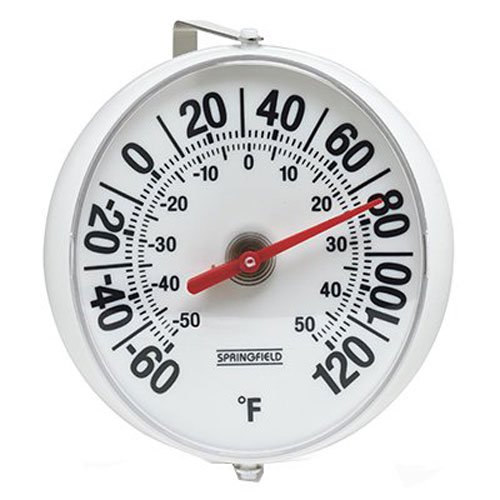
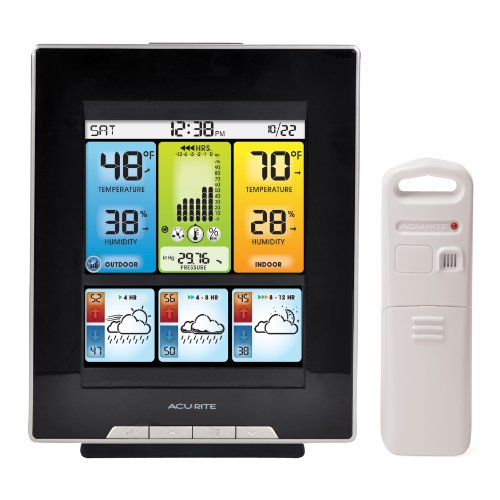
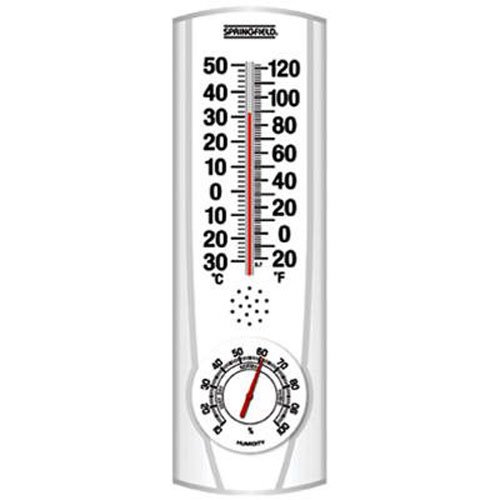
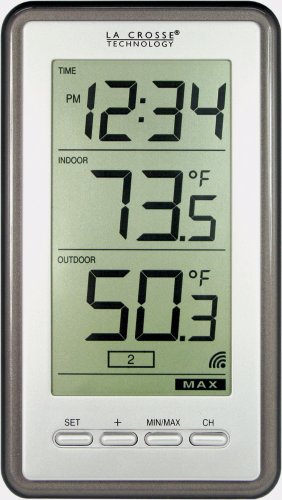
If you are looking for some simple outside or inside thermometers here are a couple of cheaper choices for you.


Springfield Big and Bold ThermometerSpringfield Big and Bold ThermometerAcurite 02007 Digital Home Weather StationAcurite 02007 Digital Home Weather StationSpringfield Vertical Thermometer and Hygrometer (9.125-Inch)Springfield Vertical Thermometer and Hygrometer (9.125-Inch)La Crosse Technology WS-9160U-IT Digital ThermometerLa Crosse Technology WS-9160U-IT Digital Thermometer


The Celsius scale is used almost everywhere else in the world. There are two main temperature scales: °F, the Fahrenheit Scale (used in the US), and °C, the Celsius Scale which is used in most of the rest of the world. It is a major part of the worldwide universally used metric scale.

Both temperature scales measure the same thing (temperature!), but use different numbers:

A couple of examples:

Boiling water (at normal atmospheric pressure) measures 100° in Celsius, but 212° in Fahrenheit
And as water freezes, it measures 0° in Celsius, but 32° in Fahrenheit

Celsius Convert to Fahrenheit

The Fahrenheit temperature scale is named for German physicist Daniel Gabriel Fahrenheit and is used primarily in the United States. As I said earlier Celsius is used everywhere else in the world. So I guess I need to get with the world standard.

Many of the weather stations sold in the United States have readings available in both grades. However, there are a few weather stations that are sold in only the Celsius grade being available.

How do you convert the two standards?

Fahrenheit to Celsius conversion is:

°F to °C Deduct 32, then multiply by 5, then divide by 9

Celsius to Fahrenheit conversion is:
°C to °F Multiply by 9, then divide by 5, then add 32

If you are not mathematically inclined you may use sites like these to plug in your readings and they will convert the temperature readings for you. Yes it is free of charge as well

 The two popular conversion links are

Rapid Tables conversion of Centigrade to Fahrenheit

or you may like this one better

Math is Fun website has this colorful tool you can use to convert Celsius to Fahrenheit easily as well.

George

Weather Enthusiast’s Journey

From an early age, I discovered the profound impact weather has on our lives.

A stormy day can disrupt your plans, while perfect weather feels like a precious gift meant to be savored to its fullest.

Through this site, I’m passionate about sharing my expertise on weather instruments and their practical applications for enhancing your daily life.

I’ll show you how a personal weather station can transform your home experience, giving you valuable insights about conditions on your specific property.

Explore my discoveries and gain the knowledge to truly understand the weather patterns in your area.

Welcome to a community where weather isn’t just small talk—it’s a fascinating science that connects us all.

Using Weather Station Data Collection Sites Makes Sense

Click On The Webcam Picture
The Weather Underground-A Weather Station Station

What About Weather Station Stations

Just about everyone has checked the weather first thing in the morning, dressed accordingly, and then found that things did not turn out as predicted.

That’s because more traditional sources of daily climate information provide data that applies to a wider area.

I am sure almost everyone interested in the climate elements daily changes is interested in or heard of sharing data with other fans.

Weather Underground-a Weather Station Station

Sites such as Weather Underground, and Weatherbug are two of the top sites that you as a fan of the outside elements can send your daily instrument information details to.

Weather Underground’s worldwide personal weather station network consists of climate enthusiasts who report live climate element information to Weather Underground from independent stations located on their houses or in their backyards.

Weatherbug and Other Weather Station Stations

Weatherbug is also a major contributor to the data collected online sites. Other such sites are the National Weather Service (NWS), and the Citizen Weather Observer Program which can be joined as well by the private citizens.

The National Weather Service has the second most collection sites, second only to the Weather Underground site. To join the NWS as what they call the Cooperative Observer Program, follow the link and you will be directed on how to sign up to be a volunteer information contributor to the national and regional forecasts.

One way to gain access to information that is relevant to a particular location immediately is by using weather station data collector sites. Taking things one step further, choosing to provide data to those sites helps others in the area to have access to real-time information. Here are some of the other reasons why this approach is the way to go.

Up to the Minute Data

With more traditional approaches, there is something of a time lag in reporting changing conditions. For example, a quick glance at an online source or listening to the broadcast on the radio will provide a general idea of what happened a few moments ago and what is predicted to happen for the rest of the day.

What those methods do not provide is what is happening right this minute. weather data collectorsThat’s one of the reasons why it’s possible to look up an outside elements site and see that it shows rain in the area, even though the sun is shining bright.

With the purchase and installation of personal climate stations, homeowners have the chance to determine what is happening outside without having to rely on data that may be delayed or based on predictions.

The stations vary somewhat in how data is processed, but most will include equipment that helps to measure wind velocity, humidity, air pressure, and temperature. All that provides immediate information about what sort of front is moving through the area.

What About Across Town?

The use of equipment in collecting personal weather station data is only part of the process. Choosing to share that data with others helps to create a network that provides information to others living in the area.

As an example, as long as you register with one of the same weather station data sites used by your friend across town, you can access the information and find out what is happening in that part of town.My Local Weather Canandaigua New York

Given that it can be raining a couple of miles east while the sun is shining brightly at home, knowing that the rain is moving in the direction of the house makes it easier to close the windows, take in the laundry, and do whatever else needs to happen before the rain sets in.

This type of arrangement is reciprocal, in that the person who chooses to share personal weather details with others also gets to access the information provided by users in other parts of town. You may take this as you pull back, to a regional or state, or even national level.

If you are flying to Colorado today, you are able to get updated climate change information as you get nearer to your destination. In bad weather, this would be most helpful in planning your Colorado travel plans, or your evening agenda.

In the meantime, back closer to home, it can be especially helpful when meteorological conditions are right for events like high winds that increase the chances for a funnel cloud to develop. By monitoring the weather situation that is happening a few miles away, it is possible to get an idea of what is moving in the direction of the user.

That provides more time to get the kids inside, dig out the batteries and candles in case the power goes out, and in general be prepared for whatever happens next.

Planning a Trip

After getting up on a Saturday morning, the desire to head to the lake or make a road trip to the beach hits. Before grabbing some gear and running out the door, accessing a weather data collection site is a good idea. Doing so makes it possible to find out exactly how things are at the beach or the lake right now.

Changing Stations On Weather CollectorIn looking at the photo above, you are able to see that on data collection sites you are given many different options of sites that you may obtain current condition readings from. This would be most helpful to you for traveling to a destination of your choice.

If the data provided by means of wireless weather stations, created and maintained by people living in the area, indicate rain or other adverse weather, there is no need to spend the time and gasoline to travel to the spot. The trip can be put off for another date, and the individual can find something to do closer to home.

Text and Visual Data Available

If you are a part of an information collector site, you can have your own webcam as part of your station’s data collection. Many of the sites are transmitting actual webcam broadcasts of what is happening right now to the visitor to their sites information. Here are a couple of examples.

Active State Webcams Click On The Webcam PictureMany home weather stations are set up to transmit video as well as other readings to weather networks.

The sharing of video is helpful for many people since it provides users with the chance to see what is happening at a given location as well as read about the essentials.webcam videos by date

For those who grasp weather conditions easier when they can view still images and video, this adds to the overall experience and helpfulness of connecting with these networks.

If You Are Still Wondering

For anyone who wonders if setting up a personal meteorological station would be difficult, we recommend seeking out our other pages under the buying advice main menu. We have many articles published to help you out in your research.

It will not take long to find out what is involved with purchasing the equipment and having it installed along the roof or even on a pole in the backyard.

Once the station is up and running, joining a network makes it all the easier to always have access to real-time information from across town, in another state, or any other location that is desired.

George

Weather Enthusiast’s Journey

From an early age, I discovered the profound impact weather has on our lives.

A stormy day can disrupt your plans, while perfect weather feels like a precious gift meant to be savored to its fullest.

Through this site, I’m passionate about sharing my expertise on weather instruments and their practical applications for enhancing your daily life.

I’ll show you how a personal weather station can transform your home experience, giving you valuable insights about conditions on your specific property.

Explore my discoveries and gain the knowledge to truly understand the weather patterns in your area.

Welcome to a community where weather isn’t just small talk—it’s a fascinating science that connects us all.

Are Weather Stations Accurate?

weather station instruments

Questioning the Accuracy of Personal Weather Stations

Weather is very important to you. Collecting the climate instrument data from around you is important to you.

You are not a novice with the elements nor are you a geek for climate information.

You are seriously interested in the daily climate changes that are in and around your world.

You keep detailed records, you really enjoy forecasting, and you plan your life around the readings from a climate station’s remote sensors. You depend on, you count on this information being accurate.

When it isn’t that accurate, it has a way of tilting your world. You would like to avoid this from happening.

Can You Depend on Readings

Your dependency on your climate instrument station is solely based on you trusting the readings you are getting fed. Just like your relationship with your best friend, is solely dependent on you trusting each other.

You trust your friend with your friends and it’s the same for you trusting the readings you are getting. This isn’t easy to have. You must find a unit, whose readings you are able to put your total trust.

How Accurate is your Weather Station

All of our reviews will show you the range of each and every sensor that the station has. These are not our accuracy ratings these are the manufacturer’s evaluated testing results.weather station

We do however try to figure in customers’ reported findings of the complete correctness of the readings. We do think this is very important to all future station owners. You would want very accurate readings you can trust in.

How does an accuracy rating work and how do I trust what I am getting sent to me? How do I interpret the manufacture provided instrument accuracy ratings?

Here is what a typical reading sheet will look like.

web Accuracy

Error Ranges Explained

As you can see it has the three main sensors that are involved in this model from AcuRite, and it has the accuracy range listed for each of the sensors.

The sensors involved in the AcuRite Environment System model #01075 Bundle are the temperature, the relative humidity, and the anemometer.

Temperature
The accuracy rating for the temperature is that it shouldn’t be off more than 2 degrees F-either 2 degrees warmer than it really is or it shouldn’t be 2 degrees colder than the thermometer reads.

Humidity Readings
For the relative humidity readings, they give them (the readings) a larger rate of error at the lower temperature and higher temperatures. The humidity in those ranges is seldom in those temperature ranges.

So anyway the 20%-80% humidity range is where most people live every day. The percentage of error there is much smaller. So that is where the sensor is calibrated to be most accurate.

The error range is +/- 3% and goes up +/- 5% for error. So a 3% error at the most common humidity range. Than 5% error for the ranges that are most unlikely to show up for a person’s location.

How About Wind Accuracy

anemometerThe wind speed accuracy is determined by the anemometer, its error rate is calibrated to work best at lower speeds of wind, and then as the wind speed goes up, as the anemometer works much harder, the error rate goes up to 5 mph plus or minus that it could off.

As an example, your wind could be actually blowing at 85 mph but the anemometer could actually show you that it is blowing at 90 mph so it’s registering at plus 5 mph than it actually is.

Some things you can gather from these readings are that the anemometer is geared towards more accurate ratings at slower wind speeds. You probably do not have a strong need for one that can handle very high-speed winds because you seldom get any wind over 35-45 mph.

When you look at this product from AcuRite you will see the wind cups are made of plastic, compared to the top-quality wind cups being made from lightweight alloys. The plastic will hold up better inaccuracy with the lower winds.

The Rain Gauge

The last correctness ratings are the station’s rain gauge collection. The rain gauge is calibrated to be accurate within a plus or minus 5 one-hundredths of an inch over calculated or 5 one-hundredths of an inch under-reported.

This is very accurate. A very small error percentage. So the rain gauge, as long as it is in a good location for proper rainfall collection should work very well for you.

Some Views On Accuracy Ratings

The main thing that we have found to be very true with climate stations, is that you do get what you pay for. This is true not only with the number of element tools (sensors) that you will get with a station but also to the life expectancy of a climate instrument station.

The more you pay for your equipment the longer they will last, the more accurate they will be, and the more bells and whistles you are the owner of. All of this is great for you.

In fact, it’s a very big thing for you, if you are looking to purchase a climate instrument station. You need to absolutely take the time to study and know that with 100% surety, why you want a station and what it is you wish to get from one.

We are very sure you need to match up as well as possible, your wants, your needs, and your budget.

If you do not do this, you will be dissatisfied and most likely be a very frustrated station owner. You will be one of those customers who write up those negative reviews of the products we have seen.

But if you have done your homework then you can be a satisfied and happy owner of a climate elements station.

In Summation

We know these things to be true. You can budget a personal weather station in at the range of $40.00 up to $4000 very easily. There are some very excellent stations which you can spend $4000 on.

They have the very best instruments, made of the very best material. weather stationThe rates of accuracy are rated in the same neighborhood that the inexpensive models don’t even discuss. You can run a farm with this type of unit.

But maybe you don’t own a farm. You would just like to have just some small amounts of information around for you to plan out your day with. A $40.00 unit may satisfy you beyond your imagination.

The accuracy of instruments that we use to collect data is a very polarizing thing with avid outside element fans. Long and strong arguments can be had, overall the recommended uses of the instruments, and the location of the instruments as well.

You can read government reports online, where the study was how the location of stations is one of the most critical findings in how accurate weather field information is.

The major complaint is over where the climate station is placed, the inaccuracies of the thermometer readings, causing weather studies from being accurate.

So take this complaint and bring it down to your level. Down to the level of how well do you place your sensors in your backyard? The location placement of weather instruments does make a huge difference inaccuracy of the information you use to make decisions.

But it is not the only determining factor inaccuracy of information. As discussed, materials used to manufacture sensors/gauges, etc. can make a difference as well.

Like I said earlier you get what you pay for. The wind cups on a $200.00 station are made of plastic. The wind cups on a $3000.00 station are made of lightweight metal alloys. Obviously, the alloys will be able to withstand extreme climate conditions much easier than the cups of the plastic anemometer.

Please keep all of these thoughts in mind as you search for your match of the station for you. Please take the time to study, and examine what other customers are saying about the accuracy of the instruments on each station.

Some manufacturers are very good about supplying accuracy ratings for their equipment, and yet others don’t supply that information. The buyer is aware.

Accuracy seems to depend on price, quality of the product, and location placement of the instruments. Good luck with your purchase.

George

Weather Enthusiast’s Journey

From an early age, I discovered the profound impact weather has on our lives.

A stormy day can disrupt your plans, while perfect weather feels like a precious gift meant to be savored to its fullest.

Through this site, I’m passionate about sharing my expertise on weather instruments and their practical applications for enhancing your daily life.

I’ll show you how a personal weather station can transform your home experience, giving you valuable insights about conditions on your specific property.

Explore my discoveries and gain the knowledge to truly understand the weather patterns in your area.

Welcome to a community where weather isn’t just small talk—it’s a fascinating science that connects us all.

What Does An Anemometer Look Like?

3 cup anemometer

What Does a Weather Anemometer Look Like?

Most people who are unfamiliar with weather instruments will ask what does an anemometer look like? They do not know that many meteorological stations today are equipped with an anemometer.

You know, a device that measures information about currents of air on your station’s display you have access to the current wind speed.

You will find that your day will simply work out better if you leave your home, with the knowledge of whether or not it will be a breezy or calm day.

As an owner of your weather station, you can get this information readily and easily from your very own personal weather station.

A Simple Anemometer For a Kid’s Weather Station

Anemometers are so basic as a piece of weather equipment you would have, that they are considered to be a basic required weather piece for setting up any kid’s weather station.

In fact, we have a great read on setting up a weather station for kids in the post, Instruments to Build a Weather Station For Kids.

 An Anemometer Looks Like This


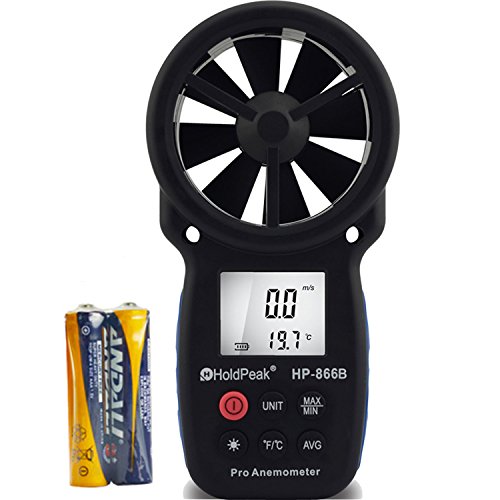
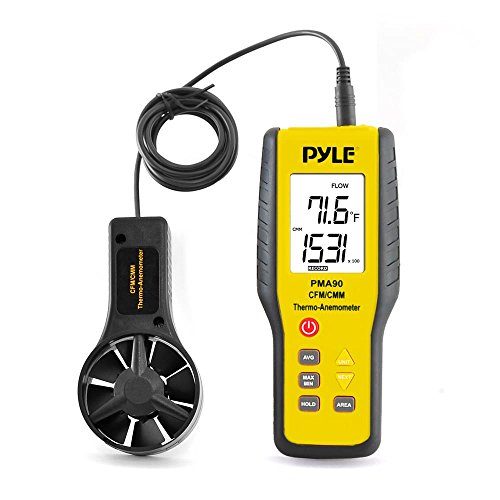
Well, let’s look at an anemometer. Here are a few anemometer pictures for you.

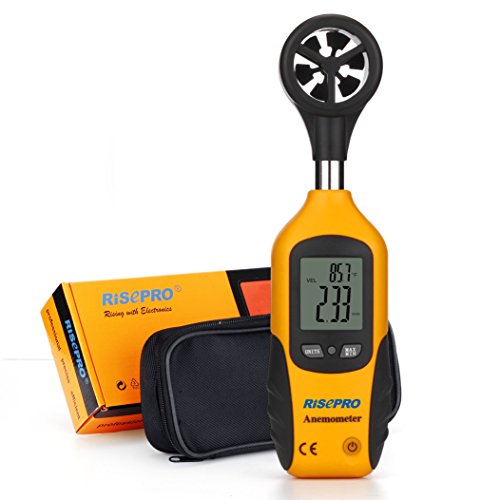
In looking at the modern wind speed instruments of today, they look like this. Many of the personal weather stations for sale today have in-home display systems that show all types of readings that are provided by the wind sensors on your weather station.

This personal station displays today, will also provide you with such other interesting tidbits as wind gust speed, the maximum current airspeed in the last half an hour, and also the speed of the breezes recorded at your location in the last 12-24 hours. You can access also the current forecast, which will tell you if there may be winds involved in your forecast.

&

RISEPRO Digital Mini Anemometer LCD Wind Speed Gauge Air FlowRISEPRO Digital Mini Anemometer LCD Wind Speed Gauge Air FlowHOLDPEAK 866B Digital Anemometer HandheldHOLDPEAK 866B Digital Anemometer HandheldPyle PMA90 Digital Anemometer- Air Velocity & Flow TemperaturePyle PMA90 Digital Anemometer- Air Velocity & Flow Temperature


How Does the Wind Affect You

In taking a daily look at the elements that you are living with, you always will be dealing with the currents of air. It is either a breezy day or maybe not a breezy day.

We all know that if it is very windy, our days, defined by our moving about from place to place can become an adventure. In very strong winds you are dealing with many different situations than you would be if it was perfectly calm outside.

If you are walking from location A to location B, then you will be facing several things. The first thing is the breezes will blow your hair out of place. Second-your body temperature and your comfort zone will most likely be affected by the wind on you. If it’s a cooler day, the air currents will dry you out and take away the protection of warmth you had near your skin.cup-anomometer

Or it (the wind) could be simply causing condensation (on a hot day), which tends to lower your skin’s surface temperature. So when it is very cold outside the wind can be a bad thing (wind chill index) or in the summer it could be looked on favorably.

History of an Anemometer

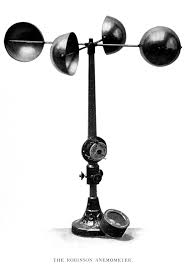
Anemometers were developed as far back in history as the mid-nineteenth century. In fact, in 1845, Dr. John Thomas Romney Robinson, the director of the Armagh Observatory, Northern Ireland, developed the first anemometer, a 4-cup anemometer. He was the director there for 59 years.

He invented the first cup anemometer, which consisted of four hemispherical-shaped cups, each mounted on one end of four horizontal arms. These horizontal arms are then connected to a vertical shaft.

As they spin around because of the air blowing, they are measured by how many revolutions per a given period.

From this then you are able to calculate the breeze’s speed by counting the number of turns of the shaft in a manner that is proportional to the currents of airspeed.

This is measured over a set period of time and various ranges of current airspeed are calculated in this manner.

The original wind cup anemometer had four cups in place, whereas most anemometers today are the improved three-cup model, developed by a Canadian, John Patterson, in 1926. This is the design, that has been improved further by various scientists over the years.

This is a simple form of air current measurement and by far the most common wind measurement instrument on today’s weather stations.

Other forms of anemometers are the Vane, Hot-wire, Laser Doppler, Sonic, and even something called the Ping Pong anemometer. These have been some of the more recent developments in air current speed instruments that are available today.

In fact, the Ping Pong Anemometer was used by NASA on a recent(2008) Phoenix Mars Lander flight, as an airspeed measuring tool.

Wind Speed Shown On a Display

There are many different daily climate stations that may be purchased today

As we mentioned earlier almost all of them use a three-cup anemometer, to gather and record the wind speeds from your remote sensor unit.

In keeping with station directions, and good common sense practices, it is best to set up your sensors in a remote place, but not a location too low to the ground. You should also make sure it is out in the open where there are as few distractions or obstacles as possible that would prevent a reasonable air current speed calculation.

If you have done this, then the wind speed your display is showing will be very accurate. These readings should be accurate enough, for you to use for your studies of your local elements.

Please also remember that the wind is a very vital element measurement in calculating the upcoming forecasts that we plan our daily lives around. The direction of the air currents, the speed of the breezes, and very often also the altitude of various upper air current patterns above the earth have a large impact on our daily forecasts.vane anemometer

The time of arrival, when fronts intersect or collide, will impact thousands of people daily around the world. How many times have we started a picnic or a baseball game only to have a storm pop upright in the middle of our planned event? This happens all of the time.

This timing of when the weather will do what is forecast is everything to us- but yet it is probably the one thing that messes up peoples’ days all the time.

Many displays are great for the user because they provide, up-to-date air current speed readings, the last half hours peak breeze speed, and the last 12 hours recorded wind speeds. They also will show you the direction the breeze is blowing from.

The collected data from the stations that have computer software is invaluable in the study of your weather.

How Accurate Are Station Anemometers

When talking about anemometers the accuracy of this instrument is often questioned. It seems that with this instrument you often get what you paid for.

Here is a list of the most important factors when buying a station with an anemometer or when buying one by itself.

  • Some facts-they can be manufactured as either a propeller-type or a cup-type of air current speed instrument. Both types are accurate but realize both types are susceptible to icing up in the winter.
  • Look for black-colored wind meters which tend to thaw out quicker than white or silver ones. Obviously the black will draw heat from the sunshine’s rays, thus they will thaw out quicker. White and silver colors will reflect the sun’s rays more than absorb them.
  • Look for accuracy ranges of ±5% o
  • Most are rated for wind speeds from 0-100 mph
  • Accuracy will depend on the wind cup sizes. Smaller cups will be spun easier by the breezes, the larger heavier metal cups will spin slower. It will take more air current/energy to get the cups moving when the cup is larger.What Is An Anemometer
  • Be aware of metal versus plastic for materials used to manufacture. We found that there is a difference in how the material reacts to the wind. The metal being heavier is much slower to react to lower wind speeds, but it is better and more accurate in high wind velocities. Whereas the plastic is quicker to react to lower wind speeds, many times it is not as accurate at the high wind velocities due to its lack of weight.
    • This is to weigh up when thinking about your decisions on which one to purchase. Consider if you are expecting more time with light winds or more time with windier days.
    • Smaller wind cups are more responsive because they are lightweight and easier to react to.
    • Plastic is more responsive than metal, again as aforementioned this is due to the weight of the material more than anything.
    • The smaller cup spokes are smaller so the cups are closer and more sensitive, especially to lower winds.
    • Check out the size and the material that the shafts are made of. It will make a difference in how free and easy the cups will move and generate accurate wind speed.

    In Summation

    If you decide to purchase a station with an anemometer, we have laid out for you the reasons why you would need one. We have also talked about the things to be aware of when picking out the right equipment for what you would like to accomplish with this equipment.

    Knowing the wind speed can add to your day’s planning You must decide whether or not you can/or are willing to go to the next step. Moving up to purchase a weather station could be a great decision for you.

    Stations that cover the air currents surely do cost more. There is more for you to care for as well. Does the cost outweigh the benefits for you? You will have to ask yourself that and come up with your answer to that question.

George

Weather Enthusiast’s Journey

From an early age, I discovered the profound impact weather has on our lives.

A stormy day can disrupt your plans, while perfect weather feels like a precious gift meant to be savored to its fullest.

Through this site, I’m passionate about sharing my expertise on weather instruments and their practical applications for enhancing your daily life.

I’ll show you how a personal weather station can transform your home experience, giving you valuable insights about conditions on your specific property.

Explore my discoveries and gain the knowledge to truly understand the weather patterns in your area.

Welcome to a community where weather isn’t just small talk—it’s a fascinating science that connects us all.

« Previous Page
Next Page »

Amazon Affiliate Associate

We are a participant in the Amazon Services LLC Associates Program, an affiliate advertising program designed to provide a means for us to earn fees by linking to Amazon.com and affiliated sites.
Most of my posts do contain some affiliate links. I like to share weather gathering instruments and stations that may help you with your weather interests. These links do provide a small compensation to me that helps in the daily operating costs of this site.

Accessibility Statement | Affiliate Disclosure | Cookies Policy| Disclaimer | Privacy Policy | Sitemap | Terms and Conditions | © 2026 - George Loves Weather

We are using cookies to give you the best experience on our website.

You can find out more about which cookies we are using or switch them off in .

George Loves Weather
Powered by  GDPR Cookie Compliance
Privacy Overview

This website uses cookies so that we can provide you with the best user experience possible. Cookie information is stored in your browser and performs functions such as recognizing you when you return to our website and helping our team to understand which sections of the website you find most interesting and useful. Our Privacy Policy.

Strictly Necessary Cookies

Strictly Necessary Cookie should be enabled at all times so that we can save your preferences for cookie settings.

3rd Party Cookies

This website uses Google Analytics to collect anonymous information such as the number of visitors to the site, and the most popular pages.

Keeping this cookie enabled helps us to improve our website.