Using Personal Weather Instruments

Have a Better Life By Using Weather Instruments


So You Are Interested In a Personal Weather Station
I have watched the activity on my site for over 4 years now. I know that viewers are looking for three things mainly.
This is an excerpt showing you the type of content available in this 42 page PDF for FREE
"So whether you are enjoying the day outside or if you are just hoping to get rid of it you could improve your mental well-being, you know (your attitude) by learning more about the weather outside.
The conditions you must drive in daily. The conditions you need to plan social events around.
The same weather that can make or break a sporting event you are participating in or going to as a fan of the sport."

This 41 page PDF from georgelovesweather.com covers in detail everything you would want to know about correctly buying a personal weather station.
No more guess about how to best decide which weather station will fit your needs.
Sign Up Below To Get Access To Your FREE Copy
So if you are interested in the weather, then my report will be a help to you.
1. It will bring up things that needed to be thought about and things you will need to do your own due diligence on.
2. The good news is: that you can easily match to a really good fit with a personal weather station.
3. It can, not only be useful to you, but also fun. This e-book also includes bonus coverage on things to avoid.

10 Things To Know When Buying A Weather Station
Copyright 2022 georgelovesweather.com - Privacy Policy

Placing Your Personal Weather Station Excerpt
Where Is The Best Place To Locate Your Weather Station?
This site placement outline will ensure you get the results you were looking for
See how easy it is to use this PDF Guide by scoping out all the most important things to effectively use all instruments
Check out my video as I walk you through a property using this outline
Sign Up Below To Get Access To Your FREE Copy
George Drum
Owner/Reviewer
Thanks for using and viewing my content at georgelovesweather.com. It is my pleasure to provide the content and information for you. Use it in Good Health! I hope you get as much enjoyment from your weather station as I do from mine.

Weather Station Site Placement PDF Excerpt
So if you have interest in getting the most from your weather station this will definitely help you with that.
If you do have any questions about this report please feel free to contact me at george@georgelovesweather.com.
Please give me two business days to respond. Thanks for using our site.
Copyright 2022 georgelovesweather.com - Privacy Policy
The easiest way to install it would be to use a weather station pole mounting kit. This is easier and more efficient for you.
If you do have a personal weather station, I know you will have to install it.
So why not think of using a weather station pole mounting kit as a simpler way to get those weather instruments out there creating weather information for you to use. This then will make your life run better.
Weather stations provide a wealth of data about the outdoors.
The only problem is that these devices are typically mounted on rooftops or long poles.
This can create harder installation problems for the owner.
So you need to respond to this by figuring out if using a mounting pole kit could make your instrument installation better, quicker, and easier to install.
This means that a weather station mounting pole kit is a great way to get the most out of your weather station.

Weather Station Pole Mounting Kit
There are many benefits to using a weather station pole mounting kit.
These benefits of using a weather station mounting pole kit are outlined below.
Here are just a few of them:
If you're looking for weather station mounting pole ideas, then you'll want to check out weather station pole mounting kits.
Anyone who has ever shopped for weather station mounting poles knows that there is plenty of weather station mounting pole ideas out there.
Here are just a few ideas and what a weather station mounting pole kit looks like.
Take a closer look at a few types presented to you. See what matches your selection very accurately.
[amazon box=”B003EABA02,B003EB3A5E,B07BNSL21G,B003EB39GO,B01139UHCW,B08CV33V51
” grid=”3″]
First, they're designed to be easy to install.
This means that you won't have to spend hours trying to figure out how to put your weather station together with the mount.
A weather station pole mounting kit makes installation easier, as all of the necessary components are included in the kit.
A weather station pole mounting kit is a quick and easy way to mount your weather station wherever you want it.
However, putting the mount on the ground is not an option as well because it would be very unstable.
Most weather instruments simply do not work well on or near the ground.
Most people choose to put the mount on their roof or in their backyard, but sometimes people cannot afford these options or they don't have an appropriate place for it.
In these cases, mounting poles are the best solution.
So you can see mounting a weather station on a roof often is the best place for your weather station.
How To Do A Pole Mount Kit Assembly
YouTube Video to give you an overview of the type of things you will be doing when setting up a mounting kit.
Owners of personal weather stations will be mounting with a pole mounting kit.
But is it really easier to just use a weather station pole mounting kit?
For starters, weather station kits come with everything you need to get started.
No need to go out and buy a bunch of different parts - the kit includes all the basics.
Plus, weather station mounting kits are designed to be easy to install. Most weather station kits can be installed in just a few minutes, without any special tools or expertise.
So why not save yourself some time and hassle by using a weather station pole mounting kit?

When we think of mounting weather station poles, many people think of large poles that they need to mount the weather station on.
This is not always the case. Weather stations can be mounted on walls with a mounting bracket, or they can be attached to trees.
The bottom line is that there are plenty of ways to mount a weather station pole or two.
The placement and type of a weather station are important to the data it will collect.
There are different types of weather stations, but the most common one is mounted on a pole.
The types of poles used are usually galvanized pipes.
These will depend on the heights needed, how large in diameter is needed as well to fasten the sensor array snuggly over the top of the support weather pole.

If you are looking for an idea on how to mount a weather station pole, you should consider installing it on the ground.
Installing a weather station pole in the ground will make it easier to measure the wind, snow depth, and temperature.
It will also increase the accuracy of the data collected.
Installing the pole at ground level has three advantages. It will save you money in terms of cost, installation time, and effort.
Plus, it will make your weather station easier to access for future maintenance or adjustments.
Yes, you do need to consider the future maintenance and repairs, upkeep, etc, that will be necessary in keeping your weather instruments humming along doing their thing for you.
One of the best ways of finding a pole mount kit is to make sure that it's compatible with your weather station.
This ensures that the measurements will be accurate, which is essential when it comes to safety and other important factors.

Weather Station Mounting Pole Ideas
If your pole mount kit has arrived, then it's time to start using it.
Before you start, make sure that the pole is secure in place and that the screws are tight.
If you're unsure about this step, then consult with your local weather station supplier for more advice.
You'll need to connect your weather station to the pole mount kit via a cable.
Next, set up your sensors according to the instructions that come with your kit.
If you're not sure about how to do this, then consult with someone who is familiar with the process.
When everything is ready, then it's time for you to start using your new weather station.
Most weather station pole mounting kits come with a suggested height for the pole, but this is only a starting point.
The actual height of the pole will depend on a number of factors, including the type of weather station being used, the location of the weather station, and the weather conditions in the area.
Please refer to either one of these three fact-filled posts that thousands of my viewers have found very beneficial to read.
What’s Involved in Weather Station Mounting-Getting the Most From Your Weather Station
Tips For Mounting A Personal Weather Station What You Should Know About Weather Station Mounting Systems
For example, if the weather station is being used in an area with high winds, it will need to be installed higher off the ground to avoid being blown over.
Likewise, if the weather station is located in an area with a lot of snowfall, it will need to be installed at a height that will allow for accurate snow depth measurements.
Ultimately, the best way to determine the ideal height for your weather station pole is to experiment until you know all of your weather situations will be handled by your choice.

Galvanized Pole,
There is no definitive answer to the question of how high off the ground the weather station pole should be installed.
The answer depends on a number of factors, including the type of weather station being used, the terrain around the installation site, and local weather conditions.
You can get your Free copy of my Site Placement- Install Your Weather Station PDF.
This will help you in deciding the type of weather station mounting pole kit you buy to use.
In general, however, it is best to err on the side of caution and install the weather station pole at least 10 feet off the ground.
This will help to ensure that the weather station is not damaged by high winds or heavy rains.
Good luck, and please remember if you have any questions or comments please write me at george@georgelovesweather.com.
In this post, I am going to discuss how to ground a weather station for beginners. I am going to be very basic yet very comprehensive about giving you the information you can use.
You will be able to make a solid decision about whether you need to ground your weather station or not.
Most people understand the importance of grounding an electrical device. For example, when you plug a lamp into a wall outlet, you expect the current to flow from the outlet, through the cord, and into the lamp.
If there is any damage to the cord, or if the current somehow jumps out of the cord, you expect the grounding system in your home to divert the current into the earth so it can't hurt anyone. The same principle applies to weather stations.

Lightning in Wyoming
A weather station is basically a set of sensitive electrical instruments that are exposed to the elements. If these instruments are not properly grounded, they can be damaged by lightning or static electricity.
Lightning dangers to personal weather stations are real and they should be taken seriously.
It’s important to know how to ground a weather station so you will need to ground your weather station in order to protect your investment in the future.
Most weather stations come with some sort of grounding system. You need to check with the directions you have received.
However, there are a few things to consider before grounding your weather station.
Lightning is a danger to personal weather stations. The National Weather Service recommends that you ground your weather station to provide protection from lightning.
While it's rare, lightning can strike an elevated tower or antenna and jump through the air to a ground-level electronics device.
Lightning strikes are more than just an atmospheric event.
A single bolt of lightning can carry up to one billion volts of electricity and as many as 100 million amps.
The electricity from a lightning bolt is enough to power several homes for an hour.
A lightning bolt can be as hot as 50,000 degrees Fahrenheit and can reach temperatures of over 3,000 degrees Kelvin.
This type of power running through a cable is enough to damage or destroy an electronic device.
With the increasing number of personal weather stations, there has been a rise in the frequency of these types of accidents.
Mounting your weather station on the ground will help ensure that you're safe from lightning strikes.
The next step is to make sure your cable doesn’t cause a short on the device.
If you have an oscilloscope, multi-meter, or other electrical test equipment then you can test this with these tools.
So in researching lightning in the United States, I find that the following States are Texas, Kansas, Nebraska, Oklahoma, Florida, Missouri, South Dakota, Iowa, Colorado, and New Mexico.
Coincidentally all of these states with Florida the exception, are part of the Midwestern USA, where weather is much more volatile at times.
It is from the hyper-active weather that violent weather clashes occur and lightning is a product. Check out the U.S. Lightning Map
Also, you may be interested in Which States Have the Most Lightning Strikes.
Did you know that Florida has been given the title of the "Lightning Capital of The U.S." because it receives 223 lightning strikes per square mile!

U.S. Lightning Map
When a lightning strike occurs, it follows the path of least resistance and will enter the ground through any wire or rod that is close by.
Proper grounding of your weather station is important for two reasons.
A weather station is an important tool for any meteorologist.
It helps to measure the temperature, humidity, wind speed, and barometric pressure in an area, providing valuable data that can be used to forecast the weather.
However, a weather station is also vulnerable to lightning strikes.
If a strike occurs close to the station, it can damage the equipment or even start a fire.
To protect your weather station from lightning, it is important to ground it properly.
Grounding the station will create a pathway for the electricity to flow away from the equipment, redirecting the strike and preventing damage.
While there are a number of ways to ground a weather station, one of the most effective methods is to use a ground rod.
You can use a grounding rod kit, which includes a clamp that attaches to the weather station and a rod that connects to the grounding system for your home.
Ground rods are typically made of copper or other conductive material, and they are driven into the ground to a depth of at least six feet.
If you have a weather station, you may be wondering if you need to ground it.
Many people don't realize how important it is to ground their weather station.
The answer is that it depends on the type of weather station you have and the location of the station.
If your weather station has a lightning detector, it should be grounded.
[amazon box=”B08MFSM3KQ,B01LNALL6C,B09DDFCJHN” grid=”3″]
A weather station that is not properly grounded can be affected by static electricity, which can cause problems with the accuracy of the readings.
If your weather station is located in an area that is prone to lightning strikes, it is important to ground the station to protect it from damage.
If your weather station is not located in an area that is prone to lightning, you may not need to ground it.
Additionally, if there is a lightning strike nearby, the ungrounded weather station may be damaged by the electrical current.

You Need To Ground Your Weather Station
If you're not sure how to ground your weather station, there are a few things you can do.
First, check the instructions that came with your weather station.
If they don't provide clear instructions, you can contact the manufacturer for more information.
You may also want to consult an electrician to make sure that you're grounding your weather station correctly.
Remember, proper grounding is essential for ensuring accurate weather readings.
Grounding a weather station is one of the most important steps in ensuring accurate readings.
By grounding the station, you are essentially creating a Faraday cage.
This helps to shield the sensitive equipment from electrical interference that can cause inaccurate readings.
Additionally, grounding the station helps to protect against lightning strikes.
If a strike does occur, the electricity will be directed into the ground instead of damaging the equipment.
While it is possible to get accurate readings without grounding the station, it is much less likely.
A weather station that is not properly grounded can produce readings that are off by as much as five degrees Celsius.
As a result, anyone serious about their weather monitoring should take the time to learn how to properly ground their station.

Weather Station Mount in Florida
A weather station is properly grounded if it is connected to a metal rod that has been driven into the ground.
The rod should be made of copper, aluminum, or other non-corrosive material.
The connection should be made using heavy gauge wire, and the entire system should be checked regularly to ensure that it is in good working order.
Additionally, grounding also helps to reduce interference from other electronic devices.
If you are unsure if your weather station is properly grounded, you can contact a professional for assistance.
There are a few things you can do to make sure your weather station is properly grounded.
Check the connections to make sure they are tight and free of corrosion.
Second, check the ground rod or stake to make sure it is driven into the ground deep enough.
The rule of thumb is that it should be driven in at least 6 feet.
Failing to properly ground a weather station can have several consequences. First, it can lead to inaccurate readings.
Without proper ground, the sensors in the weather station can pick up electrical interference from nearby power lines or other sources, leading to skewed data.
If a lightning bolt hits the station, the electricity will flow through the metal frame and into the ground instead of being discharged into the air. This can cause a fire or damage the electronics.
Finally, not grounding a weather station can create safety hazards for anyone who touches the equipment. If there is an electrical charge building up in the frame, it could shock or even kill somebody who comes into contact with it.
If you live in an area that is prone to lightning, you may be wondering if it is necessary to ground your weather station.
The answer is yes, it is necessary to ground your weather station in order to protect it from damage.
Lightning can cause a power surge that can damage electronic components, so it is important to have a way to dissipate the electrical charge.
Grounding your weather station will help to protect it from this type of damage.

You can ground your weather station by attaching a copper wire to the base of the unit and running it underground to a grounding rod.
For best results, consult with a qualified electrician to ensure that your weather station is properly grounded.
However, if you really want to get into grounding your weather station, what I suggest (if you have the time) is to study the NEC notes and thoughts on grounding a TV antenna, (probably the closest thing to a weather station) that you can use as a comparison.
So go to national electrical code 810.21.
This is an excellent source of information, that you can read and decipher for yourself to see what you understand, what you need for supplies, and what you can do to properly ground your weather station.
Of course, I earlier discussed in great detail many questions that come up with how to ground a weather station.
Should you decide you even need to do this, good luck as it is a detailed job, and having the knowledge to do this well, is a job in itself.
Earlier I wrote a post on how to get the most from your weather station, you may go here for some other information on lightning proofing, What’s Involved in Weather Station Mounting-Getting the Most From Your Weather Station.
I include an excellent video that you may watch to help you out.
I have covered many bases in this article. Grounding is important to you if you have decided, it is the best way to protect your weather equipment.
Sometimes your weather station's sensor array may be set up (mounted) where the danger of a lightning strike is exceptionally low or maybe even close to nil.
In that case, you probably don't need to ground all of your instruments. I can give you a great example of where I have decided to not ground my weather station on my property.
We receive very few lightning strikes and where everything is set up, I made the decision not to ground my La Crosse V40-PRO Weather Station
So you see you will not always have situations where you need to ground your weather station.

What My Mounting Using These Two Items Looks Like
In my search for best weather station for kids, I will take you through 3 key areas in this article.

Weather Station For Kids Education
So in my search, I did find that many companies have worked on and released some weather stations to fill this need.
Later on, I will make some suggestions from my experience and research.
Major companies such as AcuRite, Davis Instruments, Ambient haven't really gone into the kids market.
However, La Crosse does have a weather station that will appeal to a young lady who has an interest in the sciences and weather instruments.
La Crosse Technology WS-9782U-IT Wireless Temperature Station with Advanced Weather Girl Icon
So where did I find my suggestions? Well, I found them being sold on the world's largest marketplace, amazon.com.
I believe have a few choices that will excite, teach and create interest in your child.

Our weather produces our climate. Climates vary as you travel around the world.
I know you will find that the basics of weather never change.
These basics are listed as temperature, relative humidity, wind direction, wind speed, and humidity
I would say the instruments in the best weather station for kids, a choice would then need to include a thermometer, a hydrometer, an anemometer, and a wind vane.
They will get to measure these conditions from their own backyard.
However, some of the products that I found go in the direction of teaching some of the laws of physics that apply as well as working with providing some experimentation creating weather happenings in a limited variety to teach the principles of what happens in weather events.
Older teenagers learn how these various weather phenomena relate to each other and the laws of physics.
These weather events range from lightning to hurricanes, tornadoes, and to different types of precipitation such as sleet, snow, hail, rain, etc.
1. Do you think measuring the weather is important? Why or why not?
2. How do you think different weather conditions feel?
3. What's your favorite weather condition to experience?
4. How do you think the weather affects our moods?
5. When do you think it's important to measure the weather?
You could also have kids relate to and learn from answering questions like:
1. Ask them how they think temperature works.
2. Have them give you examples of everyday items that have temperature measurements on them.
3. Compare and contrast Celsius and Fahrenheit measurements.
4. Ask them to tell you about their favorite weather conditions, and why they like those particular weather conditions the best.
If these questions don't work to peak the interest you need from the kids as students you could try these questions. See what you think.
1. What's your favorite weather?
2. Why do you like that weather?
3. How does the temperature feel today?
4. What's the temperature in Celsius and Fahrenheit?
5. How many degrees is it hotter than yesterday?
I am sure these will inspire interest and get you to feedback from your kids. Give it a try.

In this part, I want to discuss things that you need to know about to correctly make wise choices for the best weather station for kids.
Your kids and their future is very important to you.
You want the best for them, so follow this information, it will allow you to make a solid list of what you will be looking for when making your selection.
This section will discuss the importance of correctly placing weather station measurements tools in order to collect accurate temperature readings.
Accurate temperature readings are important as they provide valuable information about the weather.
The most common types of weather station measurements tools are thermometers, barometers, and hygrometers.
Thermometers measure the air temperature, barometers measure air pressure and hygrometers measure relative humidity.
The placement of these tools is crucial for accurate results because some factors such as wind speed and direction can affect the data collected by these tools.
Weather and atmosphere data resources found on the NOAA site have many resources to use to help educate children about the weather.
This will be from a nation and world point of view.
It will help your child learn how to measure different weather conditions such as temperature, humidity, barometric pressure, and rainfall. You may go to
Younger kids are fascinated by the simplicity of a weather station.
A weather station is an easy way to teach kids about the basics of weather. The most basic stations include thermometers, rain gauges, and wind meters.
These devices are interactive and fun for children to use.
They can learn about temperature changes, rainfall, and wind speeds without having to travel outside their home.
The sensors on a weather station can be the key to finding the perfect balance.
When choosing a station for your children, it's important to take the type of sensor into account.
The more accurate and in-depth the sensor is, the better your child will be able to learn while still having some fun.

What else should you be thinking about? Just make sure that what they’re getting will look realistic.
If it’s a real instrument, make sure that it’s digital with readable indications.
If the product is designed for kids as a weather learning toy type weather set, then you need to make sure you should consider just how realistic the chosen weather set is.
Your kid should know what a real anemometer with cups looks like based on their device.
If you’re getting them a real weather station, make sure it’s digital with readable information on the console.
For children, durability is a major issue, so we recommend that you avoid electronic personal weather stations.
Instead, look for a model where you and your child can build it together, or is made of a few parts and easy to install.
If you are willing to invest in a weather station, we recommend the following models: The Davis Instruments 6152 Vantage Pro2 Wireless Weather Station and the Davis Instruments 6250 Vantage Vue Wireless Weather Station:
These weather stations have an LCD screen with an alarm that is easy for children to understand.
For example, if the temperature is below -5 degrees Celsius, it will alarm if this is a critical level.
Now is the time to take a close look at a handful of weather station-type products that I believe may help your child learn about the weather.
Take some time and examine what these products offer the student.
[amazon box=”B002LLVFK0,B001AMRCDU” grid=”2″]
These weather stations have an LCD screen with an alarm that is easy for children to understand.
For example, if the temperature is below -5 degrees Celsius, it will alarm if this is a critical level.
Now is the time to take a close look at a handful of weather station-type products that I believe may help your child learn about the weather.
Take some time and examine what these products offer the student.
[amazon box=”B000G3LR9E” template=”horizontal”]
[amazon box=”B07WZVHDSK” template=”horizontal”]
[amazon box=”B013BOA86W” template=”horizontal”]
[amazon box=”B007WDGZDY” template=”horizontal”]
[amazon box=”B002HHQ8X2″ template=”horizontal”]
[amazon box=”1603800875″ template=”horizontal”]
This post is all about the WeatherBug weather station for schools. You will find as you read that I cover everything I have researched that you need to know about WeatherBug and schools.
To start with, you should know Weather Bug Schools is a community-based program. It will involve a program where your school will be partnered with over 80 TV stations across the USA.
You (the School) will be set up to act in the following ways.
Let's look first at some siting factors you must face when picking out where the WeatherBug weather station will be set up.
They (WeatherBug) have a extremely complete site set guide listed as a PDF that you will need to look at, study, complete, and submit to them.
You may access the PDF here:
Atmosphere Investigation Site Definition Sheet.pdf.
This is all part of the acceptance process.

WeatherBug Weather Stations For Schools
Students will have access to real-weather equipment. It brings a real weather situation into the classroom. Interactive lessons and tools are used in lessons.
Safety is provided by early warning systems. Lightning and severe weather are covered and keep the students and community safer.
Students, faculty, and visitors are protected. Advanced warning alerts are sent out, using various devices and desktop computers. These devices send alerts to multiple locations.
Motivation is provided for teachers as they will have access to fun, and engaging programs, which provides the students with real-life skills and knowledge.
Training modules are provided and designed for teachers to get the most out of the program. Time-lapse imagery is used.
Homework and on-the-go studies are all covered. Over 8000 stations across North America, provide a complex map of always updated local weather information.
The following equipment makes up the WeatherBug schools equipment
1. Wind sensor- wind speed and direction
2. Sensor shelter- Temperature, relative humidity, heat index, wind chill, barometric pressure, dew point, wet bulb, and more
3. Rain Gauge- Daily, monthly, and yearly rainfall totals and averages
4. Lightning sensor (optional) Integrated in-cloud (IC) and cloud-to-ground (CG) lightning detection sensor
5. HD Camera (optional) - Stationary or pan, tilt, and zoom HD cams incorporate state-of-the-art image enhancement technologies in a compact body. This allows users to capture clear and bright images and videos. This brings to life many challenging natural environments.
6. WeatherBug Network Appliance. connects an IP-enabled device that connects easily;y to the internet. It provides fast transmission of your station's data. It also has a 72-hour battery life and reboots automatically as needed.
7. WeatherBug LCD Display. The LCD can be installed in school offices, classrooms, science labs, hallways, or any other high traffic area.

WeatherBug Schools Equipment
Protocol for the Weatherbug Schools Program is set up as follows. You see WeatherBug Weather stations (free for approved schools) works as a scientific weather instrument feed for the Earth Networks company.
Earth Networks provides several different weather-sourced programs for various companies around the world.
As an example, they source out the weather forecast to businesses for specific events or specific needs. Some examples of weather related studies and help they provide:
They provide this assistance to these types of industries
Telematics- optimize these situations. Such as Fleet Management, Driverless Cars, and Navigation. All of this utilizes their 48-hour local road condition forecast reports.
They also work on reports that aid the retail-supply chain operations and the construction industry as examples.

Weather Conditions At Your School
Once your school is collecting data, and transmitting data all the time to the EarthNetworks computers this information is all collated and sent along to the GLOBE project.
A special GLOBE atmosphere study is defined for the school Earth Networks weather stations.
So the WeatherBug Weather Station is helping to define and work within the GLOBE study.
This is all part of the 8000 WeatherBug networks of home or personal weather stations.
All help by supplying data to the overall trending and thriving weather conditions within the North American region of the world.

8000 Weatherbug Stations Across The USA
Teachers in the WeatherBug program should be made aware of all of the educational opportunities for teaching. I want to list all of the areas of study that WeatherBug weather stations touch.
Two choices are offered and used in the WeatherBug For Schools program. The camera choices are as follows.
What you need to know if operating this, the WeatherBug for Schools is a network of automated weather stations throughout the world collecting and reporting data to a central database that would serve as an important resource for studying global weather patterns and tracking weather systems.
An extension of this network is the Earth Networks® Schools Program, which involves schools and colleges in the study of weather and provides educational tools to aid in this study.
Earth Networks® and GLOBE The Earth Networks® Schools Program allows schools to use weather stations to collect and report atmospheric data.
Since the function of Earth Networks® Schools is in line with that of GLOBE, it is possible for a school to participate in both programs simultaneously.
A GLOBE school that is participating in the Earth Networks® Schools the program may have the data that they collect with an Earth Networks® weather station transferred automatically to the GLOBE database.
To become part of the WeatherBug Schools Program, call an Education Representative at 1-800-544-4429, Ext. 2, or
visit Weatherbugschools and complete the contact form.

Earthworks.com WeatherBug Stations Network
The main purpose of schools at every level is to educate and enlighten students on various subjects and fields of study. Weather happens to be an all-encompassing area of study. It involves many different fields of study.
The more you learn about weather the more you will find, it to be enchanting and seductive to your emotions and your intellect and curiosity for learning.
For more information on weather stations for kids you may want to read this popular post, that I had written a few years ago.
How Can Your School Obtain a Weather Station
Having a good knowledge of weather and daily weather conditions is also a very real thing that could help out with life.
This knowledge at the very least can make things go smoother daily to actually save your life in the extreme sense.
So learn about weather, you should.
It can only help you. It can't hurt!
This post does contain some affiliate links. I like to share weather gathering instruments and stations that may help you with your weather interests. These links do provide a small compensation to me that helps in the daily operating costs of this site.
The La Crosse weather station mounting pole you have will now be used with your weather station. So you have purchased your very own La Crosse weather station.
Now what you did, was you decided where you were going to mount your La Crosse weather station.
The best proper siting of a weather station involves many different common-sense decisions.
You also have some facts concerning the weather instruments you must or at the least, you need to consider.
Let's look first at some siting factors you must face when picking out where the La Crosse weather station will be set up

Mounting Directions For a La Crosse Weather Station
We can start with the type of situation you are facing.
Is your property more of a suburban type or a rural type of situation? It will matter due to a few outside interference factors. The urban or suburban siting is probably the more difficult.
Generally speaking, avoid obstructions and anything that may cause a biased reading, such as dark surfaces, or materials that are not reflective.
The placement of the weather station is also important. For example, if it is placed on a roof or in the shade of a building, this will produce inaccurate readings.
The placement of weather stations is crucial for the accuracy of the data. The climate-quality data is best collected in areas where sources of potential bias (such as the introduction of surrounding structures) are minimized
So when setting up your best site overall for your weather station sensors keep in mind you want to maximize out as a whole the best place for getting the most accurate
So set standards, and then do your best to meet them. If you do you will long-term be most satisfied with your choice of a La Crosse personal Home weather station.
•Should be placed where the ground is level, over a surface that represents the area the best. Please be advised to avoid dark surfaces, roofs, irrigated areas, plus stay away from concrete and dark surfaces that absorb heat from the sun.
•If you have a ventilated radiation shield then please use it.
•Place at a recommended height of 1.25 – 2.0 m or between 4’ 1” and 6’ 7” above the ground )
•Place sensors at a horizontal distance of 2 times the height of the nearest object (tree, structure, etc). [Example: 40 feet away from a 20-foot tall tree].
•Keep away from other sources of heat such as chimneys, air vents, air conditioners, etc.
•Try to mount at 32.8 feet (10 meters) above ground level.
•As a rough guide try to place at a horizontal distance of 10 times the height of the nearest obstruction.
•If you are placing it on the side of a mast account for the mast by, "the sensor should be placed on a horizontal boom extending outwards from the mast, at a distance of 3 times the mast diameter". [So, if mounted on a 2-inch diameter pole, the boom should extend out 6 inches away from the pole].
•Try to mount at a height of 4 to 6 feet above the ground.
•Best for catching the rain if located at a horizontal distance of 4 times the height of the nearest obstruction.
•Ensure the gauge is mounted level to the ground, away from any horizontal surface. This will avoid any rain-splashing into the catch area or having any snow build-up.
Another thing to watch for is wind-driven water from trees, shrubs, or anywhere there is water running off of something.
Another issue is that movement out of the level of the tipping bucket mechanism that measures the rain will throw the measure off.
Such an example may be a tall pole that ends up swaying in strong wind will not cut it. You may need to install support guy wires.
If you aren't careful the hygrometer if you have one can be influenced by irrigated yards, swimming pools, and other sources of evaporation in its proximity.
So be aware to stay away from these situations.
One more thing to be aware of is to watch out for shadows that may be cast on and over your weather station's sensor array.
This could cause your weather station solar-powered fans inside the radiation shield from working.
If so you will experience elevated thermal readings from the increased heat build-up.

La Crosse Weather Station Mounting Pole
So far I have been setting you up for one thing to help you. The one thing is simply that you will obtain the absolute very best results from using your La Crosse Weather station.
Now that you know where the weather station needs to be set up, you need to figure out the very best type of mounting pole idea that works best for you.
You may go to my two posts for a great read of what you need to know when picking out the type of mount that works best for you.
The types of mounts have led you to what works for you. La Crosse manufactures various models and types of weather stations.
The sensor packages that come with the most popular current models from La Crosse would be a simple Temperature/humidity sensor which is simple and easy to install.
Nothing very complicated and a pole will not be needed most likely for it.
You can take a look at the La Crosse Technology S81120-INT Wireless Combo Weather Station with New Breeze Solar Wind Sensor.
[amazon box=”B075F68J5L” template=”horizontal”]
This is a new model that has a brand new sensor 3-in-1 sensor array called the Breeze Solar Wind Sensor.
In researching this new sensor it is powered by a solar panel and a Rechargeable Coin Cell battery.
The big thing that sticks out about this sensor array is the improved transmission distance was taken from 333 feet up to 400 feet.
The cups of the anemometer are made larger for picking up the wind easier, and then the mounting bracket is versatile in that it can be set up much easier and at more angles, than you may need.
Measures:
A great example of a 5-in-1 sensor pack for La Crosse would be the La Crosse Technology V40A-PRO-INT Wi-Fi Professional Weather Center
As you can see looking at this sensor will give you weather readings for the temperature, the wind speed, the wind direction, the amount of rain precipitation, and the humidity level outside as well.
[amazon box=”B084NXZQSS” template=”horizontal”]
Now that you see what type of differences exist between these three La Crosse weather instrument choices you can move on and figure out the La Crosse Weather Station Mounting Pole, that will work for you and your site situation.
The need to mount a La Crosse Weather Station Mounting Pole will be as follows.
Single Sensor. you will need a hammer and a couple of small screws to mount on a door frame a poster, a porch roof support, etc. This is a really easy mount.
The only reason you would mount it might be using a piece of wood to mount it on, then attach a pole to a galvanized pipe that will serve as your La Crosse Weather Station Mounting Pole.
This then would be attached to your eaves, fence, shed, roof or chimney. Many of these examples can be found being explained in detail by reading them here.
Next, let's look at the 3-in-1 sensor array. This will fit under the many different types of pole mounts I cover in some of my other posts. The chimney mount, the slanted roof mount, the flat roof mount.
Also, it would fit by using the tripod mount, the fence top mount, the tool shed mount, etc.
All of these are specifically written about and discussed in my article, Using a Weather Station Mounting Pole-Looking at Easy Weather Station Mounting
The 5-in-1 will now be much the same choices for a pole mount, with the exceptional difference of now you have to have height clearance, and clearance of any obstacles for many feet so that the wind vane may be free to move and detect the wind directional changes your weather situations present to you.
As you can see a La Crosse weather station mounting pole can be many things and can involve many different pole mounting choices.
The best selection for you will be from you examining, and reading all of the information I provide for you on this post as well as my complete catalog of other posts about weather station mounting.
[amazon box=”B01ETDZ3F0,B001RD703E,B000WDS0H0″ grid=”3″]
The pole attachment area, going from one company to the next is generally within the 3/4 inch up to 1 1/2 in diameter for what you need to attach the station.
Each weather station will have its own measurement list, either in the PDF Manual, and/or the specifications and product description.
The keys to a good mount are fastening the pole and the station's bracket area snuggly. Not over tight but firmly holding them together.
If you have a long pole you will need to add extra support, to prevent everything from breaking. Guidewires, or an extra set of brackets often will do the trick.
I would highly recommend that you go to the National Weather Service's Citizen Weather Observer Program to check out the level of reporting weather stations to report.
This will give you a level of expectations for what you can expect as far as professional readings to submit hourly and daily.
These would be how the National Weather Service looks at your commitment as well as what you can strive for reporting if you decide to be a reporting station.
This is also an excellent place to get excellent siting tips and instructions from their experienced people.
All digital weather stations need to be looked at in three broad information categories. I will cover all 3 areas with this review of the AcuRite Notos (3-in-1) 00589 Pro Color Weather Station.
Here is what I will cover in this complete personal home weather station.
This review is done through the eyes of a personal weather station owner, and I have completed 35 reviews of different weather stations in the past on this site.
AcuRite is one of my favorite companies to review indoor outdoor weather stations.
I have covered the following manufacturers with past weather station reviews
The areas I will cover are what the display unit looks like and what the AcuRite Notos (3-in-1) 00589 Pro Color Weather Station includes in its sensor unit.
Then I will also cover details that you can use to decide whether this wi-fi home weather station is for you.
As you may observe, this display has the following icons. This will be what you will receive for weather sensor information.
Time Zones the display will work in are
HAST, AKST, EST, PST, MST, CST, EST, AST

Please note these weather readings will work in North America and Central America. Probably not as well in South America, Australia, etc.
AcuRite does not support the equipment for use outside of North America.
Some Miscellaneous things (details) that might interest you.
The specifications for the display unit may be found by going here
You can download the manual and read all of the specs for the display unit. The display is powered with a
5V power adapter which is included; electric power is recommended to take full advantage of the full-color display.
Please note the display unit will also run on 3 AAA alkaline batteries. If you use batteries they are not included with the Notos 3-in-1 sale.
The display unit measures 7.5-inches Height x 3.6-inches Width x 1.6-inches Depth, this will help you find a great place to use.
You will need to remember that the display works best when viewed straight on, not at an angle.
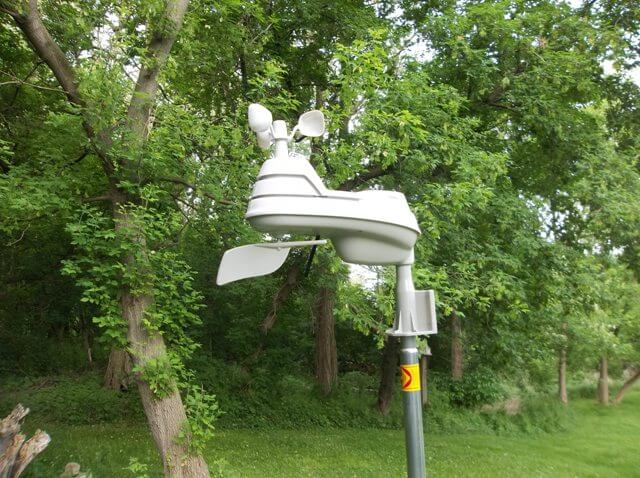
So now we come to the heart and soul of a personal pro color weather station the weather instruments. This is what collects all of your data that is then sent up to 330 feet inside to your AcuRite Notos (3-in-1) 00589 Pro Color Weather Station display.
So you get to peek at the display unit anytime you would like an updated series of local weather measurements. That is what makes a home weather station awesome to have.
If you like to stay up on all of your local weather information as I do, then nothing more local than the weather in your own backyard.
The Acurite Notos (3-in-1) 00589 pro color weather station comes equipped to provide the following weather information to you.

windy day what is your wind speed?
These are what is being generated from the 3-in-1 weather instruments you just purchased.
The AcuRite Sensor Array is powered by using 4 AA alkaline or Lithium batteries. I personally would recommend using Lithium batteries.
They are proven to consistently work much longer and better than alkaline batteries. Lithium batteries are built for outside use.
The moisture, heat, and freezing temperatures do not affect their performance.
The wind speed is updated every 18 seconds, and the outside temperature and relative humidity are also updated every 18 seconds.
For all specifics about your weather station's sensor array, you may go to this link and download the specs for yourself
If you have any questions feel free to contact Customer Support at
(877) 221-1252 or visit www.AcuRite.com
Guarantee: There is a limited one-year warranty. it may be read by going here


I agree, that would drive me cuckoo as well. Wind direction can make a big difference in how you interpret your weather measurements.
So in reviewing this weather station I believe if you are new to owning a weather station then this unit will make a great beginner weather station for you.
It is not as simplistic as you can buy, but it has enough plus features to give you a good taste of what it is like to have a weather station.
You will see the advantages after a short period of time.
I find that in the process of searching for a good place to mount the weather station, you will learn much about the how-to mount and where to mount a personal weather station.
Learn more about weather station mounting, What You Should Know About Weather Station Mounting Systems
If you are more advanced in your weather knowledge as well as more advanced in your weather instrument knowledge, you most definitely will find this weather station to be no challenge and maybe even boring.
So avoid this as a purchase.
AcuRite 5" Capacity Easy-to-Read Magnifying Acrylic, Blue (00850A2) Rain Gauge
In this post, I intend to give you 5 top diy weather station pole ideas that I believe you may use to save money.
You should find these simple to do and inexpensive for you to find and mount your weather station with.
Every good weather station needs a good pole to mount it on. There are many ways to build a weather station pole and they vary in complexity and stability.

Some Ideas Of What Your DIY Can Look Like
Choosing the best diy pole is important because they will serve as your anchor and you won’t want that to fall apart in the middle of a bad storm.
The right pole should be able to withstand high winds, should be lightweight, should not be too hard or complex to construct, and can also hopefully provide an aesthetic quality for your space.
Do you need to install a weather station near your home? What is the best weather station pole for this?
This article will discuss how to find the best diy poles for mounting outdoor weather stations.
We'll also cover some of the most popular diy poles for mounting that are available on Amazon.
I am discussing some great weather station pole ideas in this article.
You can get great results from a weather station if you use it correctly.
It will help you know when it is time to bring in the garden, or if you are about to have a storm coming into your area.
For a diy weather station pole, you have to know what you want. You have to determine the height and diameter of the pole.
How do you know what you want?
You will need to do a complete site map of your property. This will include walking and checking for all areas that are available to be used for mounting your weather station.
Let's move into the area site walk-through.
What do I mean and include in this walk-through? You will need to:
That sounds like a perfect place you say. Well yes, that is what you are striving for, the best-suited spot for your weather station.

Lawn DIY mounting Pole Idea
Every weather station comes with instructions. Please read the instructions.
Then look at the area on the weather station where you will attach it.
What you will attach it to, you will decide next.
Look at the attachment area, measure the opening that will be fitting over or where you will be sliding the pole mount through.
I always want to know what the maximum size is and also how small it will tighten to.
To get a better idea you can take a look at my unboxing post to see what I did and what I looked at when un-boxing my La Crosse V-40-Pro Weather Station.
The post can be found here La Crosse V-40-Pro Weather Station Unboxed Remote Monitoring Station
Look at the bottom of your weather station.
Just measure the diameter inside that needs to be shipped over the pole.
That measurement is what is needed to determine the size of the pole (the diameter of the pole) that you can use to attach the station to.
Then you will need to figure out how long the pole needs to be for the best weather information.

La Crosse V40 Pro On A Mounting Pole
I set up my own weather station using these two parts.
I purchased both of these on Amazon.
This is my mounting pole for my La Crosse V40-PRO.
It has been working great now for over three years now.
It has been proudly staying in place and reporting the weather to me.
I decided, for me, my best spot was on the southwest corner of my tool shed.
This is in my backyard, and it is not exposed to direct sunlight very much.
First we don't get an abundance of sunshine and secondly from probably 11:00 am until sunset direct sunlight is limited. I actually have the temperature sensor under the top roof framework of a built add on covered deck.
If you have read any of my weather station reviews you know and realize that the temperature sensor may be placed at another location on my property.
It very often is in a more shaded area that the temperature sensor will be located.
So I purchased (after researching) these two TV Antenna installation parts.
I thought they would work perfectly for what I needed to install my weather station.
As you can see in the pictures it worked out well.

What My Mounting Using These Two Items Looks Like
So as you can see from directly above, do a site walk, plan out exactly by measuring what you need, and then purchase what you need to install your personal weather station.
Buy pipe sections and then wall mounts (brackets) to fasten the pole to the wall of the shed, house, garage, or fence.

An Example To Get You Thinking
As an example buy something like this as an example.
Look for something like Rigid Pipe Strap Clamp Hanger, then a 6-foot section of 1 inch galvanized pipe.
So let's go over 5 different suggestions for a DIY weather station pole of your own.
So I am going to use some Amazon products as suggestions and for thought so you can figure out what will work for you.
Let's take as look at this type of strap that you would fasten to a sidewall, either a tool shed, side of a fence, sidewall of a house, you get the idea.
These clamps are very similar to what I used on my tool shed.
I simply screwed them into the sidewall of the shed and then tightened the pole against the wall with them as the pole was lined up to exactly where I needed to have it.
So the position was perfect. The height was perfect as well. It works.
You determine for you what will work. That is suggestion number 1
A suggested selection number 2 idea is this particular type of bracket.
Place the pole and then tighten it into place.
Again maybe that will work for you. Many of the poles need to be weatherized.
They can be either galvanized or ones that have been galvanized using the Flo-Coat (zinc-chromate polymer) for excellent corrosion proof protection.
Always remember all of this is out in the weather elements 24 hours a day and 365 days, year-round so rust and weather will happen.
It is not a question of if it will happen but when it will happen.
Be prepared with good solid parts for your mounting pole.
Idea number 3 would be setting up a Davis Instruments Weather Station Mounting Tripod on a flat roof section.
This could be a section of your home roof or part of a roof section on your garage or maybe a tool shed.
This would then these two products that you can now take a look at on Amazon.
Again, I am not saying you need to purchase from me and Amazon, but what I want you to catch is the spirit of the idea.
After your site walks, maybe this flat roof tripod is just right for you.
You may also want to take a look at this Pitch Pad Kit for Tripod/Wall Mounting to ensure no leaks in your roof after installing this Tripod.
Number 4 is to set up your weather station on an angle on your sloped house roof.
Then you need to look at
Channel Master CM-3090 Telescoping Universal Antenna Mast Pole
This pole mount for any angled (sloped) roof features that it is definitely compatible with any weather station you would try to mount with it.
It includes a telescoping mast where the length will cover anything from a 24" to a 44" height.
The best part is that the mounting plate offers multiple angles of installation.
Whether it may be eaves, angled roof of any type all can make the weather station still stay upright. It is covered for you.
Covers up to 30 lbs of load.
Rust proofed material (pre-galvanized steel)

Idea 5 would be to fasten at an angle on the side of a tall fence or to have it figured out to set up on the eaves of your second-story bedroom open area.
Think of all of the possibilities. Many difficult for normal installation, this would make it easier to use some of the more difficult places to still mount easily.
A very flexible pole mount. Possibility #5.
So you have read this post, plus you have looked at my other post-Top Weather Station Pole Idea.
These two posts and my whole mounting category will help you to set up the absolute best location for your very own personal weather station.
This will mean your very own best weather information
Mounting ideas usually can be matched up with a mounting fixture/pole kit of some type that you may purchase.
But sometimes your choices for mounting your personal weather station limits you.
At those times you may need to be innovative. I hope I sparked some ideas for you with this posts.
Many ideas once explored may not work, but you can find something and some way to get the very best results using your weather equipment.
Please write me if you have a questions. You may contact me at support@georgelovesweather.com/
A weather station is a great way to monitor the weather at your home.
It will be set up by using a pole. This is all about giving you some useful weather station pole ideas.
Weather stations are a great way to monitor the climate and environment of a certain location.

Made By Me A DIY Pole Mount
Your weather station will need to be placed in a "Best Spot" to get the best use of it.
This can be accomplished by using a weather station mounting pole.
I am discussing some great weather station pole ideas in this article.
You can get great results from a weather station if you use it correctly.
It will help you know when it is time to bring in the garden, or if you are about to have a storm coming into your area.
Some homeowners don’t know what kind of weather station pole to purchase or how to install it.
In this article, we will list different poles and mounting kits for your consideration.
In the following section, you will find a list of different types of weather station poles that can be used as well as mounting kits for each type.
Some great suggested pole ideas would be, a telescoping pole, a stationary pole, a tripod pole, and fence bracket pole, an AcuRite pole kit, and the Ambient mounting pole kit.
A telescoping pole is a great option for homeowners who want to measure the weather in their backyard. This type of pole is also easy to install and can be used on any terrain.
The first thing you need to know is that there are two types of weather station poles: telescoping and non-telescoping.
Telescoping poles are easier to install but they have a limited height range. Non-telescoping poles can reach higher heights, but installation is more difficult.
A telescoping weather station pole is a pole that can be adjusted to the height needed by the user. Telescoping means that it can move in and out, or expand.
The telescoping weather station poles are usually made of aluminum, fiberglass, or steel.
Telescoping poles are the most popular type of pole for homeowners because they’re easy to install and can be adjusted to fit any height.
If you live in a rural area, then you might need a non-telescoping pole because it can reach higher heights than a telescopic pole.
You see large trees, a barn or any other type of object present in the rural area will need to be worked around to get the best reception and thus the best weather station results.

You Can Locate Your Weather Station On A Fence Like This
A stationary pole is a pole that is a set length, and will not be able to extend to lesser or greater lengths.
You would use this pole when you are sure your location is the one you need. You are also sure of the fact that you will not be moving your weather station for any reason.
This is often used for the side of building mounts, and mounts that are attached to a ground mount fixture. Here is an example of a stationary mount pole.
This is the one idea I picked from our list of weather station pole ideas.
I attached my pole to the side of my tool shed. The La Crosse weather station has been operating really well for me for over 3 years now.

My Personal Do It Yourself Pole Mount
Many different owners of personal weather equipment will need to be using a tripod mount. a tripod mount may be attached to the following type of areas.
You see a Tripod mount can be very flexible to use on your property. It is convenient to move around, yet also strong enough to serve as a solid, firm, and steady platform for a weather station.
Many yards have fences around them. many fences that are built today in housing developments are strong and sturdy enough to hold wild animals out of yards.
They are also tall enough to keep out mountain lions, cougars, as well as the more common coyotes, deer, rabbits, etc.
Thus the fences structures are strong and wide enough to attach mounting poles to the top rail of these fences. This would also satisfy the weather station requirements for a height above any ground, or rain or wind influenced changes in the weather station readings.
The AcuRite weather station pole is the best option for mounting your personal weather station. The telescoping design allows you to adjust the height of your weather station depending on your needs.
The AcuRite Weather Station Pole is a telescoping pole that adjusts to fit any height for mounting your personal weather station. The pole is made from durable aluminum and has an adjustable screw-in mount at the top to accommodate different types of outdoor conditions.

Can You Attach Your Weather Station Here?
The AcuRite Weather Station Pole is a telescoping pole that can extend up to 36 inches, and it's the best way to mount your weather station. The AcuRite Weather Station Pole is made of aluminum and has a diameter of 1 inch.
It's easy to install, so you don't have to worry about trying to find someone who knows how to do it for you.
All you need is an electrical outlet nearby for the power adapter. Once installed, the pole will hold up your weather station securely in place.
I mention and will talk about the Ambient weather station mounting pole kit (kits) because of their flexibility, choices provided, and value in the price presented to the consumer.
I have been selling these for the past few years, and I sell more of these than any other mounts or mount combinations.
I will now cover 2 normal pole kits, and 1 tripod mast kit for you to take a look at.
The WeatherMount allows you to mount your weather station to most any surface.
Whether your decision for mounting would be horizontal, vertical, or attaching to a pitched roof, all can be accomplished here.
Can be used on most professional weather stations.
A small mounting plate footprint (3.75" x 6") allows for easy installation in difficult locations.
It is made of coated galvanized metal tubing.
WeatherMount and mast height is approximately 50"
Please Note the weather station pictured is not included in the mounting kit.
Here is another choice to choose from, a Tripod mast mounting pole kit.
The EZ-48-3AB-125-35 Tripod assembly is made of 18 gauge 1008-10 steel tubing, galvanized
They used the Flo-Coat (zinc-chromate-polymer) process for excellent corrosion-protection.
The leg braces, the mast collars and all connecting components are gold
are gold irridited for corrosion protection.
Other important Stats you need to know are: the tripod base is 33" (85.8 cm).
Installed Tripod Height: Supplied with one mast for an assembly height of 53" inches (150.8 cm).
You may also purchase ground stakes additionally and you might want to add a Tar Pad for roof installs.
So you see these Ambient products cover all different types of mounting situations. They are very flexible. They are built well and will last a long time in your outdoor elements.
They will do the job for you. I am sure that the only thing I didn't cover in detail was DIY mounting poles that you can use, as many of the pole mounting situations are many times unique.
These may require you coming up with a unique answer by using various other parts.
Mounting ideas usually can be matched up with a mounting fixture/pole kit of some type that you may purchase.
I have covered many ideas and settings which will match up to probably over 80% of you who own your own weather equipment.
You may check out my post titled Tips For Mounting A Personal Weather Station
In this post, I discuss many different things that you need to know and follow.
This is all aimed at giving you the best instructions, knowledge, and guidance to help you get the best readings and results from your personal weather equipment.
Please write me if you have a questions. You may contact me at support@georgelovesweather.com/

This article is about supplying you with some great ideas for mounting your AcuRite personal weather station. AcuRite weather station mounting ideas will be found in this article.
The most popular weather stations all need to be placed in a great location. As AcuRite is one of the more popular weather stations it fits that category very nicely.
This will ensure the best weather information results from your personal AcuRite weather station.
You will be using a mounting pole to secure your weather station in your selected best location.
Mounting poles of various types are used to mount most personal weather stations.
However, it can be confusing to find the best location for your weather station.
A mounting pole gives you the ability to mount your weather station in an optimal spot within your home or office.
You can easily move your weather station so you can get accurate readings while placing it in the most convenient location for yourself.
Some of the more popular weather stations from AcuRite may be mounted by you are your personal home property or at your place of business.
You may refer to my post titled, Tips For Mounting A Personal Weather Station, in this post, you will find a complete guide to pole mounting.
Walk your property and check for the following types of mounting possibilities.

After this search and seek walk you will a better idea of the type of mount you will be doing.
You may check out a few of the separate types of mounts here.
These are top sellers on Amazon currently. I have written about them in previous posts.
Ambient Weather pole mounting kit constructed of rust-proof 10-steel tubing, galvanized using the Flo-Coat (zinc-chromate polymer) for excellent corrosion proof protection.
The mounting pole is simple and easy to use, it's made of durable steel and has handy leveling feet built into the bottom.
It is perfect for every level of weather enthusiast whether beginner or an expert, making it an essential tool for any homeowner or a business owner.
Here are some notes of interest to add to your knowledge of weather station ideas.
I wanted to tell you that most of the mounts are constructed of galvanized, rustproof 10-steel tubing.
Many of the mounting poles for weather stations are made of 18 gauge 1008-10 steel tubing, that is galvanized using the Flo-Coat (zinc-chromate-polymer) process for excellent corrosion protection.
They are strong, durable, and stable rustproof powder-coated steel construction so that holding your weather station will be long-lasting and lend stability for years of weather watching enjoyment.
.
Here are some great selections to seriously consider:
Ambient Weather pole mounting kit constructed of rust-proof 10-steel tubing, galvanized using the Flo-Coat (zinc-chromate polymer) for excellent corrosion proof protection.
The mounting pole is simple and easy to use, it's made of durable steel and has handy leveling feet built into the bottom.
It is perfect for every level of weather enthusiast whether beginner or an expert, making it an essential tool for any homeowner or a business owner.
Next, you could look at a Davis Instruments Mount, this is a tripod type of mount. This is generally when you have found a great spot on your property, where all of the boxes are ticked on properly setting up your weather station.
The tripods usually are mounted on an area in your yard, or many times they are popular as a mount for a personal weather station on a flat rooftop.
Take a look at this as well. It is a great choice and you will find it is made of galvanizing tubing as the first choice I suggested you take a look at.
Another type of material that is used is PVC. This can't be found on many of the mounting choices but is present in some types of weather station mounting from a select few manufacturers.
PVC stands for polyvinyl chloride, and it's become a common replacement for metal piping. PVC's strength, durability, easy installation, and low cost have made it one of the most widely used plastics in the world
Plastic or PVC type construction may be found from AcuRite mounts for the following models.
This mounting bracket for any of these AcuRite Weather stations: AcuRite Atlas®, AcuRite Iris™ (5-in-1), or the AcuRite Notos™ (3-in-1)
It will help you make much better personal weather decisions and thus have a better operating life. This means a better return on your investment and a much better quality of life.
The following instruments are considered in your decision process on where do you best set up your AcuRite Weather Station.
Please consider all my directions in the two posts I have suggested and you will get the results you have wanted much better results.
So enough about the materials, these choices are made with. You really need to just concentrate on my instructions on my post
What’s Involved in Weather Station Mounting-Getting the Most From Your Weather Station
After reading this post I go over all the instruments involved with a personal weather station. I also chat with you about how to get the best instrument measurement for your use.
It will help you make much better personal weather decisions and thus have a better operating life. This means a better return on your investment and a much better quality of life.
The following instruments are considered in your decision process on where do you best set up your AcuRite Weather Station.
Please consider all my directions in the two posts I have suggested and you will get the results you have wanted much better result
AcuRite is one of the top-selling brands in the personal weather station market.
I have done numerous reviews on AcuRite Products. You will not go wrong in purchasing an AcuRite product for your personal home.
So if the product is that good, and produces great weather instrumentation results, then take full advantage of this opportunity for yourself.
Use the mounting ideas found in this post and my ideas laid out in my Mounting Category.
I am sure you will find an ideal place on your property that will get you the best results.
Remember you can check for sidewall mounting or roof edge mounting.
Or maybe mounting on top of a fence works better, or like me on the rooftop of my shed.
Or the chimney mount that my brother-in-law has done at his place.
Maybe a ground-level mount of a tripod mount will work best.
If you do your site map analysis, it will work out best for you.
If you have any questions always feel free to contact me by writing at support@georgelovesweather.com

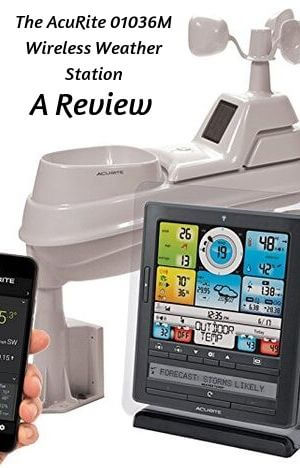
In looking at top sellers for weather stations on Amazon, I see that the AcuRite 01024M Pro Weather Station is reviewed by customers very highly.
This is reflected in how many sales of this Acurite color weather station there are. It has a great sales history, and as I researched it I can see why it is well received.
This digital color weather station had many strengths which I am going to share with you.
Today’s price is $169.99 if you buy from Amazon. Two days ago the price was 192.99. If you don’t buy it from Amazon I can find it today at a variety of other prices.
Other prices today from two other places online are anywhere from $179.95 to $199.95. So you see it fluctuates.
When I put the phrase AcuRite 01024M Pro Weather Station into Google and check out shopping I can see a variety of prices available to me for today.
I mean today as in the published date on this review. Your current price may be totally not this price, for the day you are reading this.
This price for you may change in the next hour or the next day. Who knows what it may be in 6 months from now or even a year from now.
So please check to see what the current today’s price really is
So every time I research a new and updated, or a newly released personal weather station, I often ask myself who does this best fit.
What type of person is this best for. Can it fulfill their expectations and will they be happy to own it? So as I see it with the AcuRite 01024M, it is a great choice for you.
But Which Who Are You? Do You Fit With This Weather Station
You are the person that would be if you are looking to upgrade from a large number of selections, of the lower-priced models, and color digital weather stations. I am talking about the single sensor models that can be purchased in the $30-$70 range.
Many companies make these, and many are good for what they do, and some aren’t very good as well. Many times the Name Brand will make the difference for you and the quality.
This station will give you a much deeper appreciation of the weather. You will be able to have some readings that you will never have with a lower-priced simple outdoor sensor.
The 5-in-1 sensor used with this AcuRite digital weather station allows you to reap the benefits of having wind speed and wind direction.
You will also have access to relative humidity figures as well as rain amounts and the amount of precipitation collected in a period of time.
You will have access to the collected weather data history. Then there is my favorite thing, the prized bell, and whistle of this model from AcuRite, The Lightning Strike Counter.
Since lightning strikes? from as far away as 20 miles can kill or harm you, this could be extremely important to your health and well being if you know to get inside, be safe from any lightning activity
When I personally look at a weather station, I check for a few things that I find will immediately help or be a distraction. Call me weird or maybe you will agree with me. ?
So when it comes to guarantees you will have two different ones protecting your investment in the AcuRite 01024M Pro Color Station.
The first is the satisfaction guarantee that you will receive if you do purchase this weather station from Amazon.com.
The second warranty is from the company in the form of a limited one-year warranty.
What this covers and how it covers your purchase may be read here in this image. So this should help you with your confidence in buying this weather station at this time.
So some days will be better to buy this weather station than other days. As I mentioned some days the station is a bit cheaper.
But that is not what will make a large difference to you. What will make the main difference to you will be the quality that is built into the product.
All of the great reviews from customers of the AcuRite 01024M. That speaks volumes to me. People like the weather station. People would buy it again.
They are satisfied customers. They found that the benefits of the AcuRite 01024M Pro Weather Station fit their needs.
That is the biggest reason to buy. If you have decided that this station has the benefits that you desire then we hope you have found enough information here to help you make your best decision.
<
So I like to suggest an item here that you may not be aware of that could really help you out.
Today I would like to recommend this battery pack for your 5-in-1 sensor array.
This could save you much of a hassle when it is time to change its batteries.
AcuRite 06052M Remote Battery Pack for 5-in-1 Weather Sensors
The AcuRite 06052M Remote Battery Pack is the perfect add-on to your new AcuRite 01024M weather station.
This battery pack is designed to be used in the 5-in-1 sensor that can with this model weather station from AcuRite.
You will find that the battery pack will connect with your 5-in-1 sensor’s battery compartment. Just insert the battery pack into the battery compartment.
Then you have a 30-foot lead wire that will allow you to install the actual battery pack where it is convenient to change the batteries easily.
As an example, this will be much easier than climbing up a ladder to change your batteries in the 5-in-1 sensor that you have mounted on your roof.
A must-have if your reach to change the batteries is difficult. Why not make it easy on yourself.
AcuRite 01512 Pro Color Weather Station
AcuRite 02064 Pro Weather Station